Korean
Korean after Hangul
한국어
Hangul was the alphabet. This is the week after it: ten features that make a sentence. The other two starts are French and Spanish.
If Japanese is already in your hands, the skeleton will feel familiar in a rude way. Verb last. Particles instead of word order. A polite ending glued to the stem. The notes below are the places Korean does not copy Japanese, and the places it does.
1. Verb last
Korean is subject–object–verb. The verb is the last piece that carries tense and politeness. Everything in front of it waits.
저는 커피를 마셔요. — As for me, I drink coffee.
Questions keep that order. 커피 마셔요? is "Do you drink coffee?" 뭐 마셔요? is "What are you drinking?" Nothing leaps to the front the way English do does.
- Fun fact: Modifiers finish before the noun, same habit as Chinese and Japanese. 뜨거운 커피 is hot coffee. You hear the description, then the thing.
- Intermezzo: Translating left to right will make you invent the verb early. Wait for it. The last word can still flip the sentence into a question, a command, or the past.
- Try: 저는 물을 마셔요.
2. Particles
Word order is a habit. A syllable after the noun says what job the noun has. Three pairs cover a basic sentence. Pick the form from the last sound of the noun: consonant, then vowel.
| Job | After a consonant | After a vowel | You will say |
|---|---|---|---|
| topic | 은 | 는 | 학생은, 저는 |
| subject | 이 | 가 | 물이, 커피가 |
| object | 을 | 를 | 물을, 커피를 |
저는 학생이에요. — As for me, I'm a student. 커피가 맛있어요. — The coffee is tasty. 물을 마셔요. — I drink water.
은/는 is the topic, "as for", often with a contrast under it. 이/가 is the subject that is news. Japanese は and が are the same split, including the arguments about which one you meant. That frustration transfers, which is the point of having both languages.
- Fun fact: "To be" is 이다, stuck to the noun. After a consonant the polite present is 이에요 (학생이에요). After a vowel it is 예요 (의사예요). There is no separate word for am.
- Intermezzo: Casual speech drops particles once the meaning is obvious. Keep them while they are new. You cannot drop a marker you have not heard yet.
- Try: 커피가 맛있어요.
3. 해요체
Politeness sits on the verb, not on a pronoun. There is no tu/vous. The same "you" fits a friend and a stranger. The ending does the work.
| Ending | What people call it | Where it belongs |
|---|---|---|
| 해요 | 해요체 | Strangers, colleagues, café staff, class. Your default. |
| 합니다 | 격식체 | News, speeches, a first meeting that wants distance. |
| 해 | 반말 | Friends and kids, after someone offers it. |
가요, 먹어요, 해요, 주세요 are 해요체. 갑니다 is the stiff one. Answering a friend who offered 반말 with 합니다 sounds like a press conference.
- Fun fact: You do not switch to 반말 because you feel close. The older person offers, or you agree out loud. Age is the usual axis.
- Intermezzo: Given name plus 씨 is a safe address (민수 씨). Given name plus 야 or 아 is 반말. A bare given name in 해요체 is the awkward middle. Name plus 씨, verb in 해요.
- Try: 물 주세요. 계산해 주세요.
Intermezzo — one coffee

아이스 아메리카노 한 잔 주세요.
That is an object with the particle left off, a native number squeezed onto a counter (한 잔, from 하나), and 해요체 on 주세요. The barista may answer 여기에서 드시고 가세요? — drink-and-go, here. 드시다 is the honorific of "eat/drink", because they are talking about your drinking. Recognize it. Do not put it on your own actions.
4. One stem
The dictionary form is stem + 다. 먹다 is "to eat", stem 먹. Endings replace 다. They are not a separate word sitting beside the verb the way English will is.
| 먹다 | 가다 | 하다 | |
|---|---|---|---|
| dictionary | 먹다 | 가다 | 하다 |
| polite now | 먹어요 | 가요 | 해요 |
| polite past | 먹었어요 | 갔어요 | 했어요 |
| polite "going to" | 먹을 거예요 | 갈 거예요 | 할 거예요 |
A consonant stem takes 어요: 먹어요. A vowel stem like 가다 folds into 아요: 가요. 하다 contracts to 해요. The "going to" ending is -(으)ㄹ 거예요: ㄹ after a vowel (갈 거예요), 을 after a consonant (먹을 거예요).
- Fun fact: That future is a plan or a bet. It covers "I'm going to" and "I expect". You do not need a second future this month.
- Intermezzo: Some stems cheat. 예쁘다 → 예뻐요, not 예쁘어요. 듣다 → 들어요. If a form looks like it ate a letter, it did. Store the polite present and move on. A theory of irregulars can wait.
- Try: 커피 마셨어요. Yesterday's coffee. 마시다 → 마셔요 → 마셨어요.
5. No articles
There is no word for a or the. 커피 is coffee, a coffee, or the coffee. 친구 is a friend or friends. 들 marks plural when the number of them is the point: 친구들, "friends, several".
이, 그, and 저 do the pointing that English does with the. 이 is this, near you. 그 is that, already mentioned or near the listener. 저 is that, over there. 이 커피. 저 건물.
- Fun fact: 우리 is "we/our", and people say 우리 집 for their own house. The "our" is the household.
- Intermezzo: This will feel like Chinese and Japanese. Do not leave a gap in the sentence where English wants the.
- Try: 이 책 좋아요.
6. Two numbers
Korean kept Chinese numerals and native ones. Sino-Korean runs dates, money, minutes, phone numbers, floors. Native runs hours on the clock, hours of duration, age with 살, and most counters.
| 1 | 2 | 3 | 4 | 5 | 6 | 7 | 8 | 9 | 10 | |
|---|---|---|---|---|---|---|---|---|---|---|
| Native | 하나 | 둘 | 셋 | 넷 | 다섯 | 여섯 | 일곱 | 여덟 | 아홉 | 열 |
| Sino | 일 | 이 | 삼 | 사 | 오 | 육 | 칠 | 팔 | 구 | 십 |
두 시 is 2 o'clock. 이 분 is 2 minutes. 두 시간 is two hours long. 오백 원 is 500 won. 삼월 is March. 다섯 살 is five years old.
- Fun fact: Before a counter, native 1–4 shrink. 하나 → 한, 둘 → 두, 셋 → 세, 넷 → 네. 한 명, 두 개, 세 잔, 네 살. From 5 they stay: 다섯 개. Twenty before 살 shrinks too: 스무 살.
- Intermezzo: Someone telling you their age uses native + 살 (스물다섯 살). A form or a news line often uses Sino + 세 (이십오 세). Both are real. Match the counter you were handed.
- Try: A clock time. 7:10 is 일곱 시 십 분.
7. Counters
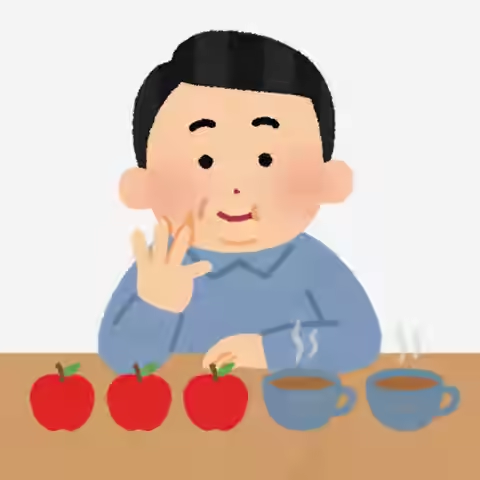
A bare number plus a noun is not how you count things. The everyday shape is noun, then number, then counter.
커피 두 잔. 사람 세 명. 책 두 권.
| Counter | Counts | Example |
|---|---|---|
| 개 | objects, the default | 사과 세 개 |
| 명 | people | 친구 두 명 |
| 잔 | cups, glasses | 커피 한 잔 |
| 권 | books | 책 한 권 |
| 마리 | animals | 강아지 한 마리 |
| 병 | bottles | 물 두 병 |
- Fun fact: 개 is the junk drawer. It is a bit blunt for people and books, and everyone still understands it.
- Intermezzo: The thing comes first, then how many. 아메리카노 두 잔. English wants the number first. Korean wants the noun so the counter has something to sit on.
- Try: 물 두 병 주세요.
8. Adjectives conjugate
Descriptive words are verbs. 좋다 is "to be good". 날씨가 좋아요 — the weather is good. There is no separate is.
They take tense. 좋았어요 — it was good. 좋을 거예요 — it'll be good.
In front of a noun they take -(으)ㄴ instead. 좋은 날, 예쁜 꽃. Predicate 좋아요, modifier 좋은. Same word, two seats. Japanese い-adjectives (寒い / 寒い日) are the cousin.
- Fun fact: 있다 and 없다 conjugate too, and they cover possession and location for a long time. 시간 있어요? 물 없어요. Place is 에: 가방이 의자에 있어요.
- Intermezzo: 예쁘다 → 예뻐요 is irregular, and you will want the word anyway. Learn 예뻐요 as a chunk. Same for 뜨거워요, from 뜨겁다, the thing a cup actually is.
- Try: 오늘 날씨가 좋아요. Then yesterday: 어제 날씨가 좋았어요.
9. Konglish
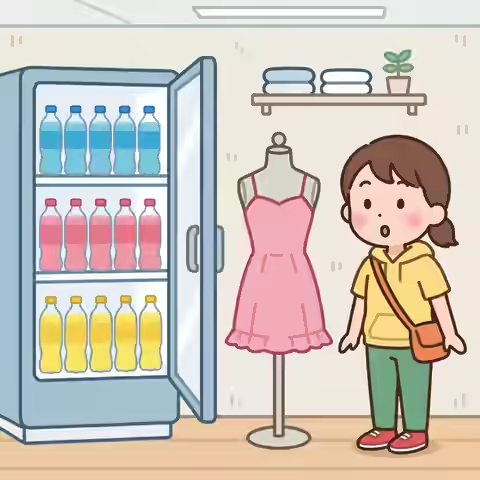
A lot of daily vocabulary is English poured through Korean sounds. The sound is a hint. The meaning is Korean.
| You hear | It is |
|---|---|
| 핸드폰 | a mobile phone |
| 사이다 | lemon-lime soda |
| 서비스 | something on the house: a refill, a side |
| 원피스 | a dress |
| 맨션 | an older apartment block |
| 화이팅 | "you've got this" |
| 콘센트 | an electrical outlet |
- Fun fact: 서비스예요 while a small plate lands is not a service charge. They are telling you it is free. Tipping is not the local script.
- Intermezzo: Some loans are dated. People also say 휴대폰. 핸드폰 is still everywhere. Store the meaning you met.
- Try: Read three loanwords on a fridge aloud, Hangul first, English after.
10. Three levels
Textbook charts list six or seven speech levels. Produce one. Recognize two more.
Produce 해요. Recognize 합니다 on announcements and presenters. Recognize 반말 when the 요 disappears, and do not hand it back until it was offered.
시 inside the verb (가세요, 드세요) raises the subject, usually the person you are talking to. Staff will use it about you. Your reply stays 해요 without 시. 저 가셨어요 honors yourself. That one is the mistake.
- Fun fact: 주세요 is already soft enough for a listed order. 주시겠어요? is for a favor, like asking someone to move a bag. Café: 주세요. A person's lap: the longer one.
- Intermezzo: One productive polite form, ears open for the rest. 해요체 is enough to live on for months.
- Try: A friend said 밥 먹었어. The form you can say to a stranger is 밥 먹었어요?
First week
Blocks already come apart. This week is sentences.
- Three particles on nouns you actually say: topic, subject, object.
- Five verbs in four shapes: dictionary, 해요, past, -(으)ㄹ 거예요. 하다, 가다, 먹다, 마시다, 주다.
- Native 1–10 with the four that shrink, Sino 1–10, one clock time, one price.
- 주세요 at a counter, with a counter.
French and Spanish start from the other end: an article on every noun, and a verb that is not waiting at the end of the line.