Anki session
HSK 4
汉语
- New
- 20
- Learn
- 0
- Review
- 151
Session: 20 new remaining of the 20/day cap · 0 learning waiting · 151 reviews due.
Click HSK::Level 4, not the parent HSK. No learning queue, so new cards mix into the 151 reviews.
Session plan
- Nothing in learning. When a new one pops, match it to the number below.
- Same-day Japanese 森 is a thick forest walk; here 树林 is the grove you walked this afternoon. Keep the pictures apart.
- Scenery pair: 美景 is the view, 景区 is the park with the crowd.
- Form pair: 表格 is the paper you fill in; 表 today is the electricity meter on the wall — not a wristwatch.
- Clock pair: 早晨 slow walk in the park vs 夜 one night at a friend’s.
- Yesterday 烦 was “bother him”; today 麻烦 is the trouble this matter caused.
- Sense traps: 无 is bound/literary (无人), not spoken 没有; 克 is grams, not Croatia or 克服; 将要 is formal “about to,” not 就要; 能否 is the polite 您能否, not 能不能; 失去 is lose contact, not 丢 a wallet; 加上 is add one more, not 另外; 听众 hear a talk, not 观众 at a play.
- People / money: 亲戚 at 春节, 零花钱 from mom, 研究 three years of history.
- Feelings: 难受 that remark, 考虑 let me think, 麻烦 the mess.
1. 表格(biǎogé)
form; table · formulir; tabel
Example: 请填一下这张表格。 — Please fill in this form.

- CJK: 表 = 表. 格 = 格. JP 表(ひょう) / フォーム. Canto 表格 biu2 gaak3. Classifiers 张 / 份. Same 表 as #19 today — that card is the meter.
- Fun fact: 请填一下这张表格. A paper form, not a spreadsheet 表格 in Excel. 填 is the verb; 写表格 is sloppy.
- Memorize: Clipboard, blank boxes, pen: 请填一下这张表格.
- Study tip: 表格. Classifier 张. Pair 表 the meter later — different noun.
2. 美景(měijǐng)
beautiful scenery · pemandangan indah
Example: 这里的美景真漂亮。 — The scenery here is really beautiful.

- CJK: 美 = 美. 景 = 景. JP 美景(びけい). Canto 美景 mei5 ging2. Same 景 as 景区 today and JP 背景 (that card is “behind the incident,” not a view).
- Fun fact: 这里的美景真漂亮. Postcard view. 风景 is the generic “scenery”; 美景 is the pretty one.
- Memorize: Overlook, camera, wow: 这里的美景真漂亮.
- Study tip: 美景. Don’t answer 风景 unless printed. Pair 景区.
3. 研究(yánjiū)
research; to look into · meneliti; penelitian
Example: 他已经在大学研究中国历史三年了。 — He's been researching Chinese history at university for three years already.
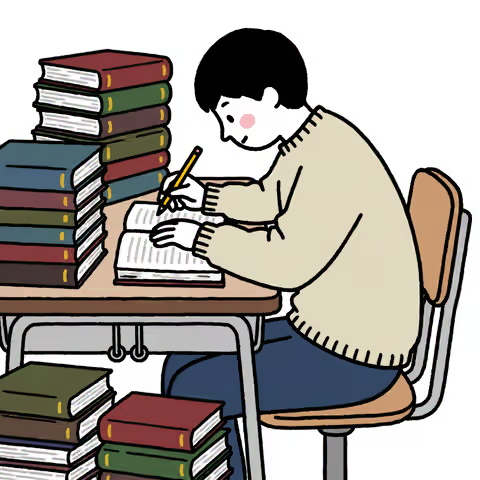
- CJK: 研 = 研. 究 = 究. JP 研究(けんきゅう). Canto 研究 jin4 gau3. Same two characters as Japanese. Noun or verb. 研究生 is grad student.
- Fun fact: 研究中国历史三年了. Library stacks, not a quick 看看. 钻研 is “drill into”; HSK wants 研究.
- Memorize: Desk, history books, year three: 研究中国历史三年了.
- Study tip: 研究. Don’t answer 学习. Reading yánjiū (jiū, not jiù).
4. 零花钱(línghuāqián)
pocket money; allowance · uang saku
Example: 妈妈给我零花钱。 — Mom gives me pocket money.

- CJK: 零 = 零. 花 = 花. 钱 = 錢. JP お小遣い. Canto 零用錢 ling4 jung6 cin4. 花钱 = spend; 零花 is the leftover bits you get to spend. Not 工资.
- Fun fact: 妈妈给我零花钱. Weekly coins, not a salary. 零 is “odd bits”; 红包 is New Year, different envelope.
- Memorize: Mum, small notes into a hand: 妈妈给我零花钱.
- Study tip: 零花钱. Don’t answer 钱 or 工资.
5. 麻烦(máfan)
trouble; to bother sb · kerepotan; merepotkan
Example: 这件事给我带来了不少麻烦。 — This matter has caused me quite a bit of trouble.

- CJK: 麻 = 麻. 烦 = 煩. JP 面倒. Canto 麻煩 maa4 faan4. Traditional 麻煩. Yesterday 烦 was “don’t bother him”; today the noun 带来麻烦. Also a polite 麻烦你 = “could I trouble you.”
- Fun fact: 带来了不少麻烦. A mess dumped on you. 麻烦你帮我 is the polite request — not this sentence.
- Memorize: Stack of problems on the desk: 给我带来了不少麻烦.
- Study tip: 麻烦. Don’t answer 烦. Yesterday’s card was 烦.
6. 加上(jiāshàng)
plus; to add on; on top of that · tambahkan; ditambah
Example: 请再加上一个。 — Please add one more.
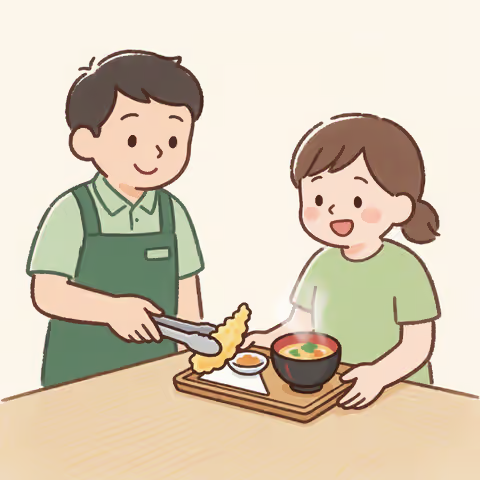
- CJK: 加 = 加. 上 = 上. JP 加える / それに. Canto 加上 gaa1 soeng6. Directional 上 = onto. 另外 is “besides”; 加上 can be math or “on top of that.”
- Fun fact: 请再加上一个. Counter, one extra item. Dictionary also “moreover”; today is add one more.
- Memorize: Finger up, one extra on the tray: 请再加上一个.
- Study tip: 加上. Don’t answer 加 or 另外. Today is the extra item.
7. 亲戚(qīnqi)
a relative · kerabat
Example: 过年的时候很多亲戚来我家吃饭。 — During Spring Festival many relatives come over to eat at my house.
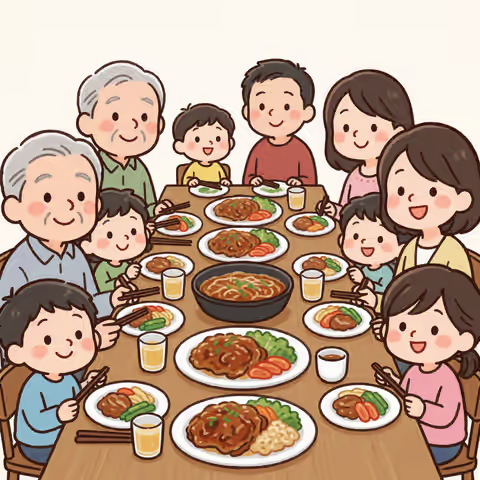
- CJK: 亲 = 親. 戚 = 戚. JP 親戚(しんせき). Canto 親戚 can1 cik1. Traditional 親戚. Same 亲 as 亲人. 家人 is the household; 亲戚 is the wider clan who visit at 春节. Pair Canto 孝 today (how you treat the parents in that clan).
- Fun fact: 很多亲戚来我家吃饭. Reunion table, not 朋友. 走亲戚 is the New Year round of visits.
- Memorize: Spring Festival table, extra chairs: 很多亲戚来我家吃饭.
- Study tip: 亲戚. Don’t answer 家人 or 朋友. Reading qīnqi (neutral qi).
8. 无(wú)
not to have; none; un- · tidak ada; tanpa
Example: 我去看的时候,房间里无人,可是灯还亮着。 — When I went to look, there was no one in the room, but the light was still on.

- CJK: 无 = 無. JP 無. Canto 無 mou4 (written) / 冇 mou5 (spoken). Literary; spoken “don’t have” is 没有. 无人 = nobody there.
- Fun fact: 房间里无人,灯还亮着. Empty room, light on. 没有人 is how you’d say it at the door; the card prints 无.
- Memorize: Open door, empty chairs, lamp on: 房间里无人,灯还亮着.
- Study tip: 无. Don’t answer 没有 unless printed. Bound in 无人 / 无法.
9. 早晨(zǎochen)
early morning · pagi-pagi
Example: 我喜欢早晨在公园里慢慢走。 — I like to take a slow walk in the park in the early morning.

- CJK: 早 = 早. 晨 = 晨. JP 朝(あさ). Canto 早晨 zou2 san4 is also the greeting “good morning!” Mandarin 早晨 is the time of day (also pr. zǎochén). Pair 夜 later. 早上 is the everyday word.
- Fun fact: 早晨在公园里慢慢走. Slow park loop. In HK 早晨 is what you say at 8am; here it is the hour, not the hello.
- Memorize: Park path, early light, slow steps: 早晨在公园里慢慢走.
- Study tip: 早晨. Don’t answer 早上 unless printed. Canto 早晨 is a greeting.
10. 难受(nánshòu)
to feel unwell; hard to bear · tidak nyaman; menderita
Example: 那句话让我很难受。 — That remark made me feel awful.

- CJK: 难 = 難. 受 = 受. JP つらい. Canto 難受 naan4 sau6. Traditional 難受. Physical or emotional. Opposite 好受. 难受 can be a stomachache; today is the remark.
- Fun fact: 那句话让我很难受. Hurt feelings, not a fever. 难受死了 is the spoken pile-on.
- Memorize: Hear the line, wince: 那句话让我很难受.
- Study tip: 难受. Don’t answer 难过 (closer to sad) or 不舒服 (body). Today is the remark.
11. 考虑(kǎolǜ)
to think over; consideration · pertimbangkan
Example: 让我考虑一下。 — Let me think it over.

- CJK: 考 = 考. 虑 = 慮. JP 考慮(こうりょ). Canto 考慮 haau2 leoi6. Traditional 考慮. Same 考 as 考试 but this is not a test. 思考 is heavier “ponder”; 考虑 is “I’ll get back to you.”
- Fun fact: 让我考虑一下. Buy time, not 想 which is too light. 考虑考虑 reduplicates the stall.
- Memorize: Hand up, “give me a minute”: 让我考虑一下.
- Study tip: 考虑. Don’t answer 想 or 思考. Reading kǎolǜ (lǜ, not lù).
12. 克(kè)
gram · gram
Example: 这个苹果有三百克。 — This apple weighs three hundred grams.
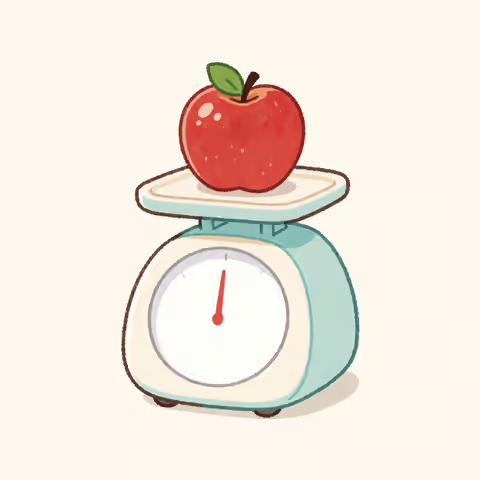
- CJK: 克 = 克. JP グラム. Canto 克 hak1. Dictionary dump also has Croatia, “overcome,” a Tibetan area unit. Today is the kitchen scale. 千克 = kg; 克服 is a different word.
- Fun fact: 三百克. One apple, 300 g. If you flash 克罗地亚 or 克服, you missed the scale.
- Memorize: Scale under an apple, 300: 这个苹果有三百克.
- Study tip: 克. Today is grams. Don’t answer 公斤 or 克服.
13. 听众(tīngzhòng)
audience; listeners · pendengar
Example: 今晚的听众特别多,座位都坐满了。 — There were so many listeners tonight that all the seats were taken.
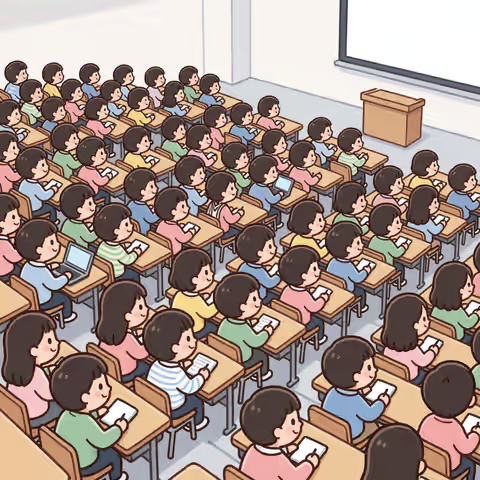
- CJK: 听 = 聽. 众 = 眾. JP 聴衆(ちょうしゅう). Canto 聽眾 ting1 zung3. Traditional 聽眾. 观众 watch a show; 听众 hear a talk / radio. Pair JP 歌 today if you picture a concert — still 听众 if they came to listen.
- Fun fact: 听众特别多,座位都坐满了. Lecture hall, not a 电影院 观众.
- Memorize: Hall, every seat taken, ears not eyes: 今晚的听众特别多.
- Study tip: 听众. Don’t answer 观众. Reading tīngzhòng.
14. 失去(shīqù)
to lose · kehilangan
Example: 毕业以后,他和同学失去了联系。 — After he graduated, he lost touch with his classmates.

- CJK: 失 = 失. 去 = 去. JP 失う. Canto 失去 sat1 heoi3. Resultative 去. 丢 is misplace a wallet; 失去 is lose a person, a chance, 联系. Pair JP 生まれる today — that card is a birth; this one is a lost thread.
- Fun fact: 失去了联系. The WeChat went quiet. 丢失钥匙 is the object; this card is the relationship.
- Memorize: Graduation, then a dead chat thread: 和同学失去了联系.
- Study tip: 失去. Don’t answer 丢. Today is lose contact.
15. 能否(néng fǒu)
whether or not; is it possible? · apakah bisa
Example: 老师,您能否再讲一下这道题? — Teacher, could you explain this question one more time?
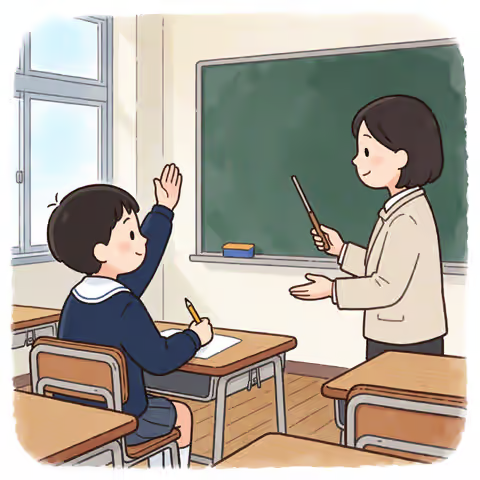
- CJK: 能 = 能. 否 = 否. JP できるかどうか. Canto 可唔可以. Formal written/polite. Spoken 能不能 / 可以吗. 否 is the classical “or not.”
- Fun fact: 您能否再讲一下. Raised hand, polite 您. 能不能再讲 is the same ask in a hoodie.
- Memorize: Hand up in class: 您能否再讲一下这道题?
- Study tip: 能否. Don’t answer 能不能 unless printed. Formal.
16. 景区(jǐngqū)
scenic area · kawasan wisata
Example: 景区里人很多。 — There are a lot of people in the scenic area.
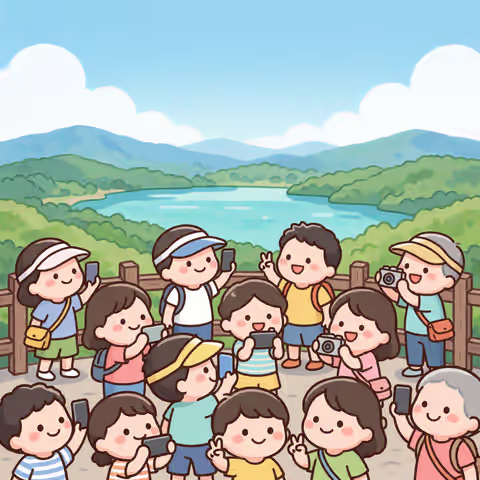
- CJK: 景 = 景. 区 = 區. JP 観光地. Canto 景區 ging2 keoi1. Traditional 景區. Same 景 as 美景. 景区 is the zone with tickets and crowds; 美景 is what you came to see. Pair Canto 遠 if the park is far.
- Fun fact: 景区里人很多. Turnstiles, selfie sticks. 公园 can be free; 景区 is usually a named tourist area.
- Memorize: Gate, crowd, cameras: 景区里人很多.
- Study tip: 景区. Don’t answer 公园. Pair 美景.
17. 将要(jiāngyào)
will; to be going to · akan
Example: 会议将要开始了。 — The meeting is about to start.

- CJK: 将 = 將. 要 = 要. JP まもなく. Canto 就快 / 將會. Traditional 將要. Formal future; spoken 就要 / 快要. 将 is the classical “about to.”
- Fun fact: 会议将要开始了. Chairs filling, not a distant 会. 将要 is one notch more written than 就要.
- Memorize: Meeting-room clock, about to start: 会议将要开始了.
- Study tip: 将要. Don’t answer 就要 unless printed. Pair Canto 放工 (that card is leaving work; this is a meeting starting).
18. 树林(shùlín)
woods; grove; forest · hutan; rimba
Example: 今天下午我们在树林里走了很久。 — This afternoon we walked in the woods for a long time.

- CJK: 树 = 樹. 林 = 林. JP 林 / 森. Canto 樹林 syu6 lam4. Traditional 樹林. 林 is trees in a group; JP 森 today is the thick forest. Two 木 = 林, three 木 = 森. Same-day JP 森を歩く is the cousin sentence.
- Fun fact: 在树林里走了很久. Afternoon grove, not a 森林 wilderness. Dictionary also lists Shulin in New Taipei — ignore the place name.
- Memorize: Afternoon path under trees: 在树林里走了很久.
- Study tip: 树林. Don’t answer 森林. Pair JP 森.
19. 表(biǎo)
meter; gauge · meteran
Example: 墙上的那个表是看家里用了多少电的。 — That meter on the wall shows how much electricity we use at home.
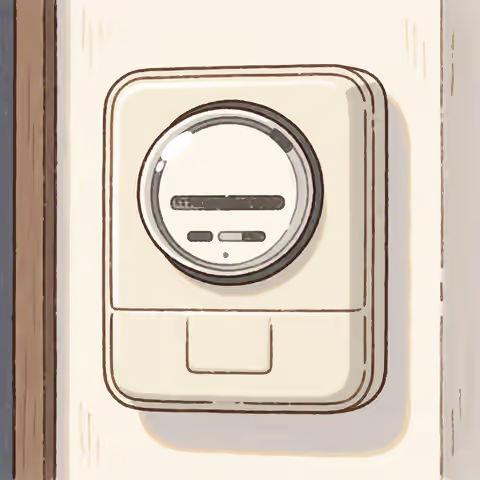
- CJK: 表 = 表. JP メーター / 表. Canto 錶 biu1 (watch) vs 表 biu2 (form / meter). Pair 表格 earlier. Dictionary also has wristwatch, form, “to show.” Today is the electricity meter.
- Fun fact: 墙上的那个表…用了多少电. Wall box, spinning dial. 手表 is the wrist; 表格 was the paper at #1.
- Memorize: Wall meter, electricity numbers: 墙上的那个表是看用电的.
- Study tip: 表. Today is the meter. Don’t answer 手表 or 表格.
20. 夜(yè)
night · malam
Example: 我在朋友家住了一夜,第二天早上才走。 — I stayed one night at my friend's place and only left the next morning.

- CJK: 夜 = 夜. JP 夜(よる / よ). Canto 夜晚 je6 maan5. Classifier-ish 一夜 = one night’s stay (a bit literary); spoken 一晚. Pair 早晨 the park walk.
- Fun fact: 住了一夜,第二天早上才走. Sleepover, then morning exit. 夜里 is “in the night”; the card is the noun 夜.
- Memorize: Guest futon, leave after breakfast: 住了一夜,第二天早上才走.
- Study tip: 夜. Don’t answer 晚上 unless printed. Pair 早晨.