Anki session
Cantonese 2
廣東話
- New
- 20
- Learn
- 0
- Review
- 83
Session: 20 new remaining of the 20/day cap · 0 learning waiting · 83 reviews due.
Click Cantonese::Level2, not Level1. Level1 is review-only now. No learning queue today, so new cards mix into the 83 reviews.
This is a third sheet for today (HSK is 2026-09-21.md, Japanese is 2026-09-21-japanese-level2.md).
Session plan
- Eighty-three reviews. Clear those as they come; the new twenty mix in.
- Same-day Japanese: 對方 respect the other side’s 意見 vs JP 意見 “I want yours.” Yesterday JP 借りる vs 借 a book today.
- HSK 皮鞋 is the leather pair; here 皮 is the banana peel you throw away.
- 冇 pair: 冇嘢 (got anything / nothing) and 冇用 (useless).
- Sense traps: 差唔多 in this sentence is similar, not “almost finished”; 皮 is peel, not 一皮 = $10k; 響 is the phone ringing, not locative 響度; 業 is bound in 科技業; 化 is the -ization in 暖化; 睇到 is the result “saw,” not bare 睇.
- Glue / move: 依家 stand united, 唔肯 won’t leave, 行開 don’t block.
- Talk: 解釋 please explain, 傾計 cha chaan teng (same sentence as Sep 18 if that card is still new), 認識 at the gathering.
1. 依家(ji1 gaa1)
now · sekarang
Example: 依家我哋一定要團結。 — Now we must stand united.

- CJK: 依 = 依. 家 = 家. Mandarin 现在. JP 今. Also written 而家 ji4 gaa1. Not 家 the household. Same slot as 而家 / 而今.
- Fun fact: 依家…要團結. This moment, a rally line. 而家 is the same word with another spelling; HSK 现在 is Mandarin.
- Memorize: Group, now, lock arms: 依家我哋一定要團結.
- Study tip: 依家. Don’t answer 现在. Reading ji1 gaa1. Also 而家.
2. 冇嘢(mou5 je5)
nothing; have nothing · tidak ada apa-apa; tidak punya apa-apa
Example: 你聽日有冇嘢想畀我? — Do you have anything you want to give me tomorrow?

- CJK: 冇 = Canto mou5 (Mandarin 没). 嘢 = Canto je5 (东西). Mandarin 没什么 / 有没有东西. JP 何もない. Pattern 有冇嘢 = got anything?
- Fun fact: 有冇嘢想畀我 is the question shape. Bare 冇嘢 = “it’s nothing / I’m fine.” 冇 is not 沒有 in Canto speech.
- Memorize: Empty hands, tomorrow?: 你聽日有冇嘢想畀我?
- Study tip: 冇嘢. Don’t answer 冇 or 東西 alone. Pair 冇用.
3. 唔肯(m4 hang2)
refuse to; won't · tidak mau; menolak
Example: 佢死都唔肯走。 — He absolutely refuses to leave.

- CJK: 唔 = Canto not (m4). 肯 = 肯 kěn. Mandarin 不肯. JP したがらない. 肯 = willing; 唔肯 = won’t budge. Not 唔想 (don’t want) which is softer.
- Fun fact: 死都唔肯走 = even dying, won’t go. Stubborn refusal, not a polite 唔想去.
- Memorize: Planted feet at the door: 佢死都唔肯走.
- Study tip: 唔肯. Don’t answer 唔想. Reading m4 hang2.
4. 行開(haang4 hoi1)
go away; step aside · minggir; menjauh
Example: 行開啲,唔好擋住人。 — Step aside a bit, don't block people.
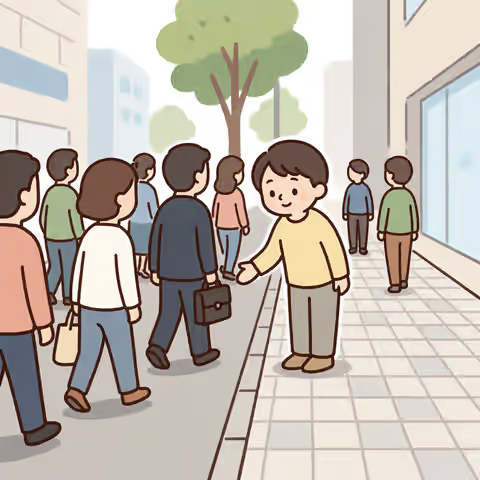
- CJK: 行 = 行 walk (haang4, not hang4 “row”). 開 = 开. Mandarin 走开 / 让一下. JP どいて. Directional 開 = away. Not 行埋 (come closer — Sep 20).
- Fun fact: 行開啲,唔好擋住人. Pavement squeeze. Yesterday 行埋 was the other direction (and a euphemism). Today is “move off.”
- Memorize: Side step, keep the path: 行開啲,唔好擋住人.
- Study tip: 行開. Don’t answer 行埋. Reading haang4 hoi1.
5. 業(jip6)
business; occupation; industry · industri; usaha; pekerjaan
Example: 大學畢業之後,佢入咗科技業。 — After graduating from university, he entered the tech industry.

- CJK: 業 = 业 yè. Mandarin 业 / 行业. JP 業(ぎょう). Bound: 科技業, 畢業, 職業. Same 业 as HSK 作业 / 专业. Not a verb you conjugate.
- Fun fact: 入咗科技業 = joined the industry. 畢業 is the same 業. Don’t flash 工作 as the whole card.
- Memorize: Graduation cap → tech office: 入咗科技業.
- Study tip: 業. Bound. Don’t answer 工作. Reading jip6.
6. 環境(waan4 ging2)
environment; surroundings · lingkungan; sekitar
Example: 保護環境係每個人嘅責任。 — Protecting the environment is everyone's responsibility.

- CJK: 環 = 环 huán. 境 = 境. Mandarin 环境. JP 環境(かんきょう). Traditional 環境. Same 境 as 边境. 環保 = environmental protection.
- Fun fact: 保護環境係責任. Poster green, not “the vibe of this café” (氣氛). 境 = the bounded scene.
- Memorize: Recycle bins, everyone: 保護環境係每個人嘅責任.
- Study tip: 環境. Don’t answer 氣氛. Reading waan4 ging2.
7. 差唔多(caa1 m4 do1)
similar; almost · hampir sama; serupa
Example: 你哋兩個性格差唔多。 — The two of you have similar personalities.

- CJK: 差 = 差. 唔 = not. 多 = 多. Mandarin 差不多. JP だいたい / 似ている. Dictionary “almost”; today is “alike.” 差少少 is “a bit off.”
- Fun fact: 性格差唔多 = two characters match, not “almost done.” Time 差唔多三點 is the other reading — not this sentence.
- Memorize: Two faces, same mood: 你哋兩個性格差唔多.
- Study tip: 差唔多. Today is similar. Don’t gloss as “almost finished.”
8. 解釋(gaai2 sik1)
to explain · menjelaskan
Example: 我唔係好明白,可唔可以解釋俾我聽? — I don't really understand, can you explain it to me?

- CJK: 解 = 解. 釋 = 释 / 釋. Mandarin 解释. JP 解釋 / 説明する. Traditional 解釋. Same 解 as 解決. Noun or verb.
- Fun fact: 解釋俾我聽. Unpack it for me. 講 is “tell”; 解釋 is why/how. Not 介紹 (introduce).
- Memorize: Confused face, “break it down”: 可唔可以解釋俾我聽?
- Study tip: 解釋. Don’t answer 講. Reading gaai2 sik1.
9. 皮(pei4)
skin; peel; (slang) $10k · kulit; sepuluh ribu dolar
Example: 香蕉皮要掉,唔好等人跣親。 — Throw away banana peels so no one slips.

- CJK: 皮 = 皮 pí. Mandarin 皮. JP 皮(かわ). Same 皮 as HSK 皮鞋 today and 皮肤 (Sep 16). HK slang 一皮 = $10,000 — not this sentence.
- Fun fact: 香蕉皮…跣親. Slapstick peel. HSK sheet is the shoes; here you bin the peel. Don’t flash 一皮 money.
- Memorize: Banana skin on the pavement, bin it: 香蕉皮要掉.
- Study tip: 皮. Today is peel. Don’t answer 皮鞋 (that’s HSK). Reading pei4.
10. 認識(jing6 sik1)
to know; to recognize · mengenal; kenal
Example: 我喺聚會度認識咗新朋友。 — I met new friends at the gathering.

- CJK: 認 = 认 rèn. 識 = 识 / 識. Mandarin 认识. JP 認識(にんしき). Traditional 認識. Same 识 as 知识. Canto 認識 = meet / make acquaintance, not “I know that fact” 知.
- Fun fact: 聚會度認識咗新朋友. First meeting. 識 is also “know how” (識講); the compound is the intro.
- Memorize: Party, handshake, new faces: 認識咗新朋友.
- Study tip: 認識. Don’t answer 知 or 識 alone. Reading jing6 sik1.
11. 傾計(king1 gai2)
to chat; to discuss · mengobrol; berbincang
Example: 放工之後,我哋好鍾意去茶餐廳傾計。 — After work, we really like to go to the cha chaan teng to chat.

- CJK: 傾 = 倾. 計 = 计. Mandarin 聊天. JP おしゃべり. Also written 傾偈. Same cha chaan teng sentence as Sep 18 #15 — leftover new if it wasn’t rated.
- Fun fact: 去茶餐廳傾計. Booth default. 討論 is a meeting; 解釋 today is “explain,” not chat.
- Memorize: Milk tea, booth, after work: 去茶餐廳傾計.
- Study tip: 傾計. Don’t answer 講 or 討論. Also 傾偈. Reading king1 gai2.
12. 變(bin3)
to change; to become · berubah; menjadi
Example: 搞咗一陣,變咗有畫面冇聲音。 — After a while, it changed to having video but no sound.

- CJK: 變 = 变 biàn. Mandarin 变. JP 変(へん) / 変わる. Traditional 變. Sep 17 變得 was the resultative cousin. Same 变 as 变化.
- Fun fact: 變咗有畫面冇聲音. The set glitched. 變 is the verb; 變得 + adjective was the earlier card.
- Memorize: TV, picture yes, mute: 變咗有畫面冇聲音.
- Study tip: 變. Don’t answer 變得 unless printed. Reading bin3.
13. 榮(wing4)
glory; honor · kemuliaan; kehormatan
Example: 佢為國家爭取咗好大榮譽。 — He brought great honor to the country.

- CJK: 榮 = 荣 róng. Mandarin 荣 / 荣誉. JP 栄(えい). Traditional 榮. Bound in 榮譽, 光榮. Shinjitai 栄. Same 荣 as 繁荣.
- Fun fact: 爭取咗好大榮譽. Medal for the country. You don’t say 好榮 as an adjective here; the compound is 榮譽.
- Memorize: Flag, medal, honour: 為國家爭取咗好大榮譽.
- Study tip: 榮. Bound in 榮譽. Don’t answer 光. Reading wing4.
14. 對方(deoi3 fong1)
the other party; counterpart · pihak lain; lawan
Example: 我哋要尊重對方嘅意見。 — We need to respect the other party's opinion.

- CJK: 對 = 对 duì. 方 = 方. Mandarin 对方. JP 相手 / 相手方. Traditional 對方. Same 对 as JP 対立 today (harsher). 意見 is on the Japanese sheet.
- Fun fact: 尊重對方嘅意見. Negotiation, not 敵人. JP 対立 is two firms at war; this is still talking.
- Memorize: Two chairs, listen across: 尊重對方嘅意見.
- Study tip: 對方. Don’t answer 敵人. Reading deoi3 fong1. JP 意見.
15. 冇用(mou5 jung6)
useless; no use · tidak berguna
Example: 呢樣嘢冇用,唔好再試。 — This thing is useless, don't try again.
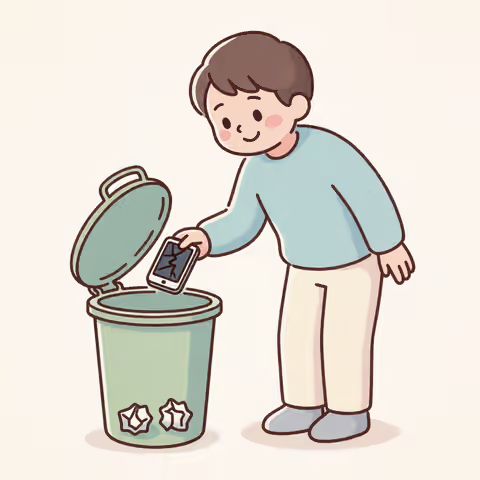
- CJK: 冇 = mou5. 用 = 用. Mandarin 没用. JP 役に立たない. Pair with 冇嘢. 有用 is the antonym.
- Fun fact: 呢樣嘢冇用,唔好再試. Dead gadget. 冇嘢 is “nothing (to give)”; 冇用 is “no function.”
- Memorize: Bin the gadget: 呢樣嘢冇用,唔好再試.
- Study tip: 冇用. Don’t answer 冇嘢. Pair 有用.
16. 睇到(tai2 dou2)
see; have seen · melihat; sudah melihat
Example: 今朝我睇到佢喺公園跑步。 — I saw him running in the park this morning.

- CJK: 睇 = Canto tai2 (看). 到 = resultative dou2. Mandarin 看到. JP 見かける / 見えた. Bare 睇 is “watch/look”; 睇到 is the result (caught sight of).
- Fun fact: 睇到佢喺公園跑步. You spotted him. Yesterday 電視 used 睇 as “watch TV”; this 到 means the seeing succeeded.
- Memorize: Morning park, you notice him jog: 睇到佢喺公園跑步.
- Study tip: 睇到. Don’t answer 睇. Resultative. Reading tai2 dou2.
17. 化(faa3)
to become; -ization · menjadi; -isasi
Example: 全球暖化好嚴重。 — Global warming is very serious.

- CJK: 化 = 化 huà. Mandarin 化 / 暖化. JP 化(か) / ~化. Bound suffix: 暖化, 現代化, 變化. Same-day 環境 is the topic this word sits on.
- Fun fact: 全球暖化. The 化 turns 暖 into “warming.” Not the verb 變 alone (that’s #12).
- Memorize: Globe, heat arrows: 全球暖化好嚴重.
- Study tip: 化. Bound. Don’t answer 變. Reading faa3. Pair 環境.
18. 借(ze3)
to borrow; to lend · meminjam; meminjamkan
Example: 可唔可以借本書畀我? — Can you lend me a book?

- CJK: 借 = 借 jiè. Mandarin 借. JP 借りる / 貸す. Yesterday JP 借りる was a video; Canto 借 covers borrow and lend (direction from 畀我).
- Fun fact: 借本書畀我 = lend-to-me. Mandarin needs 借给我; Canto 畀 marks the recipient. JP splits 借りる / 貸す.
- Memorize: Pass a book across: 可唔可以借本書畀我?
- Study tip: 借. Don’t answer 還. Yesterday JP was 借りる. Reading ze3.
19. 查(caa4)
to check; to look up · memeriksa; mengecek
Example: 今晚有飛馬德里嘅機咩?——可能有,等我查吓先。 — Is there a flight to Madrid tonight? — Maybe, let me check.

- CJK: 查 = 查 chá. Mandarin 查. JP 調べる. Same 查 as 检查 / 调查. Not 差 in 差唔多 (#7) — different character.
- Fun fact: 等我查吓先. Phone, flight board. 檢查 is a physical inspect; 查 here is look it up.
- Memorize: Phone, Madrid flight search: 等我查吓先.
- Study tip: 查. Don’t answer 檢查 or 差. Reading caa4.
20. 響(hoeng2)
to make a sound; to ring · berbunyi; berdering
Example: 電話響咗好耐都冇人聽。 — The phone rang for a long time but nobody answered.
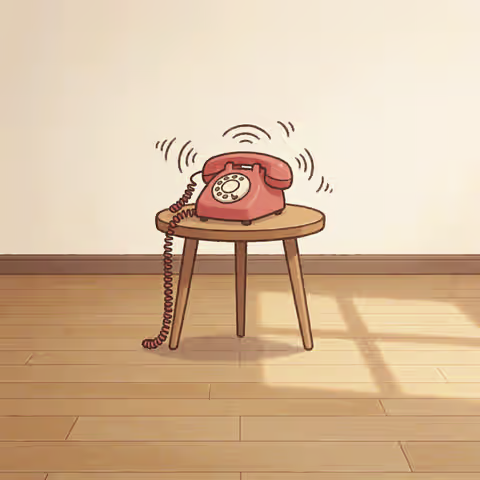
- CJK: 響 = 响 xiǎng. Mandarin 响. JP 響(ひび)く / 鳴る. Traditional 響. Locative 響度 (“at that place”) is another Canto use — today is the ringtone.
- Fun fact: 電話響咗好耐. Unanswered ring. Don’t flash 響度 the preposition.
- Memorize: Phone shaking, empty room: 電話響咗好耐都冇人聽.
- Study tip: 響. Today is “ring.” Don’t answer 響度. Reading hoeng2.