Anki session
Japanese 2
日本語
- New
- 20
- Learn
- 0
- Review
- 109
Session: 20 new remaining of the 20/day cap · 0 learning waiting · 109 reviews due.
Click Japanese::Level2, not Level1. Level1 is review-only now. Yesterday’s new cards are in the 109 reviews; today’s twenty still mix in.
This is a second sheet for today (HSK is 2026-09-20.md). Do not mix the decks in one Anki session.
Session plan
- One hundred nine reviews already — clear those as they come, then the new pile.
- Station cluster: 並ぶ here, ホーム the train is coming. False friend: ホーム is the platform, not home.
- Door pair with HSK: 入学 US college in September vs HSK 入 into the class last year.
- Same-day Canto: 自由 here is free time; Canto 自由 is liberty in the city. Don’t mash the sentences.
- People: 兄弟 three siblings, 年寄り the village, 皆さん an announcement, グループ students in the shop, 家族 five people, 選手 pro soccer, 代表 class rep.
- Body / school / paper: 浅い this river, 文化 this country, 運動 he should do more, 泣く little sister, 借りる a video from him, 向く this way, やっと work finally done, 増加 island population, 評価 his rating went up.
1. 並ぶ(ならぶ)
line up, be parallel · berbaris, sejajar
Example: ここに並んでください。 — Please line up here.
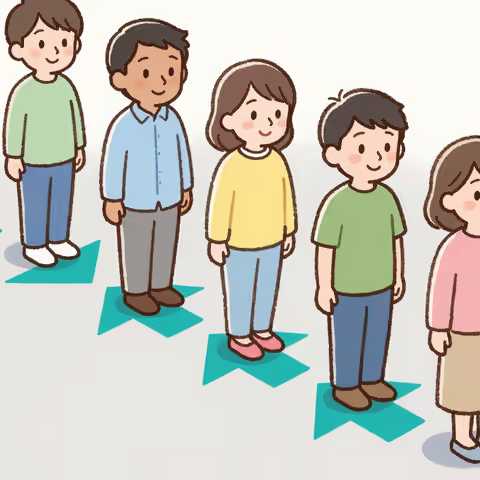
- CJK: 並 = 并 / 並 bìng. Mandarin 排队. Canto 排隊 paai4 deoi2. Intransitive: people 並ぶ; you 並べる objects. Same 並 as 並木.
- Fun fact: ここに並んでください at the mark on the floor. 並ぶ also “stand abreast / be on a par.” Not 並べる the books.
- Memorize: Floor arrows, a queue: ここに並んでください.
- Study tip: 並ぶ. Don’t answer 並べる. Reading ならぶ. Pair with ホーム.
2. ホーム(ホーム)
platform · peron
Example: もうすぐこのホームに電車が来ます。 — The train will arrive on this platform soon.
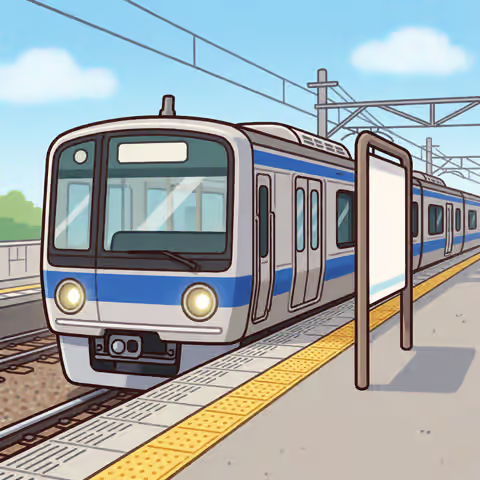
- CJK: Katakana from English platform (via プラットホーム, clipped). Not 家庭 / home. Mandarin 站台. Canto 月台 jyut6 toi4.
- Fun fact: このホームに電車が来る. Railway platform. 家 is house; ホームステイ is the other English home. Yesterday 駅員 asked at the gate; today you wait on the ホーム.
- Memorize: Yellow line, train incoming: このホームに電車が来ます.
- Study tip: ホーム. Don’t answer 家. False friend.
3. やっと(やっと)
at last, finally · akhirnya
Example: やっと仕事が終わりました。 — Finally, I finished my work.

- CJK: Adverb, no kanji on this card. Mandarin 终于. Canto 終於 zung1 jyu1. Relief after waiting — not ついに (often dramatic) or ようやく.
- Fun fact: やっと仕事が終わりました = the slog ended. やっと can also mean “barely” (やっと間に合った). Today is the relief reading.
- Memorize: Closed laptop, exhale: やっと仕事が終わりました.
- Study tip: やっと. Don’t answer ついに. Adverb.
4. 兄弟(きょうだい)
sibling · saudara kandung
Example: 彼は3人兄弟です。 — He has two siblings.
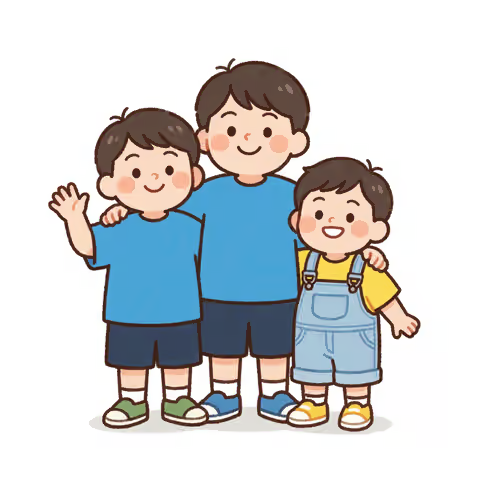
- CJK: 兄 = 兄 xiōng. 弟 = 弟 dì. Mandarin 兄弟. Canto 兄弟 hing1 dai6. Reading きょうだい, not けいてい. Covers brothers and the sibling set; 3人兄弟 = three kids in the family.
- Fun fact: 3人兄弟です → English “two siblings” is the other two. 姉妹 is sisters only. 兄 / 弟 alone are older/younger brother.
- Memorize: Three kids in a row: 彼は3人兄弟です.
- Study tip: 兄弟. Reading きょうだい. Don’t answer 兄.
5. 年寄り(としより)
old person, elderly · orang tua, lansia
Example: あの村にはお年寄りがたくさん住んでいます。 — A lot of elderly people live in that village.
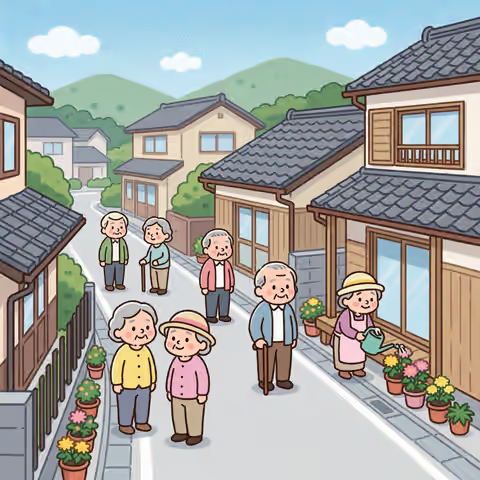
- CJK: 年 = 年. 寄 = 寄 jì. Mandarin 老人. Canto 老人家 lou5 jan4 gaa1. Reading としより (year-lean). Polite お年寄り. Not 年を取る the verb.
- Fun fact: お年寄りがたくさん住んでいる. The village demographic. 老人 is blunter; 高齢者 is the official word. 寄る = draw near (to old age).
- Memorize: Village street, many elders: お年寄りがたくさん住んでいます.
- Study tip: 年寄り. Don’t answer 老人 unless printed. Reading としより.
6. グループ(グループ)
group · kelompok; grup
Example: 店に学生のグループが来た。 — A group of students came to the shop.
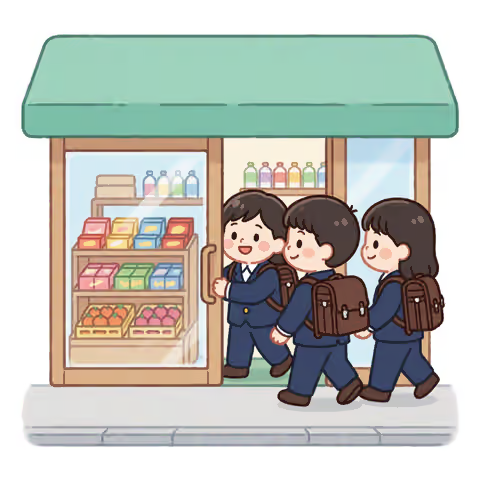
- CJK: Katakana from English group. Mandarin 组 / 团体. Canto 組 zo2 / 團體. Not 群れる. A set of people acting together.
- Fun fact: 学生のグループが来た = a pack of students, not one class クラス. グループワーク is group work. Same-day 皆さん is how you address them.
- Memorize: Shop door, student pack: 店に学生のグループが来た.
- Study tip: グループ. Don’t answer クラス.
7. 皆さん(みなさん)
everybody, ladies and gentlemen · semuanya, hadirin
Example: 皆さんにお話があります。 — I have something to say to everybody.

- CJK: 皆 = 皆 jiē. Mandarin 大家. Canto 各位 gok3 wai2 / 大家. Reading みなさん. みんな is casual; 皆さん is the polite address.
- Fun fact: 皆さんにお話があります = announcement voice. に marks the audience. Not すべて (all of it).
- Memorize: Mic, polite bow: 皆さんにお話があります.
- Study tip: 皆さん. Don’t answer みんな unless printed. Reading みなさん.
8. 浅い(あさい)
shallow, superficial · dangkal
Example: この川は浅いです。 — This river is shallow.
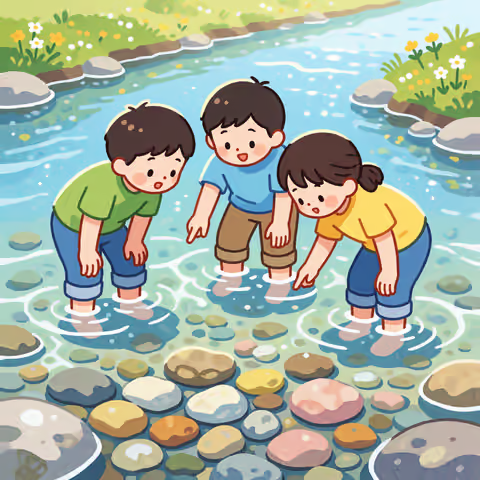
- CJK: 浅 = 浅 / 淺 qiǎn. Mandarin 浅. Canto 淺 cin2. Shinjitai 浅. Antonym 深い. Also 経験が浅い = green, not deep water only.
- Fun fact: この川は浅い. You can see the stones. 浅い眠り is a light sleep. Don’t answer 低い (low height).
- Memorize: Kids standing in the river: この川は浅いです.
- Study tip: 浅い. Don’t answer 低い. Reading あさい. Pair 深い.
9. 文化(ぶんか)
culture · budaya
Example: 私はこの国の文化を勉強しています。 — I'm studying this country's culture.

- CJK: 文 = 文 wén. 化 = 化. Mandarin 文化. Canto 文化 man4 faa3. Same 文 as HSK 文章. Suru-noun 文化化する is rare; here it’s the noun.
- Fun fact: この国の文化を勉強. Customs, arts, ways — not 文学 (literature) alone. 文化交流 is the exchange compound.
- Memorize: Notebook, this country’s ways: この国の文化を勉強しています.
- Study tip: 文化. Don’t answer 文学. Reading ぶんか.
10. 運動(うんどう)
movement, exercise · olahraga, gerakan
Example: 彼はもっと運動した方がいい。 — He should exercise more.

- CJK: 運 = 运 yùn. 動 = 动. Mandarin 运动. Canto 運動 wan6 dung6. Traditional 運動. Same 運 as 運転; 動 as 動物. Today is physical exercise, not a political 運動.
- Fun fact: もっと運動した方がいい. Doctor’s advice. スポーツ is sports; 運動 is the broader “move your body.” した方がいい = you’d better.
- Memorize: Couch → stretch: もっと運動した方がいい.
- Study tip: 運動. Don’t answer スポーツ unless printed. Reading うんどう.
11. 選手(せんしゅ)
representative athlete · atlet, pemain
Example: 彼はプロのサッカー選手だ。 — He's a professional soccer player.

- CJK: 選 = 选 xuǎn. 手 = 手. Mandarin 选手. Canto 選手 syun2 sau2. Traditional 選手. 手 = person skilled at X (運転手, 歌手). Not 選手権 (championship).
- Fun fact: プロのサッカー選手. The person on the pitch. 選手団 is the team delegation. Same-day 代表 is the class voice, not the athlete.
- Memorize: Kit, soccer ball: プロのサッカー選手だ.
- Study tip: 選手. Don’t answer 選手権. Reading せんしゅ.
12. 入学(にゅうがく)
enter a school, matriculate · masuk sekolah
Example: 妹は九月にアメリカの大学に入学します。 — My little sister's entering college in the United States in September.

- CJK: 入 = 入. 学 = 学 / 學. Mandarin 入学. Canto 入學 jap6 hok6. Same 入 as HSK today 入. Suru-noun: 入学する. Antonym 退学 / 卒業.
- Fun fact: 九月にアメリカの大学に入学. US semester clock. 入る is generic enter; 入学 is enrolment. Pair with HSK 入了我们班.
- Memorize: September, campus gate, little sister: 九月に大学に入学します.
- Study tip: 入学. Don’t answer 入る. Reading にゅうがく.
13. 家族(かぞく)
family, household · keluarga
Example: うちは五人家族です。 — We're a family of five.
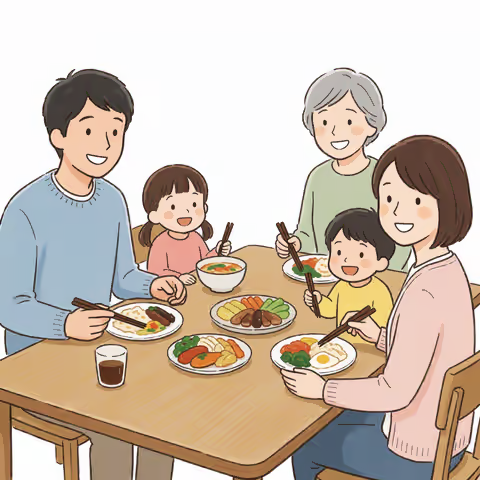
- CJK: 家 = 家. 族 = 族 zú. Mandarin 家庭 / 家族. Canto 家族 gaa1 zuk6. Counter 人. うちは…家族 is the household census line. Same-day 兄弟 are inside it.
- Fun fact: 五人家族 = five under one roof, not 家庭 the abstract “home life.” 親族 is relatives more widely.
- Memorize: Five silhouettes at the table: うちは五人家族です.
- Study tip: 家族. Don’t answer 家庭 unless printed. Reading かぞく.
14. 代表(だいひょう)
representative · perwakilan
Example: 彼がクラスの代表だ。 — He's the class representative.
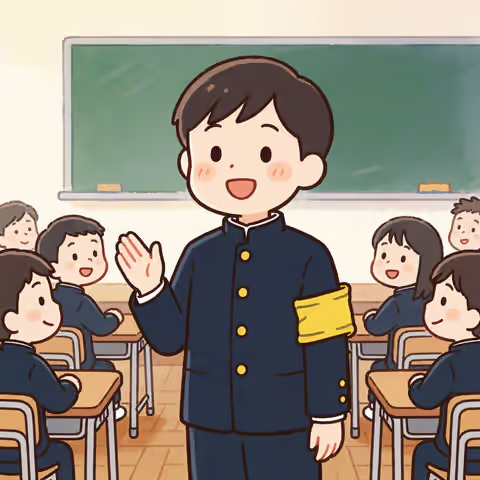
- CJK: 代 = 代 dài. 表 = 表. Mandarin 代表. Canto 代表 doi6 biu2. Suru-noun: 代表する. Same 代 as 現代; 表 as 表情. Not 選手 (athlete).
- Fun fact: クラスの代表 = class rep, the spokesperson. 代表的 is “typical.” Can also mean “on behalf of.”
- Memorize: Class badge, speaks for them: 彼がクラスの代表だ.
- Study tip: 代表. Don’t answer 選手. Reading だいひょう.
15. 泣く(なく)
cry, weep · menangis
Example: 妹はすぐに泣く。 — My little sister cries easily.

- CJK: 泣 = 泣 qì. Mandarin 哭. Canto 喊 haam3 / 哭. Reading なく. 鳴く is birds/animals; 泣く is humans weep. Same 妹 as the 入学 sentence.
- Fun fact: すぐに泣く = tears at a small trigger. 泣き虫 is a crybaby. Don’t write 鳴く for a person.
- Memorize: Little sister, instant tears: 妹はすぐに泣く.
- Study tip: 泣く. Don’t answer 鳴く. Reading なく.
16. 借りる(かりる)
borrow · meminjam
Example: 彼にビデオを借りました。 — I borrowed a video from him.

- CJK: 借 = 借 jiè. Mandarin 借. Canto 借 ze3. Ichidan. Source に = from; object を. Antonym 貸す (lend).
- Fun fact: 彼にビデオを借りた. You received it. 彼に貸した would mean you lent to him. 借る is not a word — 借りる.
- Memorize: Handing over a tape: 彼にビデオを借りました.
- Study tip: 借りる. Don’t answer 貸す. に = from. Reading かりる.
17. 向く(むく)
turn, face, look · menghadap, menoleh
Example: こっちを向いてください。 — Please turn this way.

- CJK: 向 = 向 xiàng. Mandarin 向 / 面向. Canto 向 hoeng3. Godan. を向く = face that direction. Also 向き = suitability (later). Not 向かう (head toward).
- Fun fact: こっちを向いて = photographer / teacher. 向ける is the transitive “turn something.” Today is intransitive 向く.
- Memorize: Camera, turn your face: こっちを向いてください.
- Study tip: 向く. Don’t answer 向かう. Reading むく.
18. 自由(じゆう)
freedom · bebas, kebebasan
Example: 今日は自由な時間が多い。 — I have a lot of free time today.

- CJK: 自 = 自. 由 = 由. Mandarin 自由. Canto 自由 zi6 jau4 — same word on the Canto sheet today, but that sentence is liberty in the city. Here 自由な時間 = unscheduled time. Same 由 as HSK 由.
- Fun fact: 自由な時間が多い. Diary freedom, not a protest. 自由に = as you like. Don’t import the Canto political sentence.
- Memorize: Empty calendar today: 今日は自由な時間が多い.
- Study tip: 自由. Today is free time. Reading じゆう. Canto sheet is liberty.
19. 増加(ぞうか)
increase, gain · peningkatan, pertambahan
Example: 島の人口は年々増加しています。 — The population of the island increases every year.

- CJK: 増 = 增 zēng. 加 = 加. Mandarin 增加. Canto 增加 zang1 gaa1. Shinjitai 増 ← 增. Suru-noun. Antonym 減少. 増える is the intransitive verb.
- Fun fact: 人口は年々増加している. Graph going up. 増加する is the formal noun-verb; 増える is everyday.
- Memorize: Island, population bars rising: 人口は年々増加しています.
- Study tip: 増加. Don’t answer 増える unless printed. 増 = 增. Reading ぞうか.
20. 評価(ひょうか)
evaluation, appraisal · penilaian, evaluasi
Example: 最近、彼の評価が上がった。 — He's been receiving more recognition lately.

- CJK: 評 = 评 píng. 価 = 价 / 價. Mandarin 评价. Canto 評價 ping4 gaa3. Traditional 評價. 価 is the JP simplify of 價 (same family as 価/権/広). Suru-noun 評価する.
- Fun fact: 評価が上がった = his standing went up, not a school 成績. 高い評価 = high praise. 価 ≠ 値 (ねだん) — different card.
- Memorize: Thumbs-up chart next to him: 彼の評価が上がった.
- Study tip: 評価. 価 = 价/價. Don’t answer 値段. Reading ひょうか.