Anki session
Cantonese 2
廣東話
- New
- 20
- Learn
- 0
- Review
- 15
Session: 20 new remaining of the 20/day cap · 0 learning waiting · 15 reviews due.
Click Cantonese::Level2, not Level1. Level1 is review-only now. No learning queue, so new cards interleave with the 15 reviews.
This is a third sheet for today (HSK is 2026-09-10.md, Japanese is 2026-09-10-japanese-level1.md).
Session plan
- 仲 pile: 仲好 (even more) and 還 (written “still”). Spoken “still” is often 仲; the 還 sentence already has 仲未 in it.
- 同一 ↔ Japanese 同じ this morning. 几 is 幾點; the card writes simplified 几.
- 座 today is blocks of a building, not a chair. 所 in the example is 所講 (“what he says”), not a building classifier.
- 處 on this note is 處男 in a coming-of-age story. Everyday 處 is place/department.
1. 仲好(zung6 hou2)
even better; even more · bahkan lebih baik
Example: 不過佢仲好紅。 — But he's even more popular.

- CJK: 仲 = Canto “still / even more,” not Mandarin 仲仲. 好 = hou2. Mandarin 更好 / 更. JP もっと.
- Fun fact: 仲 + adj = even more. 仲好紅 = even more popular (紅 as in fame). Not 仲 = cousin 表兄弟.
- Memorize: Crowd around a celebrity, even bigger than last time: 仲好紅.
- Study tip: 仲好 + adj. Don’t answer 更好 as Mandarin, and don’t answer 仲 as “second.”
2. 二(ji6)
two · dua
Example: 我有二隻貓。 — I have two cats.
- CJK: 二 = 二 èr. JP 二(に). Canto ji6. Measure 隻 for animals. Mandarin would often say 两只猫; Canto is happy with 二隻.
- Fun fact: 兩 loeng5 is the other “two.” This card is the numeral 二. Cats take 隻.
- Memorize: Two cats: 二隻貓.
- Study tip: 二. Don’t answer 兩 unless that’s the card.
3. 人生(jan4 sang1)
life · kehidupan
Example: 人生有起有落,要學識面對。 — Life has ups and downs; you need to learn how to face them.

- CJK: Same 人生. JP 人生(じんせい). Mandarin 人生. 生 = sang1 here (life), not 生疏.
- Fun fact: 有起有落. 學識 = learn to (not 知識 the noun). Big-picture 人生, not 生活 the daily grind.
- Memorize: Path over a hill and into a dip: 人生有起有落.
- Study tip: 人生. Don’t answer 生活.
4. 幾十(gei2 sap6)
dozens of; scores of · puluhan
Example: 玫瑰一大把幾十支都只賣二十五蚊。 — A big bunch of roses, dozens of stems, only sold for twenty-five dollars.

- CJK: 幾 = 几 / 幾. 十 = 十. Mandarin 几十. JP 何十. Same 几 as card 18, here “several tens.”
- Fun fact: 幾十支 = dozens of stems. 蚊 = Hong Kong dollar. Cheap roses is the hook, not a math 十.
- Memorize: Huge bunch of roses, tiny price tag vibe: 幾十支.
- Study tip: 幾十. Don’t answer 十 or 很多.
5. 澳門(ou3 mun4)
Macau · Makau
Example: 週末我哷計劃去澳門玩。 — We're planning to go to Macau for the weekend.

- CJK: 澳 = 澳 ào. 門 = 门. JP マカオ. Mandarin 澳门. 門 is the “gate” in the place name, same 门 as HSK 上门 yesterday.
- Fun fact: Weekend 去澳門玩. 澳 as in 澳洲 is a different 澳-word; here it’s the SAR.
- Memorize: Ferry toward the ruins/skyline: 去澳門玩.
- Study tip: 澳門. Don’t answer 香港 or 深圳.
6. 一早(jat1 zou2)
from the start; earlier on · dari awal
Example: 我一早就話過你唔好信佢。 — I told you from the beginning not to trust him.
- CJK: 一 = 一. 早 = 早. Mandarin 早就. JP 最初から. Not “one morning” as the main sense here.
- Fun fact: 一早就 + verb = I already / from the start did it. Ties to 原諒 later (trust, then forgive).
- Memorize: Finger wag from scene one: 一早就話過.
- Study tip: 一早. Don’t answer 早晨 (good morning).
7. 家(gaa1)
home; family · rumah; keluarga
Example: 我哋一齊返屋企啦,家啦。 — Let's go home together, it's home time.
- CJK: 家 = 家 jiā. JP 家(いえ / うち). Canto spoken home is often 屋企; 家啦 here is the “home time” call.
- Fun fact: 返屋企 is the verb phrase. 家啦 = come on, home. Don’t force 家 as Mandarin 回家 only.
- Memorize: Family walking toward the door: 返屋企,家啦.
- Study tip: 家 / 屋企. Don’t answer 家庭 unless that’s the card.
8. 之間(zi1 gaan1)
between · antara
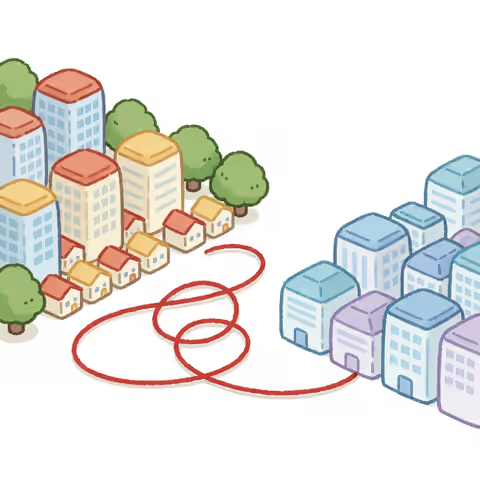
Example: 香港同中國之間嘅關係越嚟越複雜。 — The relationship between Hong Kong and China is getting more complicated.
- CJK: Same 之間 / 之间. JP の間. Mandarin 之间. 同 = Canto “and / with.”
- Fun fact: A同B之間. 越嚟越 = more and more. Politics sentence; the grammar is the 之間 sandwich.
- Memorize: Two places with a tangled string in the middle: 之間嘅關係.
- Study tip: 之間. Don’t answer 中間 unless that’s the card.
9. 親戚(can1 cik1)
relatives · kerabat
Example: 放假時我哻親戚一齊食飯。 — During holidays I eat with my relatives.
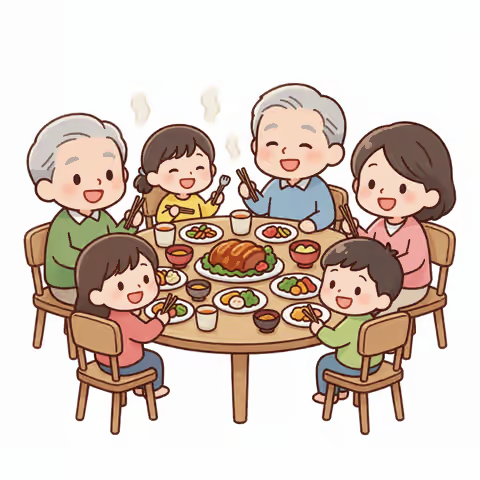
- CJK: 親 = 亲 qīn. 戚 = 戚 qī. JP 親戚(しんせき). Mandarin 亲戚. Same 亲 as 亲爱.
- Fun fact: Holiday 一齊食飯 with 親戚. Not 朋友. Ties to HSK 聚餐 this morning — different language, same table.
- Memorize: Holiday round table of relatives: 親戚一齊食飯.
- Study tip: 親戚. Don’t answer 朋友 or 家人 unless that’s the card.
10. 一世(jat1 sai3)
a lifetime · seumur hidup
Example: 我會記住你一世。 — I'll remember you for a lifetime.
- CJK: 一 = 一. 世 = 世 shì. JP 一生. Mandarin 一辈子. 世 = generation / world.
- Fun fact: Duration 一世, not 世界. 記住…一世.
- Memorize: One long timeline, one face kept: 記住你一世.
- Study tip: 一世. Don’t answer 世界.
11. 同一(tung4 jat1)
the same; identical · sama; identik
Example: 我哋著咗同一款衫。 — We wore the same style of shirt.
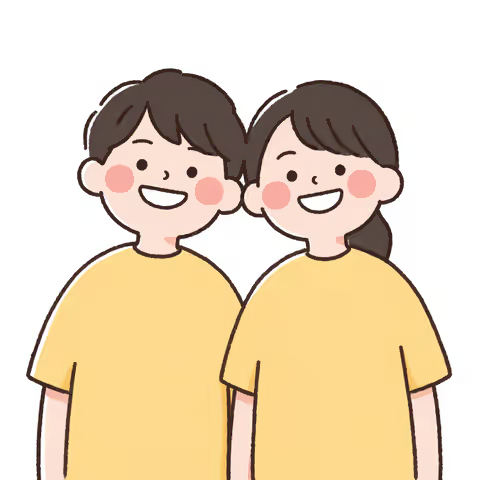
- CJK: Same 同一. JP 同じ is on today’s Japanese sheet. Mandarin 同一 / 同样. 著 = wear (Canto zyu3).
- Fun fact: 同一款衫. 款 = style. 同 is also “and”; 同一 is “one and the same.”
- Memorize: Two people, same shirt: 同一款衫.
- Study tip: 同一. Don’t answer 一樣 only — wait for the audio.
12. 座(zo6)
block (of a building); seat; stand · blok; kursi
Example: 呢棟大廈有三十座。 — This building has thirty blocks.
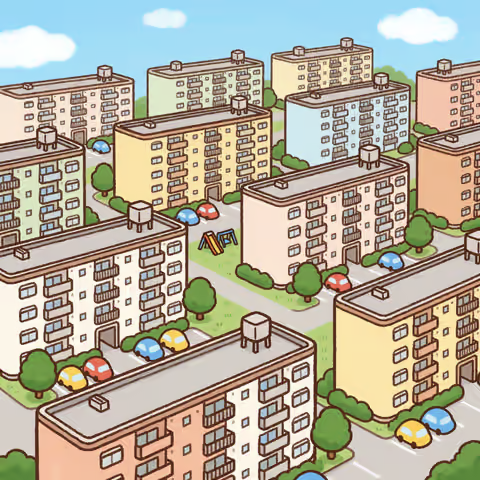
- CJK: 座 = 座 zuò. JP 座. Mandarin 座. HSK 座 as measure for mountains/buildings.
- Fun fact: Dictionary leads with “seat.” Today is 三十座 — blocks of an estate. 棟 is the building; 座 is the block count.
- Memorize: Estate map with lots of blocks: 三十座.
- Study tip: 座. Don’t answer 張椅子.
13. 習慣(zaap6 gwaan3)
habit; to be used to · kebiasaan
Example: 我已經習慣早起身。 — I've already gotten used to waking up early.
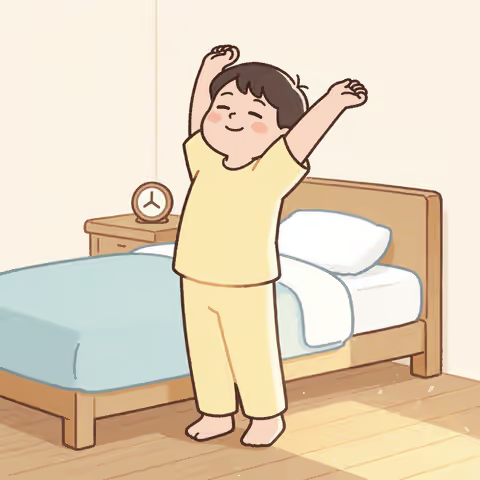
- CJK: Same 習慣 / 习惯. JP 習慣(しゅうかん). Mandarin 习惯. 起身 = get up.
- Fun fact: 習慣 can be noun or “gotten used to.” 已經習慣 + verb. HSK 习惯.
- Memorize: Alarm, stretch, already routine: 習慣早起身.
- Study tip: 習慣. Don’t answer 平時.
14. 的確(dik1 kok3)
indeed; really · memang; sungguh
Example: 的確好犀利,我唔服都唔得。 — Indeed impressive, I can't help but admit it.

- CJK: 的 = 的. 確 = 确 què. JP 確か. Mandarin 的确. 犀利 = sharp / impressive (Canto slang).
- Fun fact: Sentence-initial 的確. 唔服都唔得 = I have to concede. Not 的 as a particle.
- Memorize: Reluctant nod, hands up: 的確好犀利.
- Study tip: 的確. Don’t answer 真係 only unless that’s the card.
15. 處(cyu5)
virginity; a virgin (on this note) · keperawanan
Example: 呢個故事講一啲關於青春同處男嘅成長經歷。 — This story tells about a coming-of-age experience involving youth and virginity.

- CJK: 處 = 处 chù. JP 処. Everyday Canto/Mandarin 處 is place / department (處所, 好處, 處理). This note’s example is 處男 in a 成長 story.
- Fun fact: 處男 / 處女 is the compound. The single character on the card is easy to mis-answer as “place.” Keep it as the storyword, not a lecture.
- Memorize: Coming-of-age paperback on a desk: 青春同處男嘅故事.
- Study tip: If the sentence is 處所 / 好處, that’s the other 處. Today’s audio is the story one.
16. 原諒(jyun4 loeng6)
forgive · memaafkan
Example: 我原諒你今次,但係唔會再有下次。 — I'll forgive you this time, but there won't be a next time.
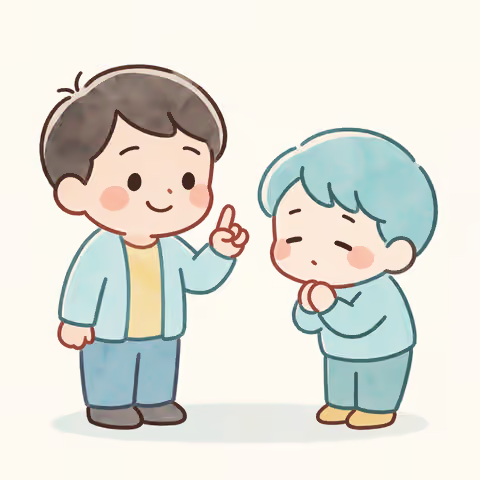
- CJK: Same 原諒 / 原谅. JP 許す. Mandarin 原谅. Ties to 一早 (don’t trust) — you already warned them.
- Fun fact: 原諒你今次. One-time. 下次 = next time (won’t exist).
- Memorize: One finger: this time only: 原諒你今次.
- Study tip: 原諒. Don’t answer 對不起 (that’s the apology, not the forgive).
17. 噉樣(gam2 joeng2)
this/that way · seperti ini
Example: 唔好成日噉樣懶惰啦。 — Don't be lazy like this all the time.
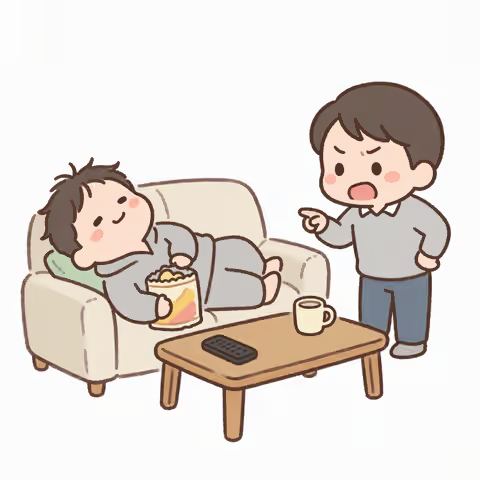
- CJK: 噉 = Canto “like this” (Mandarin 这样). 樣 = 样 yàng. JP こんなふうに. Not 咁 only — 噉樣 is the two-syllable.
- Fun fact: 成日噉樣 = always in this manner. 懶惰 is the behavior. 咁 / 噉 are cousins.
- Memorize: Sofa-lump, wagging finger: 唔好成日噉樣.
- Study tip: 噉樣. Don’t answer 這樣 as Mandarin.
18. 几(gei2)
how many; what (time) · berapa
Example: 你幾點先返到屋企? — What time will you get home?
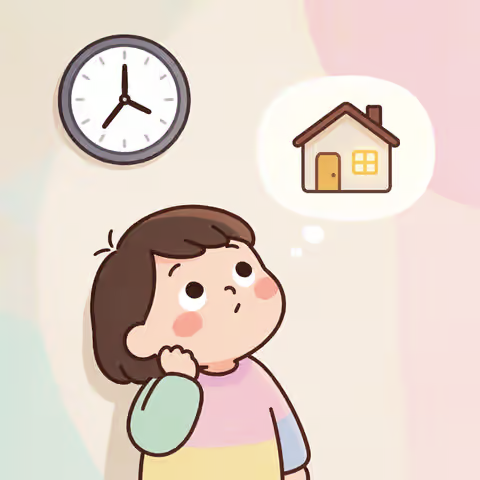
- CJK: Card writes 几; example writes 幾. Same word as HSK 几, Canto gei2. JP 何時. The ruby on the word field is gei1 (furniture 几); ignore that — 幾點 is gei2.
- Fun fact: 幾點 = what time. 先…到 = only then arrive. Same 幾 as 幾十.
- Memorize: Clock, “when are you home”: 幾點返到屋企.
- Study tip: 幾點. Don’t answer 何時 as Japanese, and don’t read it as gei1.
19. 還(waan4)
still · masih
Example: 我仲未食飯,還好肚餓。 — I haven't eaten yet, still very hungry.

- CJK: 還 = 还 hái. JP まだ. Canto spoken “still” is often 仲; written/formal 還. The sentence uses both: 仲未 + 還.
- Fun fact: 還好 here is “still quite” hungry, not Mandarin 还好 “fortunately / I’m fine.” Easy trap. 未食飯 = haven’t eaten.
- Memorize: Empty bowl, still hungry: 仲未食飯,還好肚餓.
- Study tip: 還 vs 仲. If you hear 仲, that’s the other card family. Don’t answer 還好 as “I’m fine.”
20. 所(so2)
that which; place; classifier · yang; tempat
Example: 人哋叫千祈唔好信晒佢所講嘅嘢。 — People told me not to believe everything he says.
- CJK: 所 = 所 suǒ. JP 所. Mandarin 所. 所講 = that which [he] said. Classifier 一所學校 is a different sense.
- Fun fact: 所 + verb = “what is V-ed.” 所講嘅嘢. 千祈唔好 = whatever you do, don’t. Ties to 一早 唔好信佢.
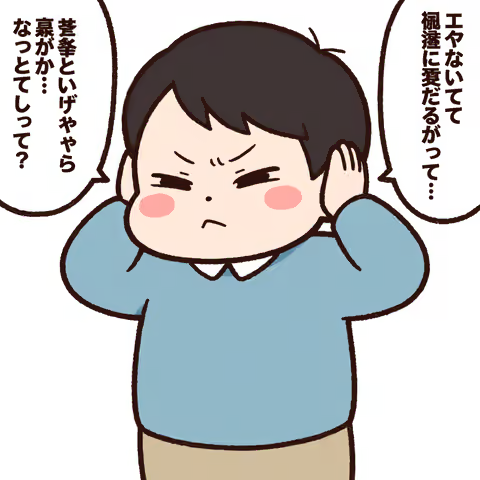
- Memorize: Hands over ears, don’t swallow every word: 唔好信晒佢所講嘅嘢.
- Study tip: 所講. Don’t answer 地方 or 一座 unless the sentence is a building.