Anki session
HSK 4
汉语
- New
- 20
- Learn
- 0
- Review
- 85
Session: 20 new remaining of the 20/day cap · 0 learning waiting · 85 reviews due.
Click HSK::Level 4, not the parent HSK. No learning queue, so new cards interleave with the 85 reviews.
Session plan
- Nothing in learning. When a new one pops, match it to the number below.
- 数 today is this number is too big, not 数学 and not 数 shǔ “to count.”
- 项 is the measure word riding on 任务: 一项任务. Don’t answer 项目 unless that’s the card.
- Money pair: 现金 (paper, no card) / 赚 (overtime pay).
- Softeners: 恐怕 = “I’m afraid that…”; 肯定 in the example is “definitely will,” not “I’m not sure.”
- 能够 vs 能 / 可以. 儿童 is the written kid; 孩子 is the kitchen kid.
1. 数(shù)
number; figure · angka
Example: 这个数太大了,我还要再检查一次。 — This number is too big; I need to check it again.

- CJK: 数 = 數 shù. JP 数(かず / すう). Canto 數 sou3. Same character as 数学, but today’s sentence is the figure on the page.
- Fun fact: POS on the note is 名、数. Dictionary leads with “to count” (shǔ). Today is shù, the noun. 这个数 = this number. 数字 is the digit; 数 is the amount.
- Memorize: Calculator flashing a huge total, you check it twice: 这个数太大了.
- Study tip: 这个数. Don’t answer 数学, 数字, or 数 shǔ unless the audio is that.
2. 能够(nénggòu)
to be able to; can · mampu; dapat
Example: 我能够自己去。 — I can go by myself.

- CJK: 能 = 能 néng. 够 = 夠 gòu (enough). JP できる. Canto 能夠 nang4 gau3. 够 is the “enough capacity” half.
- Fun fact: 能 is the short verb. 能够 is a bit more formal/written: capable enough to. 可以 is permission. 会 is a learned skill.
- Memorize: Walking out the door alone, no hand-holder: 我能够自己去.
- Study tip: 能够 + verb. Don’t answer 可以 (may I) or 会 (know how) unless that’s the card.
3. 现金(xiànjīn)
cash · uang tunai
Example: 对不起,这家店只收现金,不收银行卡。 — Sorry, this shop only takes cash, not bank cards.

- CJK: 现 = 現 xiàn. 金 = 金. JP 現金(げんきん). Canto 現金 jin6 gam1. Same 现 as 现在, here “on the spot” money.
- Fun fact: 收现金 / 付现金. Opposite of 刷卡 / 银行卡. 现钞 is the bills; 现金 is the everyday word.
- Memorize: Shop sign, card refused, stack of notes: 只收现金.
- Study tip: 只收现金. Don’t answer 钱 or 信用卡 for this card.
4. 赚(zhuàn)
to earn; to make a profit · menghasilkan (uang)
Example: 他这个月加班很多,所以赚了不少钱。 — He worked a lot of overtime this month, so he earned quite a bit of money.

- CJK: 赚 = 賺 zhuàn. JP 稼ぐ. Canto 賺 zaan6. Traditional 賺. Not 转 zhuǎn.
- Fun fact: 赚钱 is the collocation. 赚了不少钱. 挣 is a cousin; HSK likes 赚 here. Overtime → 赚 is the picture.
- Memorize: Overtime lamp + a thicker wallet: 赚了不少钱.
- Study tip: 赚钱. Don’t answer 花 (spend) or 转.
5. 项(xiàng)
classifier for tasks, items, projects · penggolong tugas
Example: 这项工作很重要,你一定要认真做。 — This task is very important; you really must do it carefully.

- CJK: 项 = 項 xiàng. JP 項目(こうもく). Canto 項 hong6. Measure word, not the surname, not the nape of the neck.
- Fun fact: Dictionary dumps “neck / surname / math term.” Today is 一项工作. 项 rides on 工作 / 任务 / 研究. Same 项 as the classifier on today’s 任务 card.
- Memorize: One stamped task sheet: 这项工作.
- Study tip: 一项 + 工作/任务. Don’t answer 个 or 项目 unless that’s the audio.
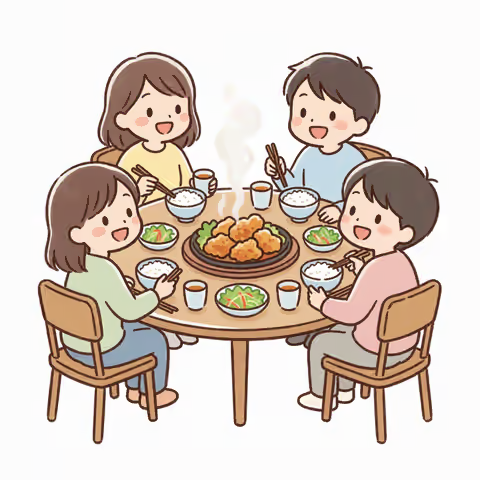
6. 聚餐(jùcān)
to have a group meal · makan bersama
Example: 周末我们一起聚餐。 — We'll have a group meal this weekend.
- CJK: 聚 = 聚 jù (聚集). 餐 = 餐 cān (餐厅). JP 会食. Canto 聚餐 zeoi6 caan1.
- Fun fact: Verb. 一起聚餐. Not 吃饭 (any meal) and not 宴会 (banquet). Club/class/office weekend table.
- Memorize: Round table, many bowls, weekend: 一起聚餐.
- Study tip: 聚餐. Don’t answer 吃饭 or 聚会 (the gathering without the food).
7. 基本(jīběn)
basic; fundamental · mendasar; pada dasarnya
Example: 这是基本问题。 — This is a basic issue.

- CJK: 基 = 基 jī (基础). 本 = 本. JP 基本(きほん). Canto 基本 gei1 bun2. Same 本 as 本科 later.
- Fun fact: Adj/adv. 基本问题 = a fundamental issue. 基本上 = basically (the “work is basically done” sense). Today’s sentence is the noun-modifying one.
- Memorize: Foundation blocks under a question mark: 基本问题.
- Study tip: 基本 + noun. 基本上 + clause. Don’t answer 基础 unless that’s the card.
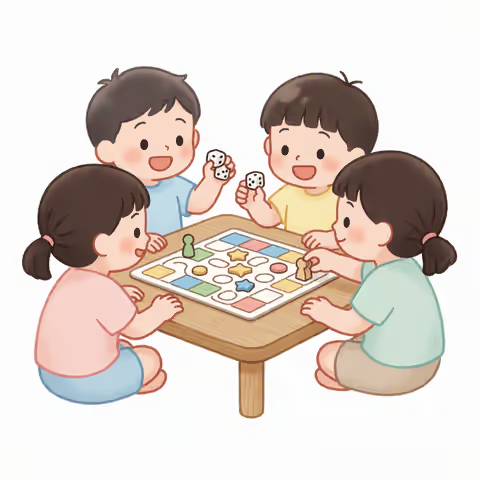
8. 儿童(értóng)
child · anak-anak
Example: 这些儿童在玩游戏。 — These children are playing a game.
- CJK: 儿 = 兒 ér. 童 = 童 tóng. JP 児童(じどう). Canto 兒童 ji4 tung4.
- Fun fact: 儿童 is the official/written kid (儿童节, 儿童医院). 孩子 is the one at home. 小孩 is casual.
- Memorize: Kids at a game table, slightly “poster” looking: 这些儿童.
- Study tip: 儿童. Don’t answer 孩子 unless that’s the card.
9. 本科(běnkē)
undergraduate (course) · S1; sarjana
Example: 他在北京的大学读本科,已经三年了。 — He’s been doing his undergraduate studies at a university in Beijing for three years already.

- CJK: 本 = 本. 科 = 科 kē (科学). JP 学部. Canto 本科 bun2 fo1. 本科生 = undergrad student.
- Fun fact: 读本科 / 本科毕业. Ladder: 专科 < 本科 < 硕士 / 研究生. 三年了 = year three of the four-year S1.
- Memorize: Campus backpack, Beijing, year-three: 读本科.
- Study tip: 读本科. Don’t answer 大学 or 研究生.
10. 恐怕(kǒngpà)
I’m afraid that…; perhaps · khawatir; takutnya
Example: 恐怕要下雨了。 — I'm afraid it's going to rain.

- CJK: 恐 = 恐 kǒng (恐龙 is a joke, not the card). 怕 = 怕 pà. JP 恐らく. Canto 恐怕 hung2 paa3.
- Fun fact: Rarely “I am terrified.” It’s the polite I suspect / looks like. 恐怕要…了. 怕 is the raw fear verb.
- Memorize: Sky going grey, shrug: 恐怕要下雨了.
- Study tip: 恐怕 + clause. Don’t answer 怕 or 可能 unless that’s the audio.
11. 厨师(chúshī)
cook; chef · koki
Example: 他是饭店的厨师。 — He is the restaurant's chef.

- CJK: 厨 = 廚 chú. 师 = 師 shī (老师). JP 料理人 / シェフ. Canto 廚師 cyu4 si1.
- Fun fact: 师 = professional. 厨师 is the job title. 做饭的人 is not a card. 饭店 here is restaurant, not hotel-only.
- Memorize: Tall hat, wok, 饭店: 厨师.
- Study tip: 一位厨师. Don’t answer 做饭.
12. 肯定(kěndìng)
definitely; to be certain · pasti; yakin
Example: 他今天肯定会来,因为他说得很清楚。 — He will definitely come today, because he said so very clearly.

- CJK: 肯 = 肯 kěn. 定 = 定 dìng. JP 肯定(こうてい) also “affirm.” Canto 肯定 hang2 ding6.
- Fun fact: Adv “definitely” in today’s sentence. Also a verb “to affirm.” Peek’s other sense was “I’m not quite certain” — ignore that; the note’s mandarin is 肯定会来.
- Memorize: Finger tap on “today,” nod: 肯定会来.
- Study tip: 肯定会. Don’t answer 一定 unless that’s the card; they’re close but not the audio.
13. 队员(duìyuán)
team member · anggota tim
Example: 每个队员都来了。 — Every team member has arrived.

- CJK: 队 = 隊 duì. 员 = 員 yuán. JP 隊員(たいいん). Canto 隊員 deoi6 jyun4. 员 = member, same as 会员.
- Fun fact: 每个队员. 队 is the team; 队员 is one body in it. 队员们 optional.
- Memorize: Sports kit, whole squad through the door: 每个队员都来了.
- Study tip: 队员. Don’t answer 队 or 运动员 (athlete) unless that’s the card.
14. 感人(gǎnrén)
touching; moving · mengharukan
Example: 这个故事很感人。 — This story is very moving.

- CJK: 感 = 感 gǎn (感觉). 人 = 人. JP 感動的. Canto 感人 gam2 jan4. Same 感 as 感冒? No — 感冒 is a cold. 感动 is the verb “be moved.”
- Fun fact: Adj. 很感人. 感动 is “it moved me.” 感人 describes the story.
- Memorize: Tear on a storybook: 很感人.
- Study tip: 感人. Don’t answer 感动 or 感觉.
15. 牙膏(yágāo)
toothpaste · pasta gigi
Example: 早上我发现牙膏用完了,得去买。 — This morning I found we were out of toothpaste, so I have to go buy some.

- CJK: 牙 = 牙 yá. 膏 = 膏 gāo (paste). JP 歯磨き粉. Canto 牙膏 ngaa4 gou1. Measure 管.
- Fun fact: 用完了 is the grammar hanging on a bathroom noun. 一管牙膏. 牙刷 is the brush — different card.
- Memorize: Empty squeezed tube at the sink: 牙膏用完了.
- Study tip: 一管牙膏. Don’t answer 牙刷.
16. 老虎(lǎohǔ)
tiger · harimau
Example: 动物园有老虎。 — There are tigers at the zoo.

- CJK: 老 = 老. 虎 = 虎 hǔ. JP 虎(とら). Canto 老虎 lou5 fu2. 老 here is prefix, not “old.”
- Fun fact: 只 is the measure (隻). 纸老虎 = paper tiger, not today’s zoo sentence.
- Memorize: Zoo fence, orange stripes: 动物园有老虎.
- Study tip: 一只老虎. Don’t answer 猫.
17. 温度(wēndù)
temperature · suhu
Example: 今天温度有点儿高,出门别穿太多衣服。 — The temperature is a bit high today; don't wear too many clothes when you go out.

- CJK: 温 = 溫 wēn. 度 = 度 dù. JP 温度(おんど). Canto 溫度 wan1 dou6. 度 is the “degree” 度.
- Fun fact: 温度高 / 低. 气温 is air temp; 体温 is body temp. Today is weather-clothes 温度.
- Memorize: Thermometer up, coat coming off: 温度有点儿高.
- Study tip: 温度. Don’t answer 热 or 天气 unless that’s the card.
18. 条件(tiáojiàn)
condition; living conditions; requirement · kondisi; syarat
Example: 他们家的生活条件越来越好了。 — Their family's living conditions keep getting better.

- CJK: 条 = 條 tiáo. 件 = 件 jiàn. JP 条件(じょうけん). Canto 條件 tiu4 gin6.
- Fun fact: Dictionary leads with “requirement.” Today is 生活条件 — how the family lives, not exam 报名条件. 条件好/差.
- Memorize: Same family, nicer apartment than last year: 生活条件越来越好.
- Study tip: 生活条件. Don’t jump to 如果 or 报名条件 unless the sentence is that.
19. 歌手(gēshǒu)
singer · penyanyi
Example: 他是有名的歌手。 — He is a famous singer.

- CJK: 歌 = 歌 gē. 手 = 手. JP 歌手(かしゅ). Canto 歌手 go1 sau2. 手 = -er, same pattern as 选手.
- Fun fact: 有名的歌手. 歌唱家 is the opera-ish word. 唱歌 is the verb.
- Memorize: Mic, spotlight: 有名的歌手.
- Study tip: 一位歌手. Don’t answer 唱歌.
20. 任务(rènwu)
task; assignment · tugas
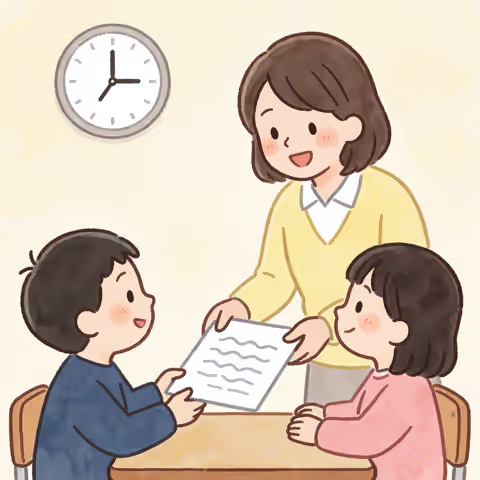
Example: 老师今天给了我们一个新任务,下午要做完。 — The teacher gave us a new task today, and we have to finish it this afternoon.
- CJK: 任 = 任 rèn. 务 = 務 wù. JP 任務(にんむ). Canto 任務 jam6 mou6. Classifier on the note: 项.
- Fun fact: 一个新任务 is in the example, but the measure you just learned is 项. 完成任务. School-afternoon deadline is the picture, not a spy mission.
- Memorize: Teacher handout + afternoon clock: 新任务,下午要做完.
- Study tip: 一项任务 / 一个任务. Don’t answer 工作 or 作业 unless that’s the card.