Anki session
Cantonese 2
廣東話
- New
- 20
- Learn
- 0
- Review
- 6
Session: 20 new remaining of the 20/day cap · 0 learning waiting · 6 reviews due.
Click Cantonese::Level2, not Level1. Level1 is review-only now. No learning queue, so new cards interleave with the 6 reviews (those 6 are already in L2).
This is a third sheet for today (HSK is 2026-09-09.md, Japanese is 2026-09-09-japanese-level1.md).
Session plan
- First full Level 2 new block. Twenty new, six reviews already in the deck.
- 無論 ↔ HSK 不论. 隨便 is on both today’s HSK and Canto sheets.
- 也 vs L1 都: 也 is “also,” but Canto everyday “also” is often 都. Don’t panic if the sentence feels Mandarin-stiff.
- 百 is also on Japanese today (ひゃく). 鐘 is o’clock, not 錢.
- 加入-style trap: none here, but 數 is “number / count,” not 數學 unless the card says so.
1. 好講(hou2 gong2)
easy to say · mudah dikatakan
Example: 好講唔好做。 — Easy to say, but hard to do.
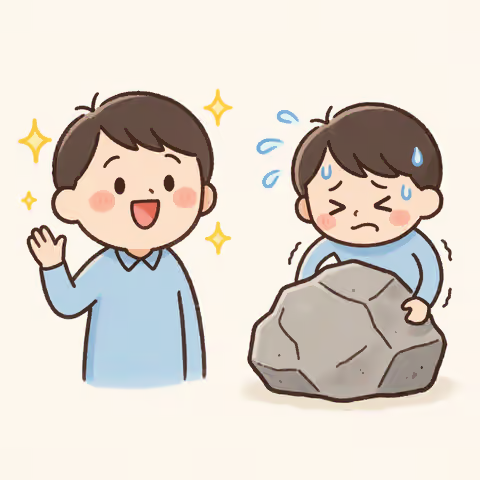
- CJK: 好 = easy here, not “very.” 講 = 讲 jiǎng / 說. Mandarin 说起来容易. JP 言うは易し.
- Fun fact: 好V = easy to V. 好食 / 好睇 / 好講. The pair is 唔好做. Not 好 as intensifier 好靚.
- Memorize: Mouth talking, arms failing to lift: 好講唔好做.
- Study tip: 好 + verb. Don’t answer 好 as “very.”
2. 無論(mou4 leon6)
no matter what; regardless of · apa pun; terlepas dari
Example: 無論發生咩事,我都支持你。 — No matter what happens, I'll support you.

- CJK: Same 無論 / 无论. HSK today 不论. JP どんな…でも. Canto mou4 leon6.
- Fun fact: 無論 + clause + 都. Close to 不管. 論 is leon6, not 論 as “theory” 理論.
- Memorize: Hug through a storm: 無論發生咩事.
- Study tip: 無論…都…. Don’t answer 無論 as 無論 (academic “no matter” only) without 都.
3. 例如(lai6 jyu4)
for example; for instance · misalnya; contohnya
Example: 我鍾意好多運動,例如籃球同足球。 — I like many sports, for example basketball and football.

- CJK: Same 例如. Mandarin lìrú. JP 例えば. Canto lai6 jyu4 (例 is lai6, not lei6).
- Fun fact: Discourse marker before examples. 譬如 is a cousin. 籃球同足球 after the comma.
- Memorize: Sports list with a finger: 例如籃球同足球.
- Study tip: 例如 + nouns. Don’t answer 好像.
4. 百(baak3)
hundred; 100 · ratus; 100
Example: 一個月八百蚊。 — Eight hundred dollars per month.

- CJK: Same 百. JP ひゃく (today’s JP sheet). Mandarin bǎi. Canto baak3. 蚊 = HKD.
- Fun fact: 八百 = baat3 baak3. Sound change 三百 saam1 baak3. Money: 蚊, not 元 in casual HK.
- Memorize: Pay packet 800: 八百蚊一個月.
- Study tip: 百. Don’t answer 千. 蚊 is the unit, 百 is the number.
5. 招呼(ziu1 fu1)
to greet; to call · menyapa; memanggil
Example: 見到朋友記得打招呼。 — Remember to greet your friends when you see them.

- CJK: 招 = 招 zhāo. 呼 = 呼 hū. Mandarin 打招呼. JP 挨拶. Canto ziu1 fu1.
- Fun fact: 打招呼 is the set phrase. 招呼 can also “call over” a waiter. Today is the greeting.
- Memorize: Wave in the street: 打招呼.
- Study tip: 打招呼. Don’t answer 叫 unless the card is 叫.
6. 節目(zit3 muk6)
program; item on a show · acara; program
Example: 呢個電視節目好好笑。 — This TV program is very funny.

- CJK: 节 = 節. 目 = 目. Mandarin 节目. JP 番組(ばんぐみ) — different word, same idea. Canto zit3 muk6.
- Fun fact: TV 節目, concert 節目. 好好笑 = very funny (好 + 好笑). Classifier 個.
- Memorize: TV laugh-track: 電視節目好好笑.
- Study tip: 一個節目. Don’t answer 節目 as 節日 (holiday).
7. 保護(bou2 wu6)
to protect; to safeguard · melindungi
Example: 我哋要保護環境。 — We must protect the environment.

- CJK: Same 保護 / 保护. JP 保護 ほご. Canto bou2 wu6.
- Fun fact: 保護環境 is the poster slogan. 保護 + object. 護 is wu6.
- Memorize: Arms around a tree: 保護環境.
- Study tip: 保護 + noun. Don’t answer 保護 as 保證.
8. 踢(tek3)
to kick · menendang
Example: 佢哋喺度踢波。 — They're playing football.

- CJK: 踢 = 踢 tī. JP 蹴る. Canto tek3. 踢波 = play football (not 足球 as the verb).
- Fun fact: 踢波 is the sport. 踢一腳 is a literal kick. 喺度 = in the middle of doing.
- Memorize: Kids kicking a ball: 踢波.
- Study tip: 踢波. Don’t answer 打波 (more basketball/tennis in some mouths) unless that’s the card.
9. 隨便(ceoi4 bin6)
as one pleases; random; informal · terserah; sembarangan
Example: 飲咩呀?隨便,你決定。 — What to drink? Doesn't matter, you decide.

- CJK: Same 隨便 / 随便 as today’s HSK #19. JP 適当に. Canto ceoi4 bin6.
- Fun fact: 隨便 as “up to you” is friendly. 食隨便 = eat whatever. Don’t take it as “I don’t care about you.”
- Memorize: Menu, shrug: 隨便,你決定.
- Study tip: 隨便. Same trap as HSK: generous vs sloppy. Here it’s the generous one.
10. 份人(fan6 jan4)
the person; someone's character · orangnya; watak
Example: 你覺得佢份人點? — What do you think of that person?
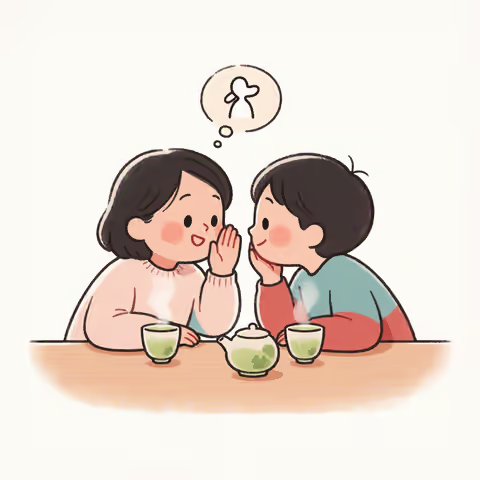
- CJK: 份 = portion / classifier. 人 = person. Mandarin 为人 / 这个人怎么样. JP 人柄. Canto fan6 jan4.
- Fun fact: 份人 = “what they’re like as a person.” Not 一份人 as a headcount. 點 = how.
- Memorize: Gossip over tea: 佢份人點?
- Study tip: 份人點. Don’t answer 人 alone.
11. 之際(zi1 zai3)
at the time of · pada saat; di kala
Example: 喺我專心工作之際,電話突然響。 — Just as I was focusing on my work, the phone suddenly rang.

- CJK: 之際 = 之际. Written/formal. JP 際に. Mandarin 正在…的时候. Canto still says zi1 zai3 in this register.
- Fun fact: N 之際 / V 之際. Slightly stiff — news, narration. 之 is the literary 的.
- Memorize: Phone exploding on a focused desk: 工作之際,電話響.
- Study tip: …之際. Don’t answer 時候 if the card is 之際 (and vice versa).
12. 未有(mei6 jau5)
never had; not yet · belum pernah; belum ada
Example: 我未有見過佢。 — I have never seen him.

- CJK: 未 = 未 wèi (未来). 有 = have. Mandarin 还没 / 从未. JP まだ…ない. Canto mei6 jau5.
- Fun fact: 未有 + V 過 = have never. Stronger than 未. 未有 is “not yet existing / never yet.”
- Memorize: Empty photo album: 未有見過.
- Study tip: 未有 + 過. Don’t answer 冇 (simple don’t-have) if the card wants 未有.
13. 佢哋嘅(keoi5 dei6 ge3)
their; theirs · mereka; milik mereka
Example: 我哋應該尊重佢哋嘅意見。 — We should respect their opinions.
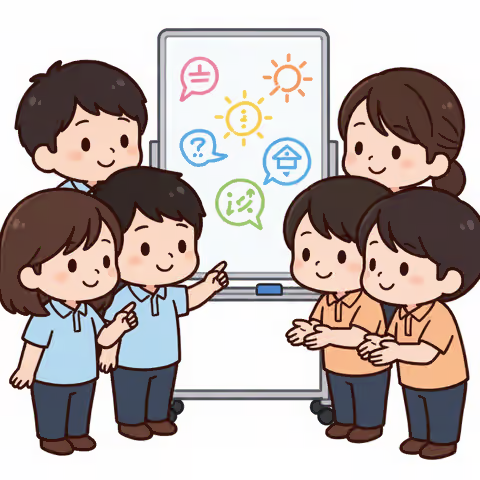
- CJK: 佢哋 = they. 嘅 = 的. Mandarin 他们的. JP 彼らの. L1 already had 佢 / 哋 pieces.
- Fun fact: Possessive: 佢哋嘅 N. 意見 = opinion. 尊重.
- Memorize: Two groups, pointing at “their” whiteboard: 佢哋嘅意見.
- Study tip: 佢哋嘅 + noun. Don’t drop 嘅. Don’t answer 我哋嘅.
14. 粒(nap1)
grain; classifier for small items · butir; penggolong benda kecil
Example: 有人踩到一粒掣,個開關就熄咗。 — Apparently someone walked past and stepped on a button, turning off the switch.

- CJK: 粒 = 粒 lì. JP 粒 つぶ. Mandarin 一粒. Canto nap1. Classifier for buttons, pills, rice.
- Fun fact: 一粒掣 = one button. 掣 = switch/button. The example is a slapstick step-on-the-button.
- Memorize: Shoe on a round button, lights die: 一粒掣.
- Study tip: 粒 + small round thing. Don’t answer 個 unless that’s the card.
15. 眼淚(ngaan5 leoi6)
tear · air mata
Example: 佢聽到個消息就流眼淚。 — He started crying upon hearing the news.

- CJK: 眼 = eye. 淚 = 泪 lèi. Mandarin 眼泪. JP 涙 なみだ. Canto ngaan5 leoi6.
- Fun fact: 流眼淚. 眼濕濕 is related. News + tears.
- Memorize: Phone news, tear drop: 流眼淚.
- Study tip: 流眼淚. Don’t answer 眼 alone.
16. 數(sou3)
counting; number; an amount · hitungan; jumlah
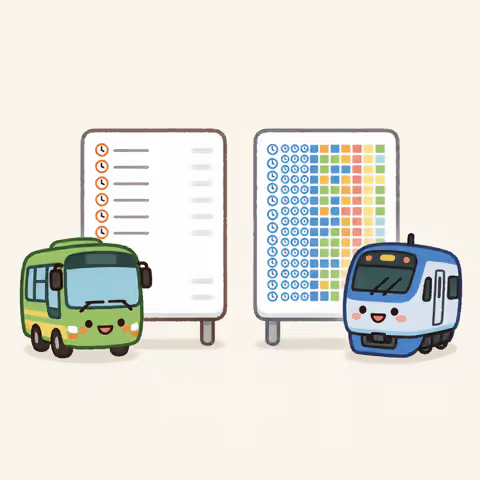
Example: 巴士班次多過火車嘅數。 — There are more bus departures than train departures.
- CJK: 數 = 数 shù / 數. JP 数 かず. Canto sou3 (count) vs 數學 sou3 hok6.
- Fun fact: 數 here is “the number (of departures).” 班次 = scheduled runs. 多過 = more than.
- Memorize: Two timetables, more bus icons: 班次嘅數.
- Study tip: 數 as quantity. Don’t answer 數學. Reading sou3, not 壽.
17. 資料(zi1 liu2)
data; material; resources · data; bahan; informasi
Example: 唔該,我想要旅遊資料。 — Excuse me, I'd like some travel materials.

- CJK: Same 資料 / 资料. JP 資料 しりょう. Canto zi1 liu2.
- Fun fact: Tourist counter pamphlets. 資料 vs 數據 (data numbers). 旅遊資料 = brochures.
- Memorize: Tourist desk, map stack: 旅遊資料.
- Study tip: 資料. Don’t answer 數據 unless the card is stats.
18. 鐘(zung1)
hour; o’clock · jam
Example: 三點鐘你喺度瞓緊? — Are you sleeping at three o'clock in the morning?

- CJK: 鐘 = 钟 zhōng. JP 時. Canto zung1. 三點鐘. Not 錢 cin4.
- Fun fact: 點鐘 = o’clock. 三點鐘. 瞓緊 = in the middle of sleeping. 3 a.m. shade.
- Memorize: 3:00 on a clock, person in bed: 三點鐘瞓緊.
- Study tip: N 點鐘. Don’t answer 錢 or 中.
19. 經過(ging1 gwo3)
to pass by; to go through · melewati; melalui
Example: 我每日返工都經過個公園。 — I pass by the park every day on my way to work.

- CJK: Same 經過 / 经过. JP 通る / 経る. Canto ging1 gwo3.
- Fun fact: 經過 + place. Also “after going through (an experience).” Today is the commute.
- Memorize: Walk past park gate with a briefcase: 經過個公園.
- Study tip: 經過 + place. Don’t answer 經過 as 經驗 (experience noun).
20. 也(jaa5)
also; too · juga
Example: 我也想去;你也可以一齊。 — I want to go too; you can also come along.

- CJK: Same 也 yě. JP も. Canto everyday “also” is often 都. 也 still appears, a bit Mandarin-flavoured or written.
- Fun fact: Two 也 in one example. L1 都 already meant “all / also.” If you answer 都, check the card.
- Memorize: Two people pointing at a trip poster: 我也想去.
- Study tip: 也 + verb. If the audio is 都, that’s the other card.