Anki session
HSK 4
汉语
- New
- 20
- Learn
- 0
- Review
- 89
Session: 20 new remaining of the 20/day cap · 0 learning waiting · 89 reviews due.
Click HSK::Level 4, not the parent HSK. No learning queue, so new cards interleave with the 89 reviews.
Session plan
- Nothing in learning. When a new one pops, match it to the number below.
- 既…又… is the grammar bomb: 既聪明又能干. Don’t answer 已经.
- 加入 in today’s sentence is add sugar, not “join a club.”
- Clusters: visit & stroll (上门 / 逛 / 导游 / 家乡), order & rest (顺序 / 不论 / 其次 / 随便), media (收听 / 阅读 / 网址 / 词语).
- 者 rides on 记者. 压力 in the example is machine pressure, not only office stress.
1. 收听(shōutīng)
to listen to (a radio broadcast) · mendengarkan (siaran)
Example: 我每天开车上班都会收听新闻。 — I listen to the news on the radio every day when I drive to work.

- CJK: 收 = 收 shōu (收到). 听 = 聽 tīng. JP 聴く / ラジオを聞く. Canto 收聽 sau1 teng1. Same 听 as 听见, but 收听 is tuned in.
- Fun fact: Collocates with 广播 / 新闻 / 广播节目. 听 can be any sound; 收听 is the radio/podcast verb. Driving + 新闻 is the classic picture.
- Memorize: Car radio, news voice, hands on wheel: 收听新闻.
- Study tip: 收听广播. Don’t answer 听见 (happen to hear) or 听写.
2. 既(jì)
already; since; both… (and…) · sudah; baik… maupun…
Example: 她既聪明又能干,所以大家都喜欢她。 — She's both smart and capable, so everyone likes her.

- CJK: 既 = 既 jì. JP 既に (already) is a cousin, not today’s pattern. Canto 既 gei3. Pattern 既 A 又 B.
- Fun fact: Dictionary leads with “already.” Today is 既…又… “both…and…”. 既然 is “since,” a different card. 能干 = capable, HSK 能干/能力 family.
- Memorize: Two thumbs: 既聪明 又能干. Not a calendar “already.”
- Study tip: 既 A 又 B. Don’t answer 已经 or 既然 unless the audio is that.
3. 上门(shàngmén)
to drop in; to visit; to come to the door · datang ke rumah; datang ke pintu
Example: 他们可以上门帮你修电脑。 — They can come to your place to help you fix the computer.

- CJK: 上 = 上. 门 = 門. JP 出張 / 上门なし — this is a Chinese service verb. Canto 上門 soeng5 mun4.
- Fun fact: 上门服务 = they come to you. 不上门 = shop stays put. Also “lock the door” in other sentences — today is the repairman visit.
- Memorize: Repairman at the apartment door with a toolbox: 上门修电脑.
- Study tip: 上门 + 服务/维修. Don’t answer 访问 (formal visit) unless that’s the card.
4. 导游(dǎoyóu)
tour guide; to guide a tour · pemandu wisata
Example: 请给我们导游。 — Please guide the tour for us.

- CJK: 导 = 導 dǎo (领导, 导航). 游 = 遊 yóu (旅游). JP ガイド. Canto 導遊 dou6 jau4.
- Fun fact: Noun and verb. 当导游 / 做导游. 旅游 is the trip; 导游 is the person with the flag.
- Memorize: Flag, headset, group behind: 导游.
- Study tip: 一位导游. Don’t answer 旅行 or 旅游 for this card.
5. 家乡(jiāxiāng)
hometown; native place · kampung halaman
Example: 我很想念我的家乡。 — I miss my hometown a lot.

- CJK: 家 = home. 乡 = 鄉 xiāng. JP 故郷 こきょう. Canto 家鄉 gaa1 hoeng1. Not 乡下 “countryside” only.
- Fun fact: 老家 overlaps. 家乡话 = hometown dialect. Classifier 个. Indonesian kampung halaman is the feeling, not just 家.
- Memorize: Train window, hometown skyline shrinking: 想念家乡.
- Study tip: 我的家乡. 回老家. Don’t answer 国家.
6. 顺序(shùnxù)
sequence; order · urutan
Example: 请按顺序进来,不要着急。 — Please come in in order, and don't rush.
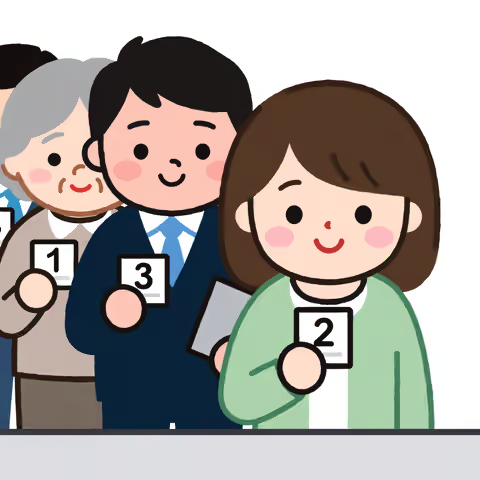
- CJK: 顺 = 順 shùn. 序 = 序 xù. JP 順序 じゅんじょ. Canto 順序 seon6 zeoi6.
- Fun fact: 按顺序 = in order. 顺序错了 = out of sequence. Queue culture: 不要插队 is the cousin, this card is 顺序 itself.
- Memorize: Numbered tickets, line at a counter: 按顺序进来.
- Study tip: 按顺序. 顺序 / 次序. Don’t answer 顺便.
7. 不论(búlùn)
no matter what; regardless of · siapa pun; tidak peduli
Example: 不论是谁都可以。 — Anyone can, no matter who.

- CJK: 不 + 论. JP 問わず. Canto 不論 bat1 leon6. Pattern 不论…都…. Pair later with Cantonese 無論.
- Fun fact: 不论谁 / 不论什么 / 不论怎么. Spoken cousin 不管. 讨论 is “discuss” — different 论.
- Memorize: Open door, anyone walks in: 不论是谁都可以.
- Study tip: 不论 + question word + 都. Don’t answer 无论 unless that’s the card (near-synonym).
8. 压力(yālì)
pressure · tekanan
Example: 这种机器需要很大的压力才能工作。 — This kind of machine needs a lot of pressure to work.

- CJK: 压 = 壓 yā. 力 = 力. JP 圧力 あつりょく. Canto 壓力 aat3 lik6.
- Fun fact: Work stress and physics. Today’s sentence is a machine. 工作压力 is the office reading for another day. 压力大了 = stressed / PSI high, context decides.
- Memorize: Piston, gauge in the red: 很大的压力.
- Study tip: 有压力 / 压力大. If the audio is 紧张, that’s a different card.
9. 动作(dòngzuò)
movement; motion; action · gerakan
Example: 这个动作很难学。 — This move is hard to learn.

- CJK: 动 = 動. 作 = 作. JP 動作 どうさ. Canto 動作 dung6 zok3.
- Fun fact: Dance / martial arts / 慢动作. 做动作. Not 工作 (job). Indonesian gerakan is the body, not 行动 (take action, plot).
- Memorize: Dance class, instructor holds a pose: 这个动作很难学.
- Study tip: 一个动作. 动作 + 慢/快. Don’t answer 运动 (sport) unless that’s it.
10. 大厅(dàtīng)
hall; lobby · lobi; aula
Example: 我们在大厅等你。 — We'll wait for you in the lobby.

- CJK: 大 + 厅 廳. JP ロビー / ホール. Canto 大廳 daai6 teng1. Hotel 大厅 = lobby.
- Fun fact: Hotel / station concourse. 客厅 is the living room at home. 餐厅 is restaurant. Three 厅, three places.
- Memorize: Hotel sofa, rolling suitcase: 在大厅等你.
- Study tip: 在大厅. Don’t answer 客厅.
11. 赢得(yíngdé)
to win; to gain · meraih; memenangkan
Example: 他的努力终于赢得了老师的支持。 — His hard work finally won the teacher's support.

- CJK: 赢 = 贏 yíng (赢了比赛). 得 = dé. JP 勝ち取る. Canto 贏得 jeng4 dak1.
- Fun fact: Not only a trophy — 赢得支持 / 赢得尊重. 赢了 is the game; 赢得 + noun is “earn.”
- Memorize: Teacher nod, student stack of homework: 赢得了支持.
- Study tip: 赢得 + 了 + noun. Don’t answer 赢了 alone if the card wants 赢得.
12. 友好(yǒuhǎo)
friendly; amicable · ramah
Example: 邻居对我们一直很友好,还经常帮忙。 — The neighbors have always been friendly to us and often help out.

- CJK: 友 = friend. 好 = good. JP 友好 ゆうこう (diplomatic). Canto 友好 jau5 hou2. Spoken 友好 vs 友好关系.
- Fun fact: 友好 is adjective and the stiff “amicable relations.” Neighbors + 帮忙 is the warm reading. 朋友 is the person; 友好 is the manner.
- Memorize: Neighbor with a toolbox over the fence: 很友好.
- Study tip: 对 + person + 友好. Don’t answer 朋友.
13. 者(zhě)
one who…; -er; -ist · orang yang…
Example: 很多记者来问他这个问题。 — Many journalists came to ask him this question.

- CJK: Same 者. JP 者 しゃ / もの (記者, 学者). Canto 者 ze2. Bound suffix: 记者 / 作者 / 学者.
- Fun fact: The example’s payload is 记者 — 记 + 者. You may not see 者 alone in the sentence. It’s the suffix card.
- Memorize: Press pack, microphones: 记者. Point at the 者 in 记者.
- Study tip: Don’t answer 人 unless the card is 人. 记者 already contains 者.
14. 逛(guàng)
to stroll; to visit (shops) · jalan-jalan (toko)
Example: 我们去逛商店吧。 — Let's go stroll around the shops.

- CJK: 逛 = 逛 guàng. JP ぶらぶら. Canto 逛 gwaang6. 逛街 is the collocation.
- Fun fact: Aimless shop-walk, not 参观 (museum visit). 逛街 / 逛商场. Indonesian jalan-jalan di toko.
- Memorize: Shopping street, bags, no list: 逛商店.
- Study tip: 逛街. Don’t answer 走 or 旅游.
15. 加入(jiārù)
to join; to add in · bergabung; menambahkan
Example: 再加入一点糖。 — Add a little more sugar.

- CJK: 加 = add. 入 = enter. JP 加入 かにゅう is usually join a group. Canto 加入 gaa1 jap6. Today is the kitchen reading.
- Fun fact: 加入俱乐部 vs 加入糖. Same word, two movies. HSK example is the sugar. 参加 is attend an event.
- Memorize: Spoon of sugar into tea: 加入一点糖. Not a membership form.
- Study tip: If the audio is 糖/材料, it’s add. If it’s 组织/党, it’s join.
16. 阅读(yuèdú)
to read; reading · membaca
Example: 我每天晚上都阅读半个小时。 — Every evening I read for half an hour.

- CJK: 阅 = 閱 yuè. 读 = 讀 dú. JP 閲読 えつどく. Canto 閱讀 jyut6 duk6. More formal than 看书.
- Fun fact: 阅读理解 = reading comprehension on exams. 看书 is casual. Duration 半个小时.
- Memorize: Lamp, book, clock at 30 minutes: 阅读半个小时.
- Study tip: 阅读 + time. Don’t answer 看 unless the card is 看.
17. 其次(qícì)
next; secondly · kedua; selanjutnya
Example: 首先你应该好好休息,其次再开始工作。 — First you should get a good rest, and secondly start working.

- CJK: 其 + 次. JP 次に. Canto 其次 kei4 ci3. Pair 首先…其次….
- Fun fact: Discourse marker, not 第二次. 其次 = point two in a speech. 其次的 is rarer.
- Memorize: Two fingers: 首先休息,其次工作.
- Study tip: 首先…其次…. Don’t answer 然后 unless that’s the card (sequence of events, not bullet 2).
18. 词语(cíyǔ)
word; term; expression · kata; istilah
Example: 这个词语很容易记。 — This word is easy to remember.

- CJK: 词 = 詞 cí. 语 = 語. JP 語句. Canto 詞語 ci4 jyu5. 单词 is the vocab-list word; 词语 can be a short phrase.
- Fun fact: Teacher talk: 这个词语. 词汇 is the whole vocabulary. Meta-card: you’re studying 词语 about 词语.
- Memorize: Flashcard in hand: 这个词语很容易记.
- Study tip: 一个词语. Don’t answer 句子 (sentence).
19. 随便(suíbiàn)
as one wishes; at random; casual · terserah; sembarangan
Example: 他随便拿起一本书就坐下看。 — He picked up a book at random and sat down to read.

- CJK: 随 = 隨. 便 = 便. JP 適当に. Canto 隨便 ceoi4 bin6 — same card in today’s Canto L2.
- Fun fact: 随便你 = up to you. 随便拿 = grab any. Negative: 别这么随便 (don’t be sloppy). Two polarities: generous vs careless.
- Memorize: Hand in a pile of books, no looking: 随便拿起一本.
- Study tip: 随便 + verb. 随便你. Don’t answer 方便.
20. 网址(wǎngzhǐ)
website; URL · alamat situs
Example: 把那个网址发给我,我回家再看。 — Send me that web address; I'll look at it when I get home.

- CJK: 网 = 網. 址 = 址 zhǐ (地址). JP URL / アドレス. Canto 網址 mong5 zi2. 地址 is a street; 网址 is a URL.
- Fun fact: 发网址 / 打开网址. Not 网站 (the site as a place) — close, but 址 is the address string.
- Memorize: Chat bubble with https://… : 发给我网址.
- Study tip: 网址 vs 网站 vs 地址. Don’t answer 网站 unless that’s the card.