Anki session
Cantonese 1
廣東話
- New
- 15
- Learn
- 0
- Review
- 97
Session: 15 new remaining of the 20/day cap · 0 learning waiting · 97 reviews due.
Click Cantonese::Level1. No learning queue, so new cards interleave with the 97 reviews. Cap is 20; only 15 new are left.
This is a third sheet for today (HSK is 2026-09-08.md, Japanese is 2026-09-08-japanese-level1.md). Do not mix the three decks in one Anki session.
Session plan
- Nothing in learning. Fifteen new, not twenty — don’t hunt for a missing five.
- Inside pair: 入面 and 裏面 are both “inside.” 入面 is the fridge/place interior; 裏面 is “what’s in the bag.” Same English gloss, two cards.
- Still: 重 here is zung6 “still,” yesterday’s 仲. Not 重 cung5 “heavy.”
- Clusters: people (叫 / 朋友 / 你呢 / 當我), even if / turns out (就算 / 原來 / 搞到 / 另一), wear & extra (著 / 秀 / 非常).
- Traps: 著 is wear (zoek3), not Mandarin 着 zhe. Y is the letter/fork, no Chinese syllable required. 叫 is “be called,” not only “shout.”
1. 入面(jap6 min6)
inside; interior · di dalam; bagian dalam
Example: 雪櫃入面仲有蛋糕。 — There's still some cake in the fridge.
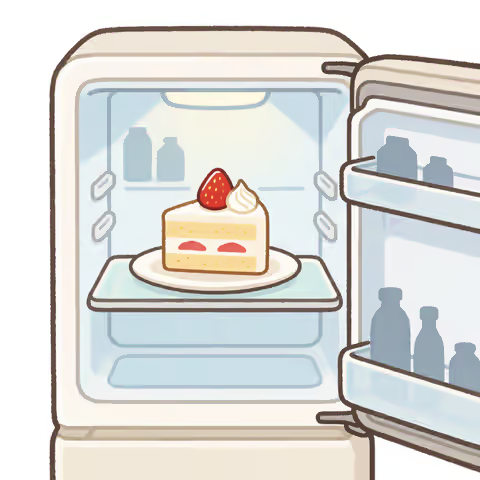
- CJK: 入 = 入 rù / jap6. 面 = miàn / min6. Mandarin 里面 / 里头. JP 中. Pair with 裏面 (#13). Yesterday 仲 already meant “still” in 仲有.
- Fun fact: 雪櫃 = fridge (Mandarin 冰箱). 入面 sits after the place: 雪櫃入面. Cake leftover is 仲有, not the target.
- Memorize: Open fridge, cake on the shelf: 入面仲有蛋糕. Point in.
- Study tip: Place + 入面. 喺入面. Don’t answer 出面 (outside). Not 入 as “enter” alone.
2. 叫(giu3)
to call; to be called · memanggil; bernama; disebut
Example: 呢隻狗叫旺財。 — This dog is called Wong Choi.
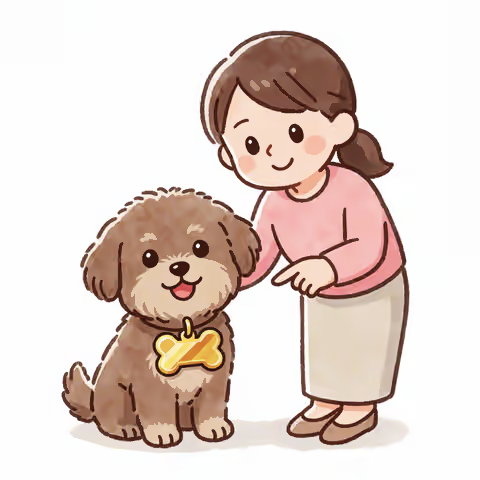
- CJK: 叫 = 叫 jiào / giu3. Same “be named” as Mandarin 叫. JP という. Classifier 隻 for animals.
- Fun fact: 旺財 (Wong Choi) is the classic HK lucky dog name. 叫 can shout (叫你) or name (叫邊個名). The example is the name.
- Memorize: Dog collar tag 旺財: 呢隻狗叫…. Point at the dog, not yell across a street unless the audio is shouting.
- Study tip: 叫 + name. 我叫. 叫做. Don’t answer 喊 unless that’s the card.
3. 朋友(pang4 jau5)
friend · teman
Example: 佢係我中學識嘅朋友。 — He's a friend I met in secondary school.

- CJK: Same 朋友 péngyou. Canto pang4 jau5. JP 友達. 中學 = 中学. 識 = 认识 (not 知识).
- Fun fact: 識嘅朋友 = a friend one got to know. 中學 is secondary school, HK track, not 大學. 佢係…朋友 is the 係 copula from earlier sheets.
- Memorize: Two uniforms, yearbook: 中學識嘅朋友. Handshake.
- Study tip: 做朋友 / 個朋友. 朋 is pang4 not fung4 (那 is a different 朋).
4. Y(Y)
the letter Y; Y-shaped · huruf Y; berbentuk Y
Example: 前面條路分成 Y 字形。 — The road ahead splits into a Y shape.

- CJK: Latin Y, not a hanzi. Mandarin Y 字形 / 分叉. JP Y字路. Canto still says “Y.”
- Fun fact: Forked road, two branches. 條路 classifier. 分成 = split into. Don’t hunt a Chinese character on the card.
- Memorize: Road splitting left/right, no letter painted: fork like a Y. Point both ways.
- Study tip: Y 字形 / Y 形. If you answer “why,” you heard English, not the letter card.
5. 另一(ling6 jat1)
another · lain; yang lain
Example: 佢哋搬去另一個城市住。 — They moved to another city to live.

- CJK: 另 = 另 lìng. 一 = one. Mandarin 另一个. JP 別の. Canto ling6 jat1. 搬 = move house.
- Fun fact: 另一個 + noun. 城市 = city. 住 is the purpose. 另 vs 零 (ling4) and vs 兩.
- Memorize: Moving boxes, skyline change: 另一個城市. Thumb over the shoulder “the other one.”
- Study tip: 另一 + classifier + noun. 另外 is the cousin. Don’t read 令.
6. 搞到(gaau2 dou3)
cause; result in; even · menyebabkan; berakibat; sampai
Example: 你成日搞到件事咁大,點算呀? — You always cause things to blow up, what should we do?
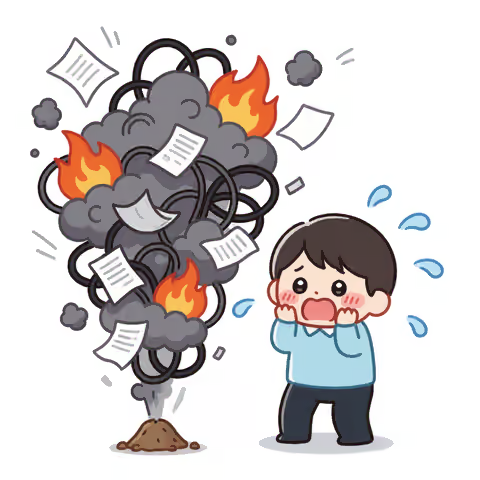
- CJK: 搞 = 搞 gǎo (搞砸, 搞掂). 到 = result. Canto gaau2 dou3. Mandarin 搞得. JP してしまう vibe.
- Fun fact: 搞到 + extent. 成日 = always. 件事咁大 = the matter got this big. 點算 = what now. Blame-y, spoken.
- Memorize: Mole-hill stamped into a mountain: 搞到咁大. Palms “what now.”
- Study tip: 搞到 + result. 搞掂 is “handle it,” opposite mood. Don’t read 稿.
7. 原來(jyun4 loi4)
originally; actually; as it turns out · ternyata; semula
Example: 原來你食咗飯喇。 — So you've already eaten.

- CJK: Same 原来 yuánlái. Canto jyun4 loi4. JP もともと / なんだ. 食咗飯 = already ate (Mandarin 吃了饭).
- Fun fact: Realization particle: oh, so that’s how it was. 原來 + clause. 喇 softens the discovery. Not a history lecture “originally in 1997.”
- Memorize: Empty bowl, lightbulb: 原來你食咗. Surprise face.
- Study tip: 原來 + fact. 原來如此. Traditional 來 on the card. Don’t answer 本来 if the vibe is “turns out.”
8. 就算(zau6 syun3)
even if · meskipun; bahkan jika
Example: 就算落雨,我都要去。 — Even if it rains, I have to go.

- CJK: 就 + 算. Mandarin 就算. Canto zau6 syun3. JP たとえ〜ても. Yesterday 如果 was open-if; this is concessive.
- Fun fact: 就算 A,都 B. 落雨 = rain (Mandarin 下雨). 都要去 = still must go. Heavier than 如果.
- Memorize: Umbrella + walking into rain: 就算落雨都要去. Push forward.
- Study tip: 就算…都…. 就算係. Don’t wait for 即使 on this spoken card.
9. 你呢(nei5 ne1)
how about you? · kamu? (bentuk pertanyaan)
Example: 我想出名。你呢?你想唔想出名? — I want to be famous. How about you? Do you want to be famous?

- CJK: 你 = 你 nǐ / nei5. 呢 = ne1 question tag. Mandarin 你呢. JP あなたは? 出名 = become famous.
- Fun fact: After you state your own plan, bounce: 你呢. The second sentence 想唔想 is A-not-A. 呢 is not 呢 as “this” (ni1).
- Memorize: Point at self, then at them: 我想…你呢? Eyebrows up.
- Study tip: Statement + 你呢. Tone ne1. Don’t answer 你 alone.
10. 著(zoek3)
to wear · memakai
Example: 今日佢著得好靚。 — He's dressed very nicely today.

- CJK: 著 / 着. Mandarin 穿 chuān for clothes; 着 zhe is the aspect. Canto zoek3 = wear. JP 着る. Not Mandarin zhe.
- Fun fact: 著衫 / 著鞋. 著得 + adjective = how the outfit looks. 好靚 = very pretty/handsome. 今日 sets the day.
- Memorize: Outfit check in a mirror: 著得好靚. Smooth the collar. Not a 着 continuous-aspect sticker.
- Study tip: 著 + garment. 著住. Don’t read zyu3 (著 as “famous/essay,” different). 穿 is Mandarin on this meaning.
11. 秀(sau3)
elegant; outstanding · anggun; unggul
Example: 佢跳得非常秀,觀眾拍爛手掌。 — He danced so elegantly, the audience clapped wildly.

- CJK: 秀 = 秀 xiù (优秀, 秀丽). Canto sau3. JP 秀才 / 優秀. Also English “show” loan in 做秀 — the example is the adjective.
- Fun fact: 跳得 + complement 秀. 非常 stacks with #12. 拍爛手掌 = clap till palms break, hyperbole. 觀眾 = audience.
- Memorize: Dancer, audience on their feet: 跳得秀. Graceful arms, not a talent-show logo.
- Study tip: 好秀 / 秀麗. If the sentence is a TV 秀, that’s the loan; today’s card is the dance.
12. 非常(fei1 soeng4)
very; extremely · sangat; luar biasa
Example: 今日天氣非常熱。 — The weather is extremely hot today.
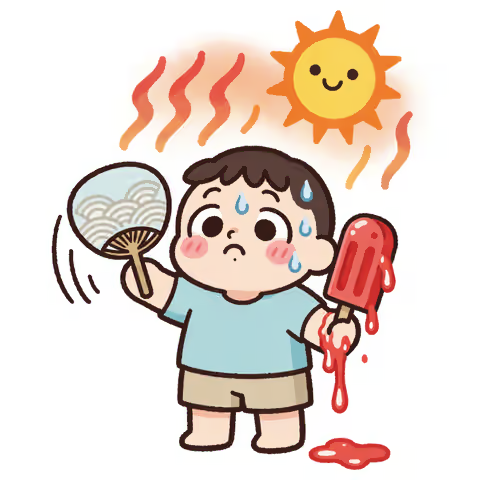
- CJK: Same 非常 fēicháng. Canto fei1 soeng4. JP 非常に (also “emergency” 非常口). Mandarin 非常 + adj. HSK 非常 is old; here it’s Canto pronunciation.
- Fun fact: 非常熱, no 的 needed. 天氣 = weather. Stronger than 好熱 in writing; spoken HK also loves 好 / 超.
- Memorize: Sun, melting popsicle: 非常熱. Fan yourself.
- Study tip: 非常 + adjective. 非常口 in JP is a false friend (emergency exit). Don’t read fei1 as 飛.
13. 裏面(leoi5 min6)
inside · di dalam
Example: 袋裏面有咩? — What's inside the bag?

- CJK: 裏 = 裡 = 里 lǐ. 面 = min6. Canto leoi5 min6. Mandarin 里面. Pair with 入面 (#1): fridge vs bag.
- Fun fact: 有咩 = what’s there (咩 = 什么). 袋 = bag. 裏面 after the container, same slot as 入面, more “inner side / contents.”
- Memorize: Open bag, peer in: 裏面有咩? Different prop from the fridge card.
- Study tip: X 裏面. Traditional 裏 on the card. Don’t merge it with 入面 in Anki — two reviews.
14. 重(zung6)
still; yet · masih
Example: 我哋重未走。 — We still haven't left.
- CJK: Character 重 = zhòng heavy / chóng again in Mandarin. Canto zung6 here = 还 / 仲. Yesterday’s card 仲 is the same adverb, different glyph. Heavy reading is cung5.
- Fun fact: 重未 = still not yet. 走 = leave. Same sentence shape as yesterday 佢仲未食飯. Two spellings, one meaning.
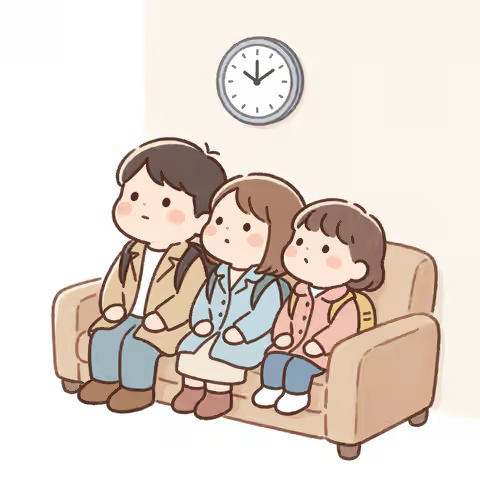
- Memorize: Group still on the sofa, clock ticking: 重未走. Don’t lift a heavy box.
- Study tip: 重 + verb. 重未. If you answer “heavy,” you used cung5. Compare 仲 on 09-07.
15. 當我(dong1 ngo5)
when I… · ketika saya…
Example: 當我哋喺雨傘革命最前線嗰陣。 — When we were on the front lines of the Umbrella Revolution.

- CJK: 當 = 当 dāng “when / as.” Canto dong1. 我 = ngo5. Mandarin 当我…. JP 私が〜とき. 雨傘革命 = Umbrella Movement, 2014.
- Fun fact: Incomplete-looking clause: 當…嗰陣 = at the time when. 我哋 widens “I” to “we.” 前線 = front line. Formal/news flavor vs 嗰陣時.
- Memorize: Umbrellas in a street, then-and-now: 當我哋喺前線. Don’t gloss 當 as “pawnshop” (當舖 dong3).
- Study tip: 當 + clause. 當我 + verb. Tone dong1 not dong3. 我哋 still counts for this 當我 card.