Anki session
HSK 4
汉语
- New
- 20
- Learn
- 0
- Review
- 85
Session: 20 new remaining of the 20/day cap · 0 learning waiting · 85 reviews due.
Click HSK::Level 4, not the parent HSK. No learning queue, so new cards interleave with the 85 reviews.
Session plan
- Nothing in learning. When a new one pops, match it to the number below.
- Clusters: write & count (作文 / 篇), body & check (躺 / 体检), work & money (活 / 免费 / 减少 / 快递 / 生意), connect (线上 / 信息 / 联系 / 广告).
- Dual-reading traps: 活 in today’s sentence is work (活儿), not “alive”; 挂 is take to heart; 省 is province, not “save”; 生意 is shēngyi business, not shēngyì “vitality.”
- 信息 is a message, not yesterday’s 信号. 期中 is midterm, not 其中.
1. 活(huó)
to live; alive; work; workmanship · hidup; kerja; pekerjaan
Example: 今天活儿太多了。 — There's too much work today.

- CJK: 活 = JP 活 かつ (活動, 生活) / kun いきる. Canto wut6. Same 活 as 生活, 活动, 活泼. The four-dot 氵 is water — living water.
- Fun fact: Dictionary leads with “alive.” Today’s sentence is 活儿 — chores / odd jobs / workload. 干活 = do work. 生活 is “life,” not this card’s example. 太…了 stacks the complaint.
- Memorize: Desk buried in papers: 活儿太多了. Wipe sweat, not a heart-monitor “alive” scene.
- Study tip: 干活 / 活儿 / 工作. If the audio is 生活, that’s a different card. Don’t answer 火 (huǒ).
2. 广告(guǎnggào)
advertisement; to advertise · iklan
Example: 电视上有很多广告。 — There are a lot of ads on TV.

- CJK: 广 = 廣. 告 = same 告 as 告诉. JP 広告 こうこく. Canto gwong2 gou3. 广 vs Japanese 広 (広告 is wrong).
- Fun fact: TV 广告, 广告牌, 做广告. Classifier 条 / 则 / 个. Skip-button culture: 这段广告真长. Not 广播 (radio broadcast).
- Memorize: TV, skip-ad button, product jingle: 很多广告.
- Study tip: 广告 + 多/少. 打广告. Don’t answer 广播 or yesterday’s 信号.
3. 演出(yǎnchū)
performance; to perform · pertunjukan; tampil
Example: 这场演出太棒了,我们都想再看一遍。 — This show was wonderful, and we all want to see it again.

- CJK: 演 = 演 yǎn (表演, 演讲). 出 = chū. JP 演出 えんしゅつ. Canto jin2 ceot1. Classifier 场.
- Fun fact: Stage, concert, play — the event and the verb. 再看一遍 = one more time, not 一遍 as “once and done.” 棒 is “awesome,” street register.
- Memorize: Curtain call, encore: 再看一遍. Clap, don’t confuse with 电影.
- Study tip: 一场演出. 演出 + 节目. 表演 is the acting; 演出 is often the whole show.
4. 作文(zuòwén)
essay; to write a composition · karangan; mengarang
Example: 我不太会写作文,每次都写很久。 — I'm not very good at writing essays; it always takes me a long time.

- CJK: Same 作文. JP 作文 さくぶん (school essay). Canto zok3 man4. 作 = make; 文 = writing. Pairs with 篇 (#9).
- Fun fact: School genre, not a novel. 会写作文 = know how. 写很久 is duration, not 很久没写. Indonesian mengarang matches 作.
- Memorize: Blank exam booklet, clock: 写作文,写很久. Head in hands.
- Study tip: 写作文 / 一篇作文. Don’t answer 文章 (any writing) unless the card is that.
5. 躺(tǎng)
to recline; to lie down · berbaring
Example: 他太累了,一回家就躺在床上。 — He was so tired that he lay down on the bed as soon as he got home.

- CJK: JP 横になる / 寝転ぶ. Canto tong2. 身 + 尚 — the body still on the bed. Not 睡 (sleep) and not 躺 vs 趟 tàng (mw for trips).
- Fun fact: 躺 is posture: on your back/side, not necessarily asleep. 一…就… = as soon as. 躺平 is the slang “lie flat” (quit the rat race) — extra, not the card.
- Memorize: Face-up on the mattress, shoes still on: 一回家就躺.
- Study tip: 躺在 + place. 躺下. Don’t read 趟. 睡 is “sleep”; you can 躺 without 睡.
6. 挂(guà)
to hang; hang up (the phone); be concerned · menggantung; menggantungkan di hati
Example: 别把这件事挂在心上。 — Don't take this to heart.

- CJK: 挂 = 掛. JP 掛ける / 掛ける. Canto gwaa3. Same 挂 as 挂电话, 挂号. Yesterday’s 心 + today’s idiom.
- Fun fact: Physical 挂 (coat on a hook, 挂电话 = hang up) vs idiom 挂在心上 = keep worrying. The example is the idiom. Slang 挂了 = died / failed an exam — later.
- Memorize: Tiny matter on a hook over the heart: 挂在心上. Then swipe it off: 别挂.
- Study tip: 挂在心上 / 挂念. 挂电话. Don’t answer 担心 as the word (that’s the gloss). Tone guà not 刮 guā.
7. 线上(xiànshàng)
online · daring; online
Example: 因为下雨,我们把会议改成线上了。 — Because it's raining, we changed the meeting to online.

- CJK: 线 = 線. 上 = on. JP オンライン; 線上 exists. Canto sin3 soeng6. Antonym 线下. 线 vs 限.
- Fun fact: COVID-era default: 线上会议 / 线上课. 改成 = change into. Rain is the excuse, not 线上购物 (that’s also valid, different scene).
- Memorize: Laptop on a wet window: 改成线上. Camera-on rectangle.
- Study tip: 线上 + 会议/课/购物. 在线上. Not 网上 alone (close cousin) if the card shows 线上.
8. 减少(jiǎnshǎo)
to reduce; to decrease · mengurangi
Example: 我们要减少浪费。 — We need to reduce waste.

- CJK: 减 = 減. 少 = shǎo. JP 減少 げんしょう. Canto gaam2 siu2. Antonym 增加. 减 vs 简 (简单).
- Fun fact: 减少 + noun (浪费, 成本, 时间). 浪费 is waste, not 忘. 要 = need to, policy tone.
- Memorize: Overflowing bin, then a smaller bin: 减少浪费. Chopping motion down.
- Study tip: 减少 + amount/noun. 比去年减少. Don’t answer 少 as a lone adjective.
9. 篇(piān)
classifier for essays / articles · kata bilangan karangan
Example: 这周我已经写了三篇作文。 — I have already written three essays this week.

- CJK: JP 編 (classifier 編 is rarer; 一篇作文 still works in CN class). Canto pin1. Bamboo-slip 篇: a bound “piece.” Ties to 作文 (#4).
- Fun fact: Measure word, not “chapter” as the main HSK job. 一篇文章 / 一篇报道 / 三篇作文. 已经…了 seals completion.
- Memorize: Three stacked exam booklets: 三篇作文. Chop 篇 after the number.
- Study tip: Number + 篇 + 作文/文章. Not 张 (paper) or 本 (book). 遍 is “times,” different.
10. 免费(miǎnfèi)
free (of charge) · gratis
Example: 今天停车免费。 — Parking is free today.

- CJK: 免 = exempt (免费, 避免). 费 = 費 fee. JP 無料 むりょう. Canto min5 fai3. 免 vs 兔 (rabbit).
- Fun fact: 免费 ≠ 自由 (free as in liberty). 停车免费, 免费试用, 免费 wifi. Yesterday 停 was park; today the lot is 免费.
- Memorize: Parking barrier open, big 免 stamp over a coin: 停车免费.
- Study tip: 免费 + noun/verb. 免费用. Don’t answer 便宜 (cheap, still costs).
11. 信息(xìnxī)
information; news; message · pesan; informasi
Example: 我刚才给你发了一条信息,你看到了吗? — I just sent you a message—did you see it?

- CJK: 信 = xìn. 息 = xī (消息). JP 情報 / メッセージ. Canto seon3 sik1. Not yesterday’s 信号 xìnhào.
- Fun fact: On the phone, 一条信息 ≈ a text. 发信息. 信息 also = data/info (信息技术). Classifier 条. 看到了吗 is “did you see it,” not 看懂.
- Memorize: Chat bubble, unread badge: 发了一条信息. Tap the notification.
- Study tip: 发/收信息. Don’t answer 信号 or 消息 unless that’s the card. 息 is xī, not xí.
12. 体检(tǐjiǎn)
physical checkup · pemeriksaan kesehatan
Example: 医生让我下个月再来医院做体检。 — The doctor asked me to come back to the hospital next month for a checkup.

- CJK: 体 = 體. 检 = 檢. Short for 体格检查. JP 健康診断 けんこうしんだん. Canto tai2 gim2. 检 vs 验 (化验).
- Fun fact: Annual 体检, blood pressure, chest X-ray. 做体检. 再来 = come again, follow-up, not 再见.
- Memorize: Hospital gown, blood-pressure cuff: 做体检. Calendar “next month.”
- Study tip: 做/体检. 体检报告. Don’t answer 检查 alone if the card is the compound.
13. 省(shěng)
province; to save / omit · provinsi; menghemat
Example: 大学毕业后,他就回省里工作了。 — After graduating from college, he went back to work in his province.

- CJK: 省 = JP 省 しょう (ministry; 省略) / 省く. Canto saang2 (province / save). Same glyph as 节省. Other reading xǐng in 反省 — not today.
- Fun fact: Two HSK jobs. (1) 河北省, 省里 = the provinces, not Beijing. (2) 省钱 / 省时间. The example is (1). 回省里 = go back inland / home province after uni.
- Memorize: Graduation cap, train ticket home: 回省里工作. Map of a 省, not a piggy bank unless the audio is 省钱.
- Study tip: 省里 / 省会. 省钱 is the other sense — wait for the sentence. Don’t read xǐng.
14. 期中(qīzhōng)
midterm; interim · tengah semester
Example: 下周我们就期中考试了。 — We're having midterm exams next week.

- CJK: 期 = qī as in 星期, 学期. 中 = middle. JP 中間試験. Canto kei4 zung1. Pair 期末. Not 其中 (among which) from yesterday’s “how many” cluster.
- Fun fact: 期中考试, often shortened to 期中. 就…了 = already upon us. Week before panic.
- Memorize: Calendar mid-semester red block: 期中考试. Stack of 作文 (#4).
- Study tip: 期中 / 期末. Don’t hear 其中. 期 is qī not qí (旗).
15. 强(qiáng)
strong; powerful · kuat
Example: 这场比赛他们比我们强多了,我们还得再练。 — They were much stronger than us in this match; we need to practice more.

- CJK: 强 = 強. JP 強い つよい / 強 きょう. Canto koeng4. Antonym 弱. Surname Qiáng exists; ignore unless a name.
- Fun fact: 比…强 = stronger than. 强多了 = much stronger. 还得再练 = still have to train. 强迫 is “force,” different word (qiǎng).
- Memorize: Scoreboard blowout: 比我们强多了. Then extra drills.
- Study tip: 很强 / 比 X 强. 强大. Tone qiáng; 强迫 is qiǎng. Don’t answer 壮 unless that’s the card.
16. 快递(kuàidì)
express delivery · paket kilat
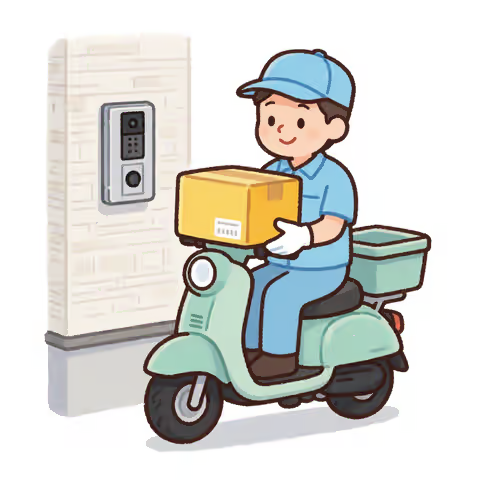
Example: 我今天早上寄了快递,下午应该就能到你家。 — I sent an express parcel this morning; it should reach your place this afternoon.
- CJK: 快 = fast. 递 = 遞 to hand over. JP 宅配便 / 速達. Canto faai3 dai6. 递 vs 弟.
- Fun fact: Meituan/SF culture. 寄快递 / 送快递 / 快递小哥. Same-day boast: 早上寄,下午到. 应该就能 = should be able to.
- Memorize: Yellow bag, scooter, doorbell: 寄了快递. Not a slow 邮局 queue.
- Study tip: 寄/收快递. Classifier 个 / 票. Don’t answer 快车.
17. 日常(rìcháng)
day-to-day; everyday · sehari-hari
Example: 这是我日常用的杯子,你先用吧。 — This is the cup I use every day—go ahead and use it first.

- CJK: 日 + 常. JP 日常 にちじょう. Canto jat6 soeng4. 常 as in 经常, 平常. Not 日常 = “Japan’s often.”
- Fun fact: Adjective: 日常用的, 日常生活. The cup is the mundane object, not a ceremony mug. 你先用吧 is lend-it-now, not “you usually use it.”
- Memorize: Favorite mug by the kettle: 日常用的杯子. Hand it over.
- Study tip: 日常 + noun. 日常工作. Don’t answer 每天 as the word (that’s the gloss).
18. 小吃(xiǎochī)
street food; snack · camilan; makanan pinggir jalan
Example: 下班后我们去吃点小吃吧。 — After work let's go have some street snacks.

- CJK: 小 + 吃. JP 軽食 / 食べ歩き. Canto siu2 hek3. Not 小说. 吃 is the verb inside the noun.
- Fun fact: Night-market skewers, 煎饼, 臭豆腐 — 小吃 is the category. 吃点小吃 doubles 吃. 吧 softens the plan.
- Memorize: Stall steam, two office workers: 去吃点小吃. Skewer in hand.
- Study tip: 吃小吃. 小吃街. Not 零食 (packaged snacks at home) if the scene is the street.
19. 联系(liánxì)
to contact; to link; connection · menghubungi; menghubungkan
Example: 把这两个点联系起来。 — Link these two points together.

- CJK: 联 = 聯. 系 = 係 / 系. JP 連絡 れんらく / 連携. Canto lyun4 hai6. 系 vs 关系.
- Fun fact: Two jobs. (1) 联系我 = contact me. (2) 联系起来 = connect ideas/dots. The example is (2) — a diagram, not a phone call. 保持联系 is (1).
- Memorize: Two dots, a line drawn: 联系起来. Then optionally a WeChat QR for the other sense.
- Study tip: 联系 + person. 把 A 和 B 联系起来. Don’t answer 关系 for the verb.
20. 生意(shēngyi)
business · usaha; bisnis
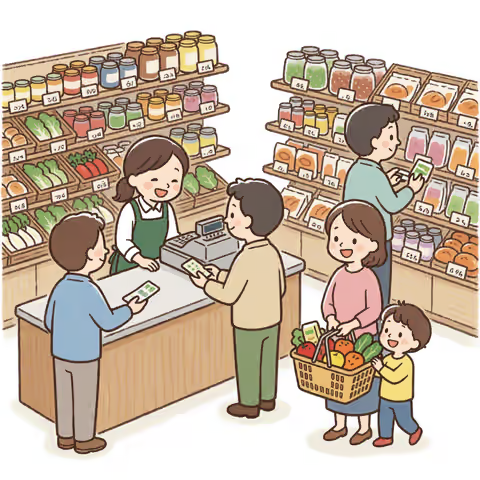
Example: 他们家今年的生意比去年好多了。 — Their family's business is much better this year than last year.
- CJK: 生 + 意. JP 商売 しょうばい. Canto saang1 ji3. Neutral 意: shēngyi, not shēngyì (生机 “vitality,” textbook trap).
- Fun fact: 做生意, 生意好/不好. Family shop vibe in 他们家. 比去年好多了 = much better than last year. Classifier 笔.
- Memorize: Shop shutter up, busier till: 生意好多了. Don’t draw a heartbeat.
- Study tip: 做生意 / 生意好. Pronounce the light 意. If you say shēngyì, you flipped the card’s job.