Anki session
HSK 4
汉语
- New
- 20
- Learn
- 2
- Review
- 70
Session: 20 new remaining of the 20/day cap · 2 learning waiting · 70 reviews due.
Click HSK::Level 4, not the parent HSK. Learning first, then new cards interleave with reviews.
Session plan
- Clear the 2 learning cards first: they are still 看法 kànfǎ and 并且 bìngqiě. They will eat the start of the session.
- Then new cards interleave with the 70 reviews. When a new one pops, glance at its number below before answering.
- Clusters: road & stop (信号 / 车速 / 停 / 桥), how many (千克 / 少数 / 其中), time off (节假日 / 暑假 — yesterday’s 假日 is the short twin), discourse (真正 / 再说 / 继续 / 赶紧).
- Reading traps: 节假日 / 暑假 both jià not jiǎ; 落 in today’s sentence is fall behind, not “drop”; 醒 is sober up; 美 is scenery, not 美国; 再说 is besides.
1. 信号(xìnhào)
signal · sinyal
Example: 这里手机信号不太好,我打不了电话。 — The phone signal here is not great, so I cannot make a call.

- CJK: 信 = 信 xìn (same). 号 = 號. JP 信号 しんごう (traffic lights, rail signals). Canto seon3 hou6. Not 讯 (消息) and not 号码’s 号 alone.
- Fun fact: Phone bars, Wi-Fi, and 红绿灯 are all 信号. 打不了电话 = cannot get a call through (potential 不了), not “I don’t know how to dial.” 信号灯 is a traffic light in more technical talk; street talk still 红绿灯.
- Memorize: Phone held up, zero bars: 信号不太好. Then a dead call: 打不了.
- Study tip: 信号 + 好/差/弱/强. 打不了 ≠ 打不到 (both “can’t get through,” 不了 is the HSK4 potential). Don’t answer 信息 (message).
2. 千克(qiānkè)
kilogram · kilogram
Example: 这些米一共十千克,我一个人拿不动。 — This rice is ten kilograms in total; I can't carry it by myself.
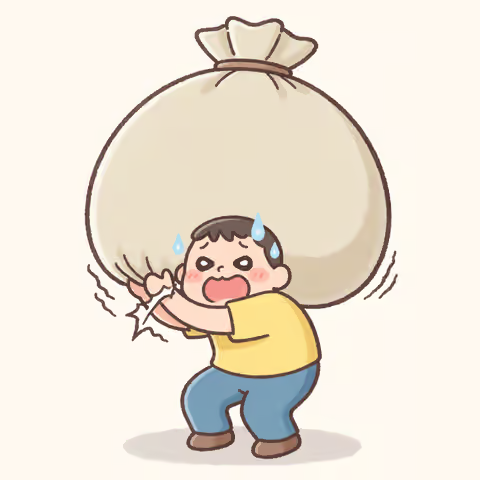
- CJK: 千 = 1000. 克 = gram (SI). JP says キロ / キログラム; the characters 千克 exist but sound textbook. Canto cin1 hak1. 公斤 gōngjīn is the same mass in spoken Mandarin.
- Fun fact: 1 千克 = 1 公斤 = 1000 克. Packs of rice in China are often 5 / 10 千克. 拿不动 is “too heavy to lift,” same 不了/不动 potential family as 打不了.
- Memorize: A 10 kg rice sack, both arms shaking: 十千克,拿不动.
- Study tip: Classifier-ish unit, no 个. 一共 + number + 千克. If the audio is 公斤, that’s the twin — still kilogram, different card.
3. 低(dī)
low; to lower (one's head) · rendah; menunduk
Example: 请把头低一下。 — Please lower your head a bit.

- CJK: 低 = JP 低い ひくい (adjective) / 低头. Canto dai1. Antonym 高. Same 低 as 低温, 低调, 低价.
- Fun fact: Today’s card is the verb: 把头低一下 (duck for a photo / a doorframe). Adjective 声音很低, 水平很低. 低头 has a second life as “bend the neck over a phone” (低头族).
- Memorize: Palm on the crown, press down: 低一下. Doorframe. Not 掉 (drop an object).
- Study tip: 把 + 头 + 低. 低着头. Don’t read it as 底 dǐ (bottom) — missing the person radical’s job, different word.
4. 心(xīn)
heart; mind · hati; pikiran
Example: 这件事一直在我心上,我忘不了。 — This matter has stayed on my mind; I cannot forget it.

- CJK: 心 = JP こころ (kun) / しん (on: 安心, 中心). Canto sam1. Same glyph as 小心, 开心, 关心. The four-dot 灬 in 点心 is not this card.
- Fun fact: 心上 = on my mind / on my heart, not anatomically “on the organ.” 忘不了 again is potential. 心里, 心情, 关心 are the HSK cluster; 心脏 is the medical organ.
- Memorize: Tap sternum: 在我心上. Then a stuck thought bubble that won’t 忘.
- Study tip: 心里 vs 心上 (both “in mind”). Don’t answer 心脏 unless the sentence is a hospital. 小心 is “careful,” not “small heart.”
5. 停(tíng)
stop; park (a car) · berhenti; parkir
Example: 你先把车停在路边,我马上出来。 — Park the car by the roadside first; I'll come out right away.

- CJK: 停 = JP 止まる / 停める / 停車 ていしゃ. Canto ting4. 亭 with 亻 — a person at the kiosk, halted. Not 仃.
- Fun fact: Two HSK jobs. (1) 停车 / 停在路边 = park. (2) 停一下 / 雨停了 = halt. Today’s 把车停在 is (1). 马上出来 is the passenger hopping out, not 出来 as Japanese できる.
- Memorize: Hazard lights, curb: 停在路边. Wave “I’ll come out.”
- Study tip: 把车停在 + place. 停车位. 停 vs 站 (a person/bus stands; a car 停). Don’t write 亭.
6. 举办(jǔbàn)
hold (an event) · mengadakan
Example: 学校举办比赛。 — The school is holding a contest.

- CJK: 举 = 舉. 办 = 辦. JP 開催 かいさい / 行う. Canto geoi2 baan6. 举办比赛 / 举办晚会 / 举办展览.
- Fun fact: The organizer 举办s; guests 参加. 办 by itself is “handle / run (a school, a card).” 举办 is specifically putting on an event. Short example: school + contest.
- Memorize: Principal with a starting pistol, banner 比赛: 学校举办.
- Study tip: 举办 + event noun. Not 举行 vs 举办 as a war — 举行 is a bit more ceremony/meeting; both accept 比赛. Don’t answer 参加.
7. 真正(zhēnzhèng)
genuine; really · sungguh; benar-benar
Example: 这次我真正理解老师说的意思了。 — This time I really understood what the teacher meant.

- CJK: 真 + 正. JP 真正 is rare (真正面 is “straight-on”); everyday JP is 本当に — today’s Japanese new card. Canto zan1 zing3. Not 正正.
- Fun fact: Heavier than 真的. 真正理解 = it finally clicked, not “I heard the words.” Pairs with 意思 (what the teacher meant). 真正的朋友 is “a real friend,” the adjective slot.
- Memorize: Lightbulb over a notebook: 真正理解了. Contrast a fake nod 真的吗?
- Study tip: 真正 + verb. 真正的 + noun. Don’t swap in 实在 (that’s “honestly / indeed” with a different flavor) or 正确 (correct).
8. 车速(chēsù)
vehicle speed · kecepatan kendaraan
Example: 现在车速太快了。 — The speed is too fast now.

- CJK: 车 = 車. 速 = same 速 as 速度, 加速. JP 車速 しゃそく. Canto ce1 cuk1. 速 vs 快: 快 is “fast,” 速 is the rate.
- Fun fact: Dashboard number. 车速太快 / 控制车速 / 车速限制. 速度 is generic speed (work, internet, a runner); 车速 is wheels. Yesterday-ish 勇敢 is a person; this is a needle.
- Memorize: Speedometer past the red arc: 车速太快. Foot off the pedal.
- Study tip: 车速 + 快/慢/高. Not 快车 (express train/bus). 超速 is the ticket; 车速 is the reading.
9. 赶紧(gǎnjǐn)
hurriedly; without delay · segera; buru-buru
Example: 你赶紧回家吧。 — Hurry home.

- CJK: 赶 = 趕. 紧 = 緊. JP 急いで. Canto gon2 gan2. 赶 by itself is “catch (a train) / drive (cattle).” 紧 is tight.
- Fun fact: Adverb of do it now. 赶紧回家, 赶紧走, 赶紧说. 赶快 is the near-twin. 赶时间 is “pressed for time,” different frame.
- Memorize: Shove someone toward the door: 赶紧回家. Clock behind them.
- Study tip: 赶紧 + verb. Soften with 吧. Not 赶快 vs 赶紧 as a fight — both work; the card wants 赶紧. Don’t use it for “I hurried yesterday” as a verb; that’s 赶.
10. 少数(shǎoshù)
small number; minority · sedikit; minoritas
Example: 只有少数人同意今天就出发。 — Only a few people agree to set out today.
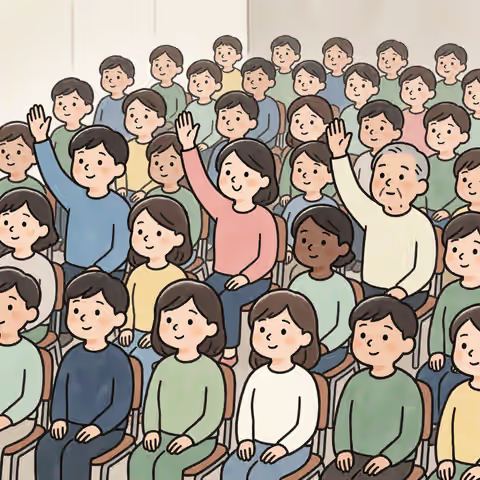
- CJK: 少 + 数(數). JP 少数 しょうすう (少数派). Canto siu2 sou3. Yesterday 人数 was the headcount; this is “the few.” Antonym 多数.
- Fun fact: 少数人 = a minority of people (today). 少数民族 is the political/ethnic term — same 少数, extra noun. 只有…才-adjacent: 只有少数人同意.
- Memorize: A crowd of 30, three hands up: 少数同意. The rest sit.
- Study tip: 少数 + 人/国家. 少数服从多数 is a set phrase. 少 shǎo not shào (young). Don’t answer 数 shǔ (to count).
11. 再说(zàishuō)
besides; say again; later · lagipula; bilang lagi
Example: 我今天太累了,再说时间也不够。 — I'm too tired today, and besides, there isn't enough time.

- CJK: 再 + 说(說). JP それに / また. Canto zoi3 syut3. Three jobs on one card; today is the conjunction.
- Fun fact: (1) 再说,… / …,再说… = moreover / besides (the example). (2) 以后再说 = let’s talk later. (3) 再说一遍 = say it again. Learning card 并且 is “and also” joining qualities; 再说 piles on an extra reason.
- Memorize: Two fingers: reason 1 太累, reason 2 时间不够 — stamp 再说 between them.
- Study tip: Comma 再说… as a linker. If you answer “say it again,” you used sense (3) and missed the audio. 而且 is Cantonese/Mandarin’s cousin linker.
12. 继续(jìxù)
continue · lanjut
Example: 休息一会儿以后,我们继续工作。 — After resting for a while, we'll continue working.

- CJK: 继 = 繼. 续 = 續. JP 継続 けいぞく / 続ける. Canto gai3 zuk6. 继 vs 断. Same 续 as 持续, 手续’s 续 only by shape-family.
- Fun fact: Pause, then same activity. 继续工作, 继续说, 待续. 一会儿 = a short while (HSK classic). Not 持续 (keep going without the rest in the middle).
- Memorize: Coffee cup down, sleeves up: 继续工作. Timeline: rest → same job.
- Study tip: 继续 + verb/noun. 继续 vs 再 (再 often “do once more from scratch”). 不停 is “without stopping,” different card.
13. 节假日(jiéjiàrì)
public holiday · hari libur resmi
Example: 节假日我们去旅行。 — We travel on public holidays.
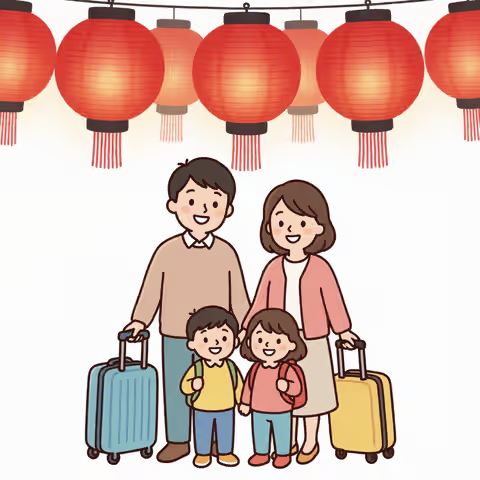
- CJK: 节 = 節. 假 = same 假 as yesterday’s 假日 jiàrì. 日 = day. JP 祝日 / 休日. Canto zit3 gaa3 jat6. jià not jiǎ (false).
- Fun fact: 节假日 = 节日 + 假日 mashed: festival days and official leave (国庆, 春节, 调休). 假日 can be any day off; 节假日 smells like the calendar with red numbers. 暑假 (#16) is a season off, not a public holiday.
- Memorize: Red calendar squares + suitcase: 节假日去旅行.
- Study tip: 在节假日 / 节假日里. Don’t tone 假 as jiǎ. 节日 is the festival itself (中秋节); 节假日 is the time off around it.
14. 落(luò)
fall; fall behind · jatuh; tertinggal
Example: 他这次考试又落在别人后面了。 — He fell behind the others on this exam again.

- CJK: 落 = JP 落ちる おちる / 落第 らくだい. Canto lok6. Today is not 落下 an object. 落后 is the two-syllable twin of this sentence.
- Fun fact: Dictionary dump is huge (sun sets, tide, write down, whereabouts). The audio is 落在别人后面 = lag behind, plus 又 = again. 落后, 落选, 落泪 are other lives; 日落 is the sky.
- Memorize: Race, last runner, dust: 落在后面. Exam paper with a red 又.
- Study tip: 落在 + 后面. 落后于. Don’t pick “drop” or là (some 落下 colloquial). 考砸了 is slang; this card wants 落.
15. 醒(xǐng)
wake; sober up · bangun; sadar dari mabuk
Example: 他喝了那么多酒,到现在还没醒。 — He drank so much that he still hasn't sobered up.

- CJK: 醒 = JP 醒める さめる (wake / the dream breaks / drunk wears off). Canto sing2. 星 + 酉 (wine jar) — the wine-character is the tell for this example.
- Fun fact: 醒 = wake from sleep or from drink. 还没醒 after 那么多酒 is sober-up. 醒来, 叫醒, 提醒 (remind — 醒 as “alert”). Japanese today’s 起こす is the transitive wake someone cousin.
- Memorize: Empty bottles, face on the table, clock 现在: 还没醒. Flick water — still out.
- Study tip: 喝醉 / 醒酒 / 还没醒. If there is no 酒, 醒 is probably sleep. Don’t answer 睡.
16. 暑假(shǔjià)
summer vacation · liburan musim panas
Example: 今年暑假我打算去北京看朋友。 — This summer vacation I plan to go to Beijing to see friends.

- CJK: 暑 = heat (中暑, 暑假). 假 = jià. JP 夏休み なつやすみ — yesterday’s Japanese 夏. Canto syu2 gaa3. Not 署 (office).
- Fun fact: School calendar: 暑假 / 寒假. 打算 + 去 is the HSK “plan to.” 看朋友 = visit friends, not “watch” them. Pairs with #13: 节假日 is a long weekend; 暑假 is weeks.
- Memorize: Sun-hat, Beijing postcard: 暑假去北京. Wipe sweat — 暑.
- Study tip: 今年暑假. 放暑假. jià again. 夏天 is the season; 暑假 is the break inside it.
17. 美(měi)
beautiful · indah
Example: 这儿的风景很美。 — The scenery here is beautiful.
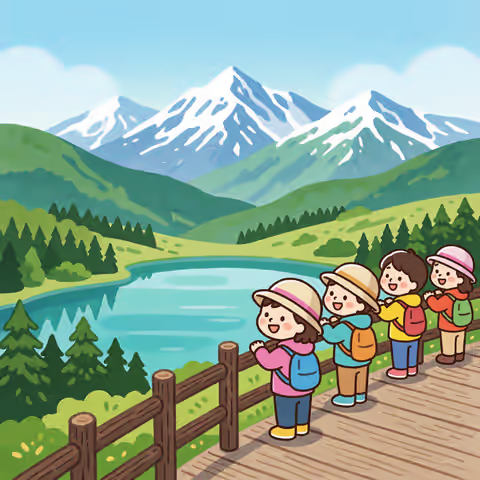
- CJK: 美 = JP 美しい うつくしい / 美 び (美術). Canto mei5. Same 美 as 美丽, 美好, 美国. Today is the adjective, not the country.
- Fun fact: CEDICT leads with Americas / USA — ignore that lead. 风景很美 is the card. 美 can be “pleased with oneself” (美得不行) later. 美丽 is the two-syllable dressy twin.
- Memorize: Viewpoint railing, landscape: 风景很美. Cover the 国 so you don’t shout America.
- Study tip: 很美. 美 vs 漂亮 (people/clothes more 漂亮; views 美). Bound 美国 / 美元 is another day.
18. 其中(qízhōng)
among them; of which · di antaranya
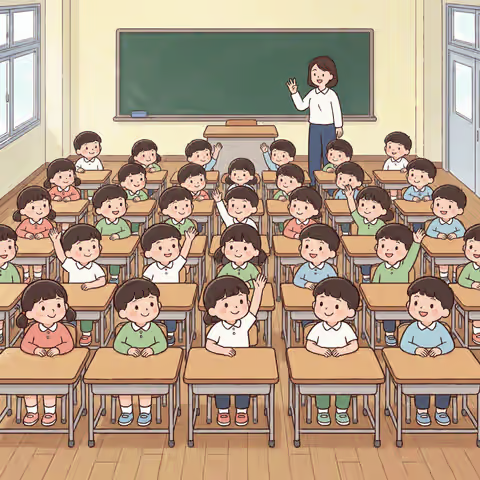
Example: 我们班有三十个人,其中一半是女生。 — There are thirty people in our class, and among them half are girls.
- CJK: 其 = that/its (其实, 其他). 中 = in. JP その中. Canto kei4 zung1. Yesterday’s Cantonese 其實 shares 其.
- Fun fact: After a total, zoom to a subset. 三十个人,其中一半…. 其中有 / 其中之一. Not 中文’s 中 and not 其中 as “in the middle of the room” (那是 中间).
- Memorize: Pie chart: 30 students, slice 15 女生, label 其中.
- Study tip: Comma 其中…. 其中的. 其他 is “the others”; 其中 is “inside that group.” Don’t start a sentence with 其中 with nothing before it.
19. 桥(qiáo)
bridge · jembatan
Example: 过了那座桥再往左走,电影院就在前面。 — After you cross that bridge, go left; the cinema is just ahead.

- CJK: 桥 = 橋. JP 橋 はし / きょう (鉄橋). Canto kiu4. Classifier 座. 木 on the left — wooden-beam memory, even for steel.
- Fun fact: Directions card: 过了 + place + 再 + 往左走. 座 is for mountains, bridges, buildings. 过桥 = cross; 过了 = after you’ve crossed.
- Memorize: Arch bridge, left arrow, cinema: 过了桥往左.
- Study tip: 一座桥. 过桥 / 过了桥. Don’t classifier 个. 梁 is the beam, not the card.
20. 厨房(chúfáng)
kitchen · dapur
Example: 厨房里有人吗? — Is there anyone in the kitchen?

- CJK: 厨 = 廚. 房 = room. JP 台所 だいどころ everyday; 厨房 ちゅうぼう more Sino. Canto ceoi4 fong4. 房 vs 屋 vs 房间.
- Fun fact: 里 + 有人吗 is the “anyone in there?” shape. 厨房 / 客厅 / 卧室 / 卫生间 is the apartment set. 灶台 is the stove surface, not the room.
- Memorize: Peek around a door, ladle: 厨房里有人吗?
- Study tip: 在厨房 / 厨房里. Last card — don’t answer 饭馆 (restaurant). 房 fáng not fǎng.