Anki session
Cantonese 1
廣東話
- New
- 20
- Learn
- 0
- Review
- 133
Session: 20 new remaining of the 20/day cap · 0 learning waiting · 133 reviews due.
Click Cantonese::Level1. No learning queue, so new cards interleave with the 133 reviews.
This is a third sheet for today (HSK is 2026-09-06.md, Japanese is 2026-09-06-japanese-level1.md). Do not mix the three decks in one Anki session.
Session plan
- Nothing in learning. When a new one pops, match it to the number below.
- 既 (#5) and 本 (#10) already sat on yesterday’s Canto sheet — same examples. They were gathered 09-05 but never entered learning.
- Killer traps: 定 is or in today’s sentence, not “stable.” 野 is a spelling of 嘢. 呢 deck ruby le4 vs spoken ni1/ne1 in 呢個.
- Clusters: think / actually / unexpectedly (諗 / 其實 / 竟然), bring / follow / leave (帶 / 跟 / 離開 / 準備), question words (呢 / 點樣 / 乜).
1. 準備(zeon2 bei6)
prepare; preparation · bersiap
Example: 我根本都未開始準備,我仲返緊學。 — I haven't even started preparing, I'm still in school.

- CJK: Exact twin of 准备 zhǔnbèi. JP 準備 じゅんび. 準 = 准. 備 = 备. Canto zeon2 bei6.
- Fun fact: 仲返緊學 = still going to school (緊 ≈ 着). 未 = not yet (未開始). 根本都 = “at all.” The card wants 準備, not 开始.
- Memorize: Empty suitcase + schoolbag: 未準備, 仲返學.
- Study tip: 準備 + verb (準備離開 is #13’s sentence). 準備好未. Noun: 做準備.
2. 感覺(gam2 gok3)
feeling; sensation · perasaan
Example: 我有種唔舒服嘅感覺。 — I have a feeling of discomfort.

- CJK: 感觉 gǎnjué. JP 感覚 かんかく (more “sense/perception”). Canto gam2 gok3. 覺 = 觉.
- Fun fact: 有種…嘅感覺 = “have a kind of … feeling.” 唔舒服 = unwell / uneasy. 感覺 can also be “I feel that…” (我感覺…).
- Memorize: Hand on stomach, wince: 唔舒服嘅感覺.
- Study tip: 感覺 vs 諗 (#16). 感覺 is a vibe in the body. 諗 is thoughts in the head.
3. 呢(le4 / spoken ni1 · ne1)
this; (also) particle · ini
Example: 你鍾意呢個? — Do you like this one?
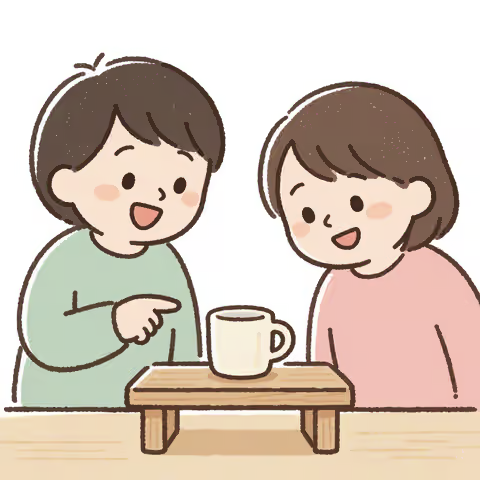
- CJK: Same 呢 as Mandarin ne. As “this,” Canto 呢個 ni1/ne1 go3 = 这个. Deck ruby le4 is a citation/Lai reading; the example ruby is ne1. Don’t “correct” the card to Mandarin ne.
- Fun fact: Two lives. (1) Demonstrative: 呢個, 呢度, 呢本. (2) Sentence-final 呢, like Mandarin. Today’s sentence is (1). 鍾意 = 喜欢.
- Memorize: Point at an object under your nose: 呢個. If the sentence has no object, it might be the particle.
- Study tip: 呢 vs 嗰 (that). 呢個 vs 嗰個. Particle 呢 is a different review — check the example first.
4. 定(ding6)
or (in today’s sentence); (dict: stable) · atau; (kamus: stabil)
Example: 噉嘅設計好定壞就見仁見智啦。 — Whether this design is good or bad is a matter of opinion.

- CJK: Character 定 = 定 dìng (一定, 决定, 安定). JP 定. Canto ding6. Dictionary on this card says “stable; calm.” The example is not that. 好定壞 = good or bad. Spoken 定 / 定係 = 还是.
- Fun fact: 見仁見智 = “depends who you ask.” 噉嘅 = this kind of. If you answer “stable,” you’ve read CEDICT and ignored the audio.
- Memorize: Two thumbs, left 好 right 壞, shrug 定. For “stable” you want 穩定 / 安定, another day.
- Study tip: 茶定咖啡. 定係. 唔定 = maybe / not necessarily. This is the 以→以為 style trap from yesterday.
5. 既(gei3)
written stand-in for 嘅 ge3 · varian 嘅
Example: 呢本既內容好有趣。 — This book's content is very interesting.

- CJK: Same card as yesterday. Do not read as Mandarin 既 jì (既然). Deck isolation gei3 is the Mandarin character’s Canto reading. Particle is ge3 = 嘅 = 的.
- Fun fact: 呢本嘅內容. Older typing writes 既 for 嘅. 本 here is the book classifier (see #10’s other life).
- Memorize: Cross out 既, write 嘅. Yesterday’s movie, rerun.
- Study tip: If you already rated this 09-05, it still never entered learning — it will feel like a repeat new card.
6. 做(zou6)
do; make; work as · lakukan; kerja sebagai
Example: 你而家做緊咩? — What are you doing right now?

- CJK: 做 = 做 zuò. Canto zou6. 而家 = 现在. 緊 = progressive. 咩 = what (softer than 乜).
- Fun fact: 做嘢 = work / do stuff. 做醫生 = be a doctor. 作 is the written cousin; speech is 做.
- Memorize: Hands busy, ask 做緊咩. Pair 咩 with 乜 (#20).
- Study tip: 做緊 = 正在做. Don’t write 在做 on this card. 做 vs 搞 vs 整 — 做 is the default.
7. 肯(hang2)
be willing; consent · mau; bersedia
Example: 佢終於肯教我游水喇。 — He finally agreed to teach me to swim.

- CJK: 肯 = 肯 kěn. Canto hang2 (not hon2). JP 肯. 游水 = 游泳. 終於 = 终于.
- Fun fact: 肯 is the will button. 唔肯 = refuses. 肯做 already showed up in spirit with 做. Mandarin kěn vs Canto hang2 is the whole drill.
- Memorize: Arms crossed, then unfolding: 終於肯. Splash: 游水.
- Study tip: 肯 + verb. 不肯 / 唔肯. Not 可以 (that’s permission/ability).
8. 竟然(ging2 jin4)
unexpectedly; to one’s surprise · ternyata; tidak disangka
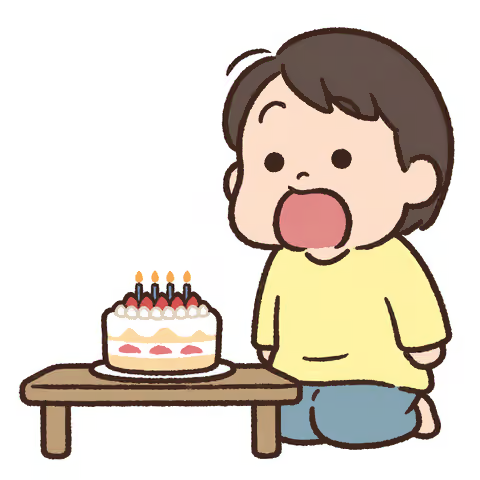
Example: 佢竟然忘記咗我個生日! — I can't believe he forgot my birthday!
- CJK: Same as 竟然 jìngrán. Canto ging2 jin4. 竟 = 竟. 然 = 然. JP 竟然 is rare; they say なんと.
- Fun fact: Complaint/surprise adverb. 竟然 + bad (or shocking-good) outcome. 忘记咗 = 忘了. 個生日 the birthday.
- Memorize: Jaw drop, calendar with a cake crossed out: 竟然忘記.
- Study tip: 竟然 vs 其實 (#14). 竟然 = I did not see it coming. 其實 = the quiet fact underneath.
9. 陣(zan6)
a (short) while; a spell · sejenak
Example: 等一陣先啦,而家好忙。 — Wait a while first, I'm busy now.

- CJK: 陣 = 阵 zhèn (一阵雨, 阵地). Canto zan6. 一陣 = a moment. 呢陣 = these days / this period.
- Fun fact: Classifier for a burst (一陣雨, 一陣痛) and the everyday “hang on a sec”: 等一陣. 先啦 = first / for now.
- Memorize: Palm “wait,” glance at a clock: 等一陣. Not 等一個小時 unless you mean it.
- Study tip: 一陣 vs 陣間 (a while). Don’t read it as army 阵地 on this example.
10. 本(bun2)
origin; local; (also classifier) · lokal; asal
Example: 我哋要保護本地文化,唔好一味跟外國。 — We should protect our local culture, not blindly follow foreign trends.
- CJK: Same card as yesterday. 本 = běn / bun2. Example is 本地, not 一本書. 跟外國 leaks into #11 跟.
- Fun fact: 本地, 本人, 日本. Classifier 呢本既 (#5) is the other life in this same session.
- Memorize: LOCAL stamp on a map: 本地. Yesterday’s rerun if you saw it.
- Study tip: Check the sentence. 本地 vs 呢本. 一味 = blindly / solely (Mandarin 一味 too).
11. 跟(gan1)
follow; with; (loyal to) · ikut; mengikuti
Example: 我跟埋你去。 — I'll follow you there / I'll go with you.

- CJK: 跟 = 跟 gēn. Canto gan1. Mandarin 跟 = with / follow. Canto also loves 同. 埋 = along / as well (跟埋).
- Fun fact: 跟隊, 跟住 (and then / following). Dictionary “be loyal to” is the gangster shade; today’s sentence is just “I’ll come with.”
- Memorize: Walk two steps behind someone: 跟埋你去.
- Study tip: 跟 vs 同. 跟住 + verb. #10’s 跟外國 is this 跟 as “follow (trends).”
12. 點樣(dim2 joeng2)
how · bagaimana
Example: 點樣都唔會被教育。 — Won't be taught no matter how / no matter what.

- CJK: 點 = 点. 樣 = 样. 点样 isn’t Mandarin; you say 怎么 / 怎样. Canto dim2 joeng2 = 点样 / 怎麼. JP どう.
- Fun fact: 點樣去 = how do I get there. 點樣都 = 怎么都 / no matter how. Today’s example is the stubborn “anyway / no matter what” reading, not a polite how-to.
- Memorize: Shrug with both hands: 點樣都唔會. For a real how-to, 點樣 + verb without 都.
- Study tip: 點 vs 點樣 vs 點解 (why). 教育 here is “be schooled / taught a lesson,” a bit stiff — still the card’s sentence.
13. 離開(lei4 hoi1)
leave; depart · meninggalkan
Example: 佢哋準備離開香港。 — They are preparing to leave Hong Kong.

- CJK: 离开 líkāi. JP 離開 is Chinese; they say 離れる. Canto lei4 hoi1. 離 vs 離’s 離. Ties 準備 (#1).
- Fun fact: 離開 + place. 走咗 is blunter “gone.” 出街 is “go out” not emigrate. 香港 in the example is the object.
- Memorize: Suitcases + airport gate labeled HK: 準備離開. #1’s 準備 finally has a destination.
- Study tip: 離開 vs 去. 離開 is leaving from. Don’t 離開 without a place unless context has one.
14. 其實(kei4 sat6)
actually; in fact · sebenarnya
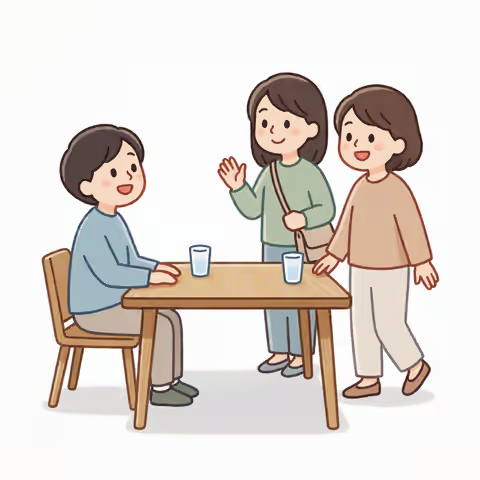
Example: 其實我一早就到咗喇。 — Actually, I got here ages ago.
- CJK: 其实 qíshí. JP 実は. Canto kei4 sat6. 其 + 實/实. Pair with HSK 实在 today — related 实, different job.
- Fun fact: Correction / reveal. 其實… = the fact you didn’t assume. 一早 = ages ago / early on. 到咗 = arrived.
- Memorize: Pull a curtain: 其實我一早就到咗. Contrast 竟然 (shock) vs 其實 (quiet reveal).
- Study tip: 其實 vs 真係. 真係 = truly / I mean it. 其實 = underneath.
15. 而且(ji4 ce2)
furthermore; and also · selain itu
Example: 而且必須帶著糖果煙酒等各種禮品去。 — And (you) must bring gifts like candy, cigarettes, and alcohol.

- CJK: Same 而且 érqiě. Canto ji4 ce2. JP しかも / そして. Written-flavor example (必須, 各種禮品) — still the card.
- Fun fact: Adds a heavier second fact. 不但…而且… is the full pattern. 帶 in this sentence is 帶 (#19) — the batch is eating itself.
- Memorize: Plus-sign: 而且, then a bag of 糖 / 煙 / 酒.
- Study tip: 而且 vs 同埋 (and, spoken). 而且 is the essay/news cousin. 並且/并且 is yesterday’s HSK learning card.
16. 諗(nam2)
think; consider · berpikir
Example: 你有冇諗過去外國讀書? — Have you thought about studying abroad?

- CJK: Canto verb nam2 = Mandarin 想. Character 諗 / 谂 is rare in HSK; Mandarin writes 想. JP 思う. Don’t read it as shěn.
- Fun fact: 諗吓 = think for a sec. 諗到 = it occurred to me. 有冇諗過 = have you ever thought. 讀書 = study (not just “read a book”).
- Memorize: Tap temple: 諗. Then a plane: 外國讀書. If you write 想 on this card, Anki still wants 諗.
- Study tip: 諗 vs 感覺. 諗 vs 知. 有冇 + 過 is the experience question.
17. 張(zoeng1)
classifier for flat things · lembar; zhang
Example: 我買咗三張飛睇戲。 — I bought three movie tickets.

- CJK: 張 = 张 zhāng. Canto zoeng1. Same classifier as 一张纸, 一张票. HK 飛 = ticket (from 飛, not 票). 睇戲 = 看戏 / watch a movie.
- Fun fact: 一張紙, 一張相, 一張單 (yesterday’s 單). Three 飛 = three tickets. Frequency 702 — everyday paper.
- Memorize: Three flat tickets fanned out: 三張飛.
- Study tip: 張 vs 個. If it’s flat (paper, ticket, table, face), 張. 飛 in HK English-loaned speech is the ticket, not 飞机.
18. 野(je5)
thing; stuff (spelling of 嘢) · barang; hal
Example: 有一樣野我哋必須要做。 — There's one thing we must do.
- CJK: Character 野 = 野 yě (野外). Canto je5 here is 嘢 — “stuff.” Same as yesterday’s 講嘢. Written 野 is a lazy/old spelling. JP 野 is field (分野).
- Fun fact: 一樣野 = 一样东西. 做嘢 = work. 咩野 / 乜嘢 = what. If you gloss “wilderness,” the example falls apart.
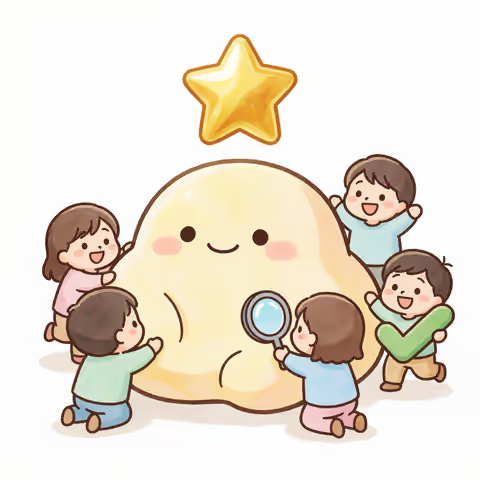
- Memorize: Draw a blob labeled 嘢, cross out wilderness 野. 有一樣野要做.
- Study tip: Cluster with 帶 (#19) 帶齊啲嘢. Same 嘢, two spellings (野 / 嘢).
19. 帶(daai3)
bring; take along; (also) belt · bawa; ikat pinggang
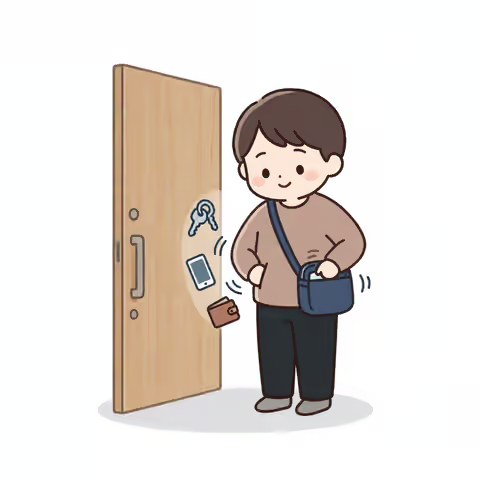
Example: 記得帶齊啲嘢先出門口喎! — Remember to bring everything before leaving the house!
- CJK: 帶 = 带 dài. Canto daai3. 帶齊 = bring the full set. 啲嘢 = the stuff (#18). 門口 = doorway. 喎 = reminder particle.
- Fun fact: Verb today. Noun 皮帶 / 腰帶 is the belt. 帶路, 帶仔女 (take the kids). #15 already used 帶禮物.
- Memorize: Checklist at the door, bag in hand: 帶齊啲嘢. Keys, phone, wallet.
- Study tip: 帶 vs 攞 (take, often “pick up”). 帶出街. Don’t answer “belt” unless the sentence is clothing.
20. 乜(mat1)
what; why (surprise) · apa; kenapa (kaget)
Example: 乜你今日咁早起身呀? — Why are you up so early today? (surprised)

- CJK: Canto-only everyday character. mat1. Mandarin 什么 / 怎么. 乜嘢 = 什么. 咩 (#6’s 做緊咩) is the lighter “what.”
- Fun fact: 乜你…呀 is “what, you…?!” — surprise, not a dictionary why (點解). 咁早 = so early. 起身 = get up.
- Memorize: Squint (the character also means squint) + 乜?! at someone awake at 5 a.m.
- Study tip: Last card. Drill 做緊咩 / 乜你 / 點樣 as three question shapes. 點解 is the calm why; 乜 is the raised eyebrow.