Anki session
HSK 4
汉语
- New
- 20
- Learn
- 2
- Review
- 66
Session: 20 new remaining of the 20/day cap · 2 learning waiting · 66 reviews due.
Click HSK::Level 4, not the parent HSK. Learning first, then new cards interleave with reviews.
Session plan
- Clear the 2 learning cards first: they are still 看法 kànfǎ and 并且 bìngqiě from yesterday. They will eat the start of the session.
- Then new cards interleave with the 66 reviews. When a new one pops, glance at its number below before answering.
- Clusters: people & kin (人数 / 父亲), now & elsewhere (目前 / 各地 / 另外), danger pair (危险 / 勇敢), body & rest (理发 / 放松 / 假日).
- Reading traps: 假日 jià not jiǎ; 钥匙 yào not yuè; 生 in today’s sentence is raw, not “give birth.”
1. 厚(hòu)
thick · tebal
Example: 这本书太厚了,我这个星期看不完。 — This book is too thick; I can't finish it this week.

- CJK: 厚 is the same in JP 厚い あつい (a thick book / a thick slice) and Canto hau5. Not 后 hòu (後, behind) and not 候 hòu (时候). 厂 + 曰 + 子 — a cliff sitting on a sun, visually “stacked.”
- Fun fact: Physical first: 厚书, 墙很厚, 脸皮厚 (thick-skinned — the card’s other example). Flavor 厚 = rich (这汤很厚). 薄 báo is the antonym for things; for people 薄情 is a different life.
- Memorize: Two hands spreading a doorstopper novel: 太厚了. If someone doesn’t blush after a gaffe, tap your own cheek: 脸皮厚.
- Study tip: 厚 is the dimension. 深度 is depth of thought. Don’t read it as 后 (after) just because the pinyin matches.
2. 等(děng)
wait; by the time; etc. · menunggu
Example: 请你在这儿等我。 — Please wait for me here.

- CJK: 等 = JP 待つ まつ for the verb, but the character 等 is など (etc.) and 平等 びょうどう. Canto dang2. Bamboo ⺮ on 寺 — a ranked bamboo slip, hence “class / equal / wait your turn.”
- Fun fact: Three HSK jobs on one glyph. (1) 等我 = wait. (2) 等他来了我们再走 = by the time. (3) 苹果、香蕉等 = and so on. 等于 = equal. Today’s audio/example is (1).
- Memorize: Plant your feet by a door: 等我. Then tick a list and shrug 等等 for sense 3.
- Study tip: 等待 is the two-syllable wait. 等到 + event. Don’t write 等 to mean 坐 (sit and wait is still 等, but 坐等 is “sit back and wait”).
3. 人数(rénshù)
number of people · jumlah orang
Example: 这次旅行的人数已经超过三十了。 — The number of people on this trip has already gone over thirty.
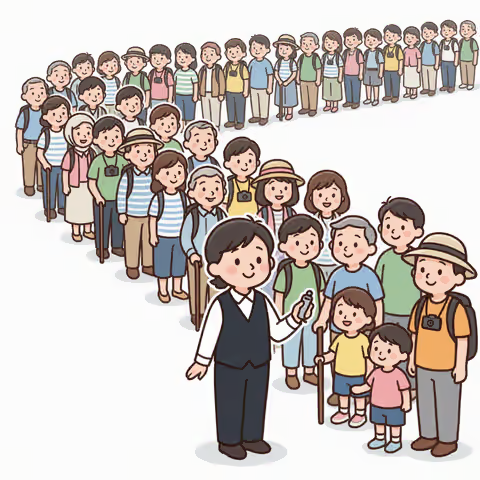
- CJK: 人 + 数(數). JP 人数 にんずう (often にんず) — same compound. Canto jan4 sou3. 数 here is shù (quantity), not shǔ (to count).
- Fun fact: 人口 is population of a place. 人数 is the headcount of this group (tour, class, meeting). 三十个人 vs 人数是三十 — one is “thirty people,” the other is “the number is thirty.”
- Memorize: Clicker at a gate, hitting 31: 人数超过三十.
- Study tip: 人数 + 多/少/超过. Classifier for people stays 个/位; 人数 is the total, not a classifier.
4. 另外(lìngwài)
other; in addition · yang lain; selain itu
Example: 另外一个人来了。 — Another person came.
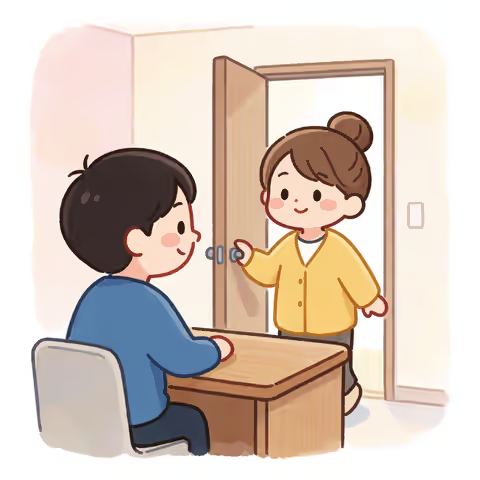
- CJK: 另 = other (另外, 另想办法). 外 = 外. JP uses 他の / 別に. Canto ling6 ngoi6. 另 vs 别: both “other,” 另 is a bit stiffer.
- Fun fact: Two slots. (1) 另外 + noun = a different one (另外一个人). (2) 另外,… at the start of a clause = besides. Yesterday-ish 并且 is “and moreover” joining two facts; 另外 can introduce an extra item or a different person.
- Memorize: Point at one person, then at a second entering: 另外一个. Then a finger “and another thing”: 另外,….
- Study tip: 另外的 is OK. 另外 besides ≠ 除了 (except). 其他 is “the rest of them.”
5. 父亲(fùqīn)
father · ayah
Example: 父亲还没回来。 — Father hasn't come back yet.

- CJK: 父 = 父 fù / ちち. 亲 = 親 = 亲人 / 亲 おや. JP 父親 ちちおや. Canto fu6 can1. Same 亲 as 母亲, 亲人, 亲爱 — here it is the kinship suffix, not “kiss.”
- Fun fact: 爸爸 is what you yell at the door. 父亲 is what you write, or what a newsreader says. 父 vs 爸 is register, not two different men.
- Memorize: Formal portrait on the wall labeled 父亲. The guy on the sofa is 爸爸.
- Study tip: 我父亲, 他的父亲. Don’t 父亲 someone as a verb. Pair with 母亲; 父母 together.
6. 提到(tídào)
mention; bring up · menyebut
Example: 他刚才提到你,说你工作很认真。 — He mentioned you just now and said you work very carefully.

- CJK: 提 = 提 tí (提前, 提高, 提问) — hand 扌 lifting. 到 = result “arrived.” JP 取り上げる / 言及. Canto tai4 dou3/dou2. Not 题 (exam question) — missing the 页, different word.
- Fun fact: 提 is “lift / raise a topic.” 到 locks the result: the name actually came out of his mouth. 提起 is a close twin. 提意见 is “raise a suggestion,” not this card’s 到.
- Memorize: Pick a name off a table and set it in the conversation: 提到你.
- Study tip: 提到 + person/thing. 别再提了 = drop it. If they discussed in depth, that’s 讨论, not a passing 提到.
7. 各地(gèdì)
various places; all regions · berbagai daerah
Example: 各地都在下雨。 — It's raining in various places.
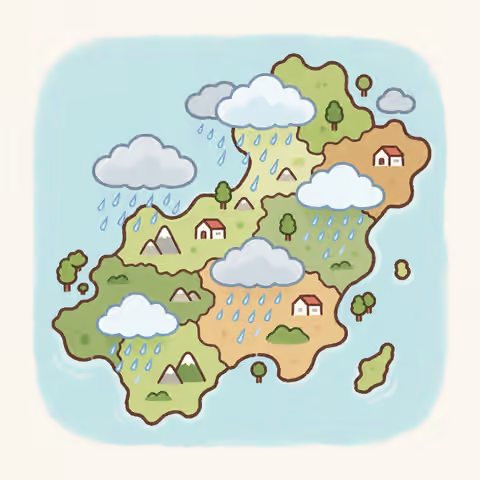
- CJK: 各 = each (各个, 各种). 地 = place. JP 各地 かくち. Canto gok3 dei6. 各 vs 个: 各 is “each of them,” 个 is the classifier.
- Fun fact: News weather word. 全国各地, 世界各地. 各 already means “each”; 地 makes it geographic. 到处 is “everywhere you look” more colloquial.
- Memorize: China map with rain-cloud stickers in every province: 各地都在下雨.
- Study tip: 各地 + 都 is the classic pair. 各个地方 is the long way. Don’t use 各地 for “this place” — that’s 当地.
8. 目前(mùqián)
at present; currently · saat ini
Example: 目前我还在上学。 — I'm currently still in school.
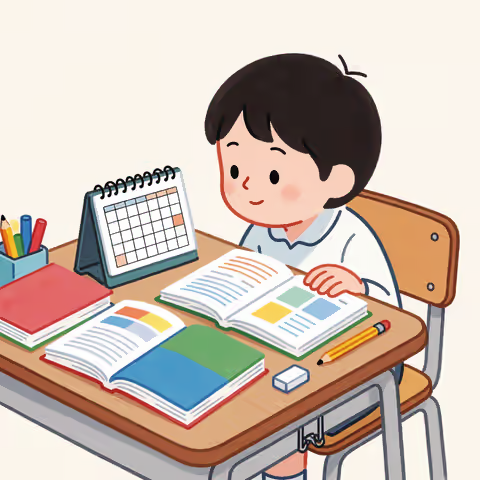
- CJK: 目 = eye. 前 = in front. Literally “before the eyes.” JP 目前 もくぜん more often “imminent” (目前に迫る). Mandarin HSK 目前 = right now / as of this moment. Canto muk6 cin4.
- Fun fact: 现在 is the everyday now. 目前 is the report now: 目前的情况, 目前还没有. 当前 is even more “the present (situation).”
- Memorize: Eyes (目) looking at what’s in front (前) on a desk calendar: 目前.
- Study tip: 目前 + 还/已经. Don’t use 目前 for “in a minute” (马上) or “at that time” (当时 — yesterday’s card).
9. 危险(wēixiǎn)
danger; dangerous · berbahaya
Example: 这条路晚上很危险,你别一个人走。 — This road is very dangerous at night; don't walk it alone.

- CJK: 危 = 危 wēi (危急). 险 = 險 = 危险 / 保险’s 险. JP 危険 きけん. Canto ngai4 him2. 危 vs 脆 cuì (brittle) — similar shape, wrong word.
- Fun fact: Noun and adjective: 有危险, 很危险. 保险 is “insurance / safe,” built from the same 险 you are trying not to hit. Last card 勇敢 is the pair for this sentence.
- Memorize: Road at night, one person, a warning triangle: 危险. Don’t walk it.
- Study tip: 危险 vs 危急 (critical, medical/news). 冒险 is to take a risk. 安全 is the antonym.
10. 理发(lǐfà)
get / give a haircut · potong rambut
Example: 我明天去理发。 — I'm getting a haircut tomorrow.

- CJK: 理 = arrange (管理, 整理). 发 = 髮 = hair (头发), not 发 fā (to send / 发生). Tone fà. JP 理髪 りはつ, 床屋. Canto lei5 faat3.
- Fun fact: 理发店 the shop. 剪头发 is the blunt spoken twin. You 去理发; the barber 给客户理发.
- Memorize: Cape + scissors + the 发 of 头发, tone 4. If you say fā you’ve sent a letter.
- Study tip: 理发 vs 梳头 (comb) vs 洗头. Don’t write 头发 as the verb.
11. 举行(jǔxíng)
hold (a meeting, exam, ceremony) · mengadakan
Example: 明天学校举行考试。 — The school is holding an exam tomorrow.

- CJK: 举 = 舉 = raise (举手, 举办). 行 = hold/carry out. JP 挙行 きょこう (ceremony; stiff). Canto geoi2 hang4. 举 vs 拳 (fist).
- Fun fact: Institutions 举行考试 / 举行会议 / 举行婚礼. People in a living room 开派对, not 举行派对. 举办 is a close synonym, slightly more “organize.”
- Memorize: Principal lifting (举) a schedule: 举行考试.
- Study tip: 举行 + event. Subject is usually a school, company, city. Don’t 举行 a haircut — that’s 理发.
12. 火(huǒ)
fire; (also) popular · api
Example: 昨天晚上厨房里突然着火了。 — Last night the kitchen suddenly caught fire.
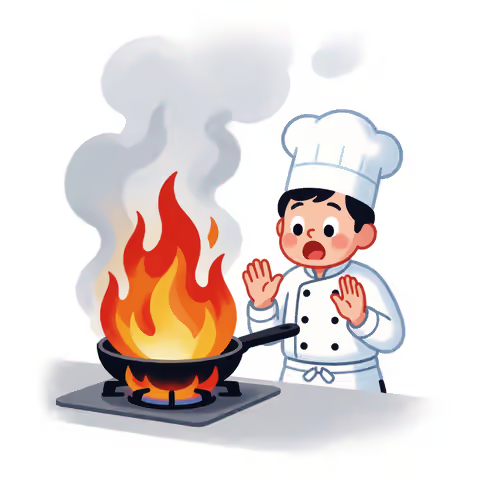
- CJK: 火 = JP 火 ひ / カ (火曜日). Canto fo2. Radical 灬 when it’s the four-dot fire under 热, 点, 煮.
- Fun fact: Today’s sentence is literal 着火. Slang 很火 = popping / sold out (a shop, a song) — same character, different movie. 发火 = lose your temper. 火车 is already in your pocket.
- Memorize: Pan on fire in a kitchen: 着火. Second panel: a packed storefront with flames as cartoon “hot”: 很火.
- Study tip: 着火 / 失火 / 救火. If the sentence is “this restaurant is 火,” it’s popularity, not a 消防队.
13. 生(shēng)
raw; unfamiliar; (also) to be born · mentah; asing
Example: 这盘牛肉还是生的,不能现在吃。 — This plate of beef is still raw; we can't eat it yet.
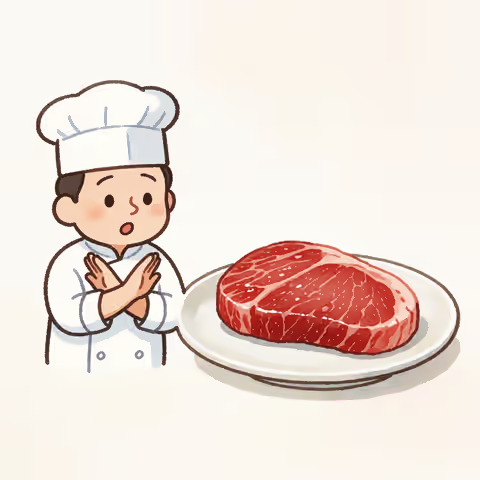
- CJK: 生 = JP 生 なま (raw) / せい (学生, 人生). Canto saang1. Same 生 as 学生, 生日, 生活 — this card’s example is the na-ma reading.
- Fun fact: Kitchen 生 = not cooked (生鱼片). Study desk 生 = unfamiliar (这些字还很生, 眼生). 花生, 生病, 生气 are other lives; don’t dump them on this example.
- Memorize: Red-in-the-middle steak: 还是生的. If the card shows characters you don’t know, that’s 生字 — same badge, different plate.
- Study tip: 生的 vs 熟的. 不熟 can mean undercooked or “we’re not close.” For people, 陌生 is the clear “unfamiliar.”
14. 钥匙(yàoshi)
key · kunci
Example: 我出门的时候把钥匙忘在家里了。 — When I left the house, I forgot my keys at home.
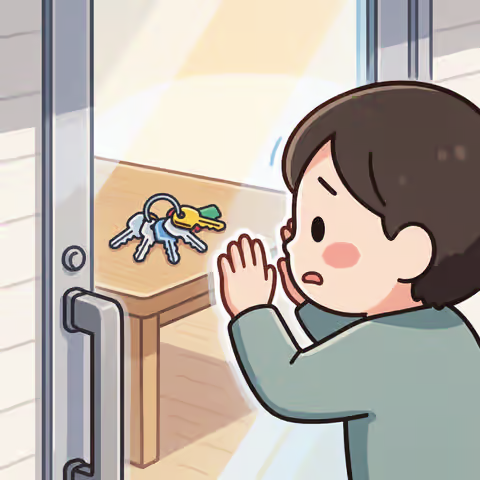
- CJK: 钥 = 鑰. 匙 = spoon/key (茶匙). JP 鍵 かぎ (different character). Canto joek6 si4. yào not yuè — 月 is not in this word.
- Fun fact: Classifier 把. 钥匙孔 the keyhole. 钥匙串 a bunch. Electronic 钥匙 still uses the same word for a fob.
- Memorize: Jangle a 把钥匙 at a locked door, then slap your pocket: 忘在家里了.
- Study tip: 一把钥匙. 开门用钥匙. Not 开 (that’s the verb) and not 锁 (the lock).
15. 放松(fàngsōng)
relax; slacken · rileks
Example: 你要放松一点。 — You need to relax a bit.

- CJK: 放 = let go (放假, 放心). 松 = 鬆 = pine / loose. JP リラックス / 緩める. Canto fong3 sung1. 松 vs 紧. Not 送 sòng.
- Fun fact: Shoulders 放松, rules 放松 (slacken), a grip 放松. Antonym 紧张. 放假 is time off; 放松 is the muscle/mood. Pair with 假日 next.
- Memorize: Drop both shoulders, shake out your hands: 放松一点.
- Study tip: 放松 + 一点/一下. 放松自己. Don’t use it for “don’t worry” as a full substitute for 放心 — 放心 is “put your heart down,” 放松 is “unclench.”
16. 假日(jiàrì)
holiday; day off · hari libur
Example: 假日你去哪儿? — Where are you going on the holiday?
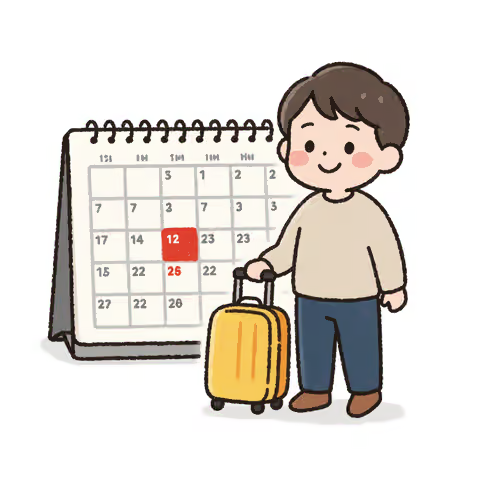
- CJK: 假 here is jià (leave), 日 = day. Same 假 as 放假, 请假, 假期. Not jiǎ (fake: 假的, 假装). JP 休日 きゅうじつ / 暇 ひま. Canto gaa3 jat6.
- Fun fact: 假日 is the calendar square. 假期 is the stretch (春节假期). 周末 is just the weekend. Tone 4 jià vs tone 3 jiǎ is the whole card.
- Memorize: Red calendar date. If you say jiǎ, you’re holding a fake passport, wrong card.
- Study tip: 在假日 / 假日的时候. 请一天假 is the verb-ish 假. Don’t write 假日 to mean 节日 (festival) unless it is one.
17. 共同(gòngtóng)
common; joint; together · bersama
Example: 我们有共同目标。 — We have a common goal.
- CJK: 共 = together (一共, 公共). 同 = same. JP 共同 きょうどう (共同作業). Canto gung6 tung4. Exact cognate of 共同.
- Fun fact: 共同 + noun is “shared X”: 共同目标, 共同点, 共同努力. 一起 is the everyday “together (we do).” 公共 is public (公园, 公共汽车), not “our shared goal.”
- Memorize: Two arrows hitting one target: 共同目标.
- Study tip: 共同的 + noun. 共同努力 is a verb-ish set phrase. 相同 is “identical,” not necessarily collaborative.
18. 实在(shízài)
really; honest; down-to-earth · benar-benar; jujur
Example: 今天实在太累了,我想早点回家。 — I'm really too tired today; I want to go home a bit earlier.

- CJK: 实 = 實 = solid/real (实在, 其实, 诚实). 在 = at. JP 実在 じつざい is philosophy “existence”; daily JP uses 本当に. Canto sat6 zoi6.
- Fun fact: Two HSK lives. (1) Adverb: 实在太累了 = I genuinely can’t. (2) Adjective: 他很实在 = honest, no pretence. Yesterday’s vibe of 质量 was “is it solid”; 实在 is “is this person/feeling solid.”
- Memorize: Collapse onto a sofa: 实在太累了. Then a straight-talking uncle: 他这人实在.
- Study tip: 实在 + 太/不. 其实 is “actually (correction).” Don’t swap them: 其实我不累 vs 我实在太累了.
19. 无论(wúlùn)
no matter (what/how) · tidak peduli; betapa pun
Example: 无论工作多忙,他每天都坚持锻炼。 — No matter how busy work is, he keeps exercising every day.

- CJK: 无 = 無. 论 = 論 = discuss. JP 無論 むろん means “of course / needless to say” — false friend. Mandarin 无论 = 不管. Canto mou4 leon6.
- Fun fact: Pattern 无论 A,都 B. A is often 多 + adj or 是否. 不管 is the spoken twin. JP-brain must not hear むろん.
- Memorize: Work pile on the left, running shoes on the right, a bridge 无论…都….
- Study tip: Needs a 都 / 也 in the second half. Bare 无论工作忙 is unfinished. Pair with 坚持.
20. 勇敢(yǒnggǎn)
brave · berani
Example: 遇到危险的时候,他非常勇敢。 — When he faced danger, he was very brave.

- CJK: 勇 = brave (勇气). 敢 = dare (敢于, 不敢). JP 勇敢 ゆうかん. Canto jung5 gam2. Same two characters. Ties 危险 (#9).
- Fun fact: 勇敢 is the adjective/praise. 勇气 is the noun you “have.” 敢 is the verb “dare to.” 勇敢地 + verb.
- Memorize: Same night road as #9, but this time he walks it: 勇敢. 危险 is the road; 勇敢 is the person.
- Study tip: 很勇敢, 勇敢的人. 勇敢面对. Don’t use 勇敢 for “reckless” (那是冒险, sometimes 鲁莽). Last card — close the loop with #9’s sentence.