Anki session
HSK 4
汉语
- New
- 19
- Learn
- 2
- Review
- 39
Session: 19 new remaining of the 20/day cap · 2 learning waiting · 39 reviews due.
Click HSK::Level 4, not the parent HSK (parent would mix L5–9 into today's new 20). Learning first, then new cards interleave with reviews.
Session plan
- Clear the 2 learning cards first: 看法 kànfǎ (opinion) and 并且 bìngqiě (and / moreover). They will eat the start of the session.
- Then new cards interleave with the 39 reviews. When a new one pops, glance at its number below before answering.
- Clusters in this batch: stop / pause (顿 / 停车), looks & redo (样子 / 重新 / 低), school-life (毕业 / 成功), how common (普遍 / 流行).
- Japanese traps worth a second: 质量 is usually quality in Chinese, 質量 in Japanese is mass. 毕业 is not 卒業 — China kept 毕, Japan uses 卒.
1. 负责(fùzé)
responsible; in charge · bertanggung jawab
Example: 今天谁负责开门? — Who is in charge of opening the door today?

- CJK: 负 = 負 = 负担 fùdān 的 负 (also 负责任). 责 = 責 = 责任 zérèn 的 责. JP: 責任 せきにん, 負う おう (to bear). Stack: 負う a 責任 = 负责. Canto fu6 zaak3.
- Fun fact: 责任 is the duty sitting on the table. 负责 is you picking it up. 负 originally “carry on the back,” then “owe / bear.” Same 贝/貝 money-shell in 责 — duty you can be billed for.
- Memorize: Point at the door key, then at your own chest: 我负责. If you only shrug “那是责任,” you haven't taken the card's verb.
- Study tip: 对 + 工作/孩子 负责. Adjective: 他很负责. Noun duty stays 责任. Don't answer 负责 when the sentence wants 责任重大.
2. 顿(dùn)
classifier for meals; pause · sekali makan; jeda
Example: 中午我们在家一起吃了一顿饭。 — At noon we had a meal together at home.
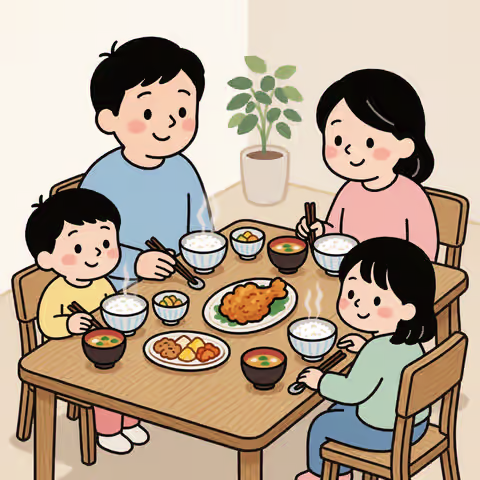
- CJK: 顿 = 頓. JP 頓 とん in 整頓 せいとん (put in order / “settle the pause”). Canto deon6. Not 吨 dūn (ton, 口+屯) and not 屯 tún.
- Fun fact: HSK wants the meal classifier first: 一顿饭, 一顿早餐. Same word still means “halt”: 停顿, 顿时 (at once — the pause snaps). A beating or scolding is also 一顿 (一顿骂) — a bout, then it stops.
- Memorize: Chopsticks down between courses: each plate-clearing is one 顿. Stamp a foot once (顿足) if you need the verb.
- Study tip: 吃了一顿饭 is the safe sentence. 顿饭 without 一/这/那 is odd. If the card shows “pause,” think 停顿, not 停车 (that's the next stop-word, with a 车).
3. 喊(hǎn)
yell; shout; call out for · berteriak; memanggil
Example: 别在医院里大声喊,病人需要休息。 — Don't shout in the hospital; the patients need rest.
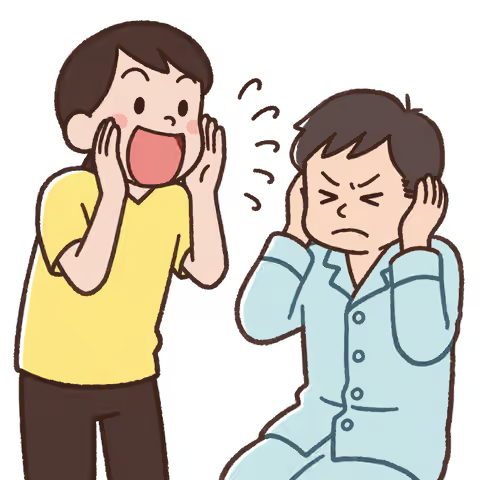
- CJK: 口 + 咸. 咸 is xián (salty) — same phonetic family, different word. JP has no everyday 喊; they 叫ぶ / 呼ぶ. Canto haam3 (you already yell 喊 in Canto). Teochew is the same mouth-shape: loud 喊, not polite 请.
- Fun fact: 叫 covers “be called / order food / a bird calls.” 喊 is the volume knob: 喊他过来, 喊救命. Mom at the door 喊你吃饭 is calling, not a lecture.
- Memorize: Hands at mouth, one shout. If it's a name on a roll-call, 叫; if the whole corridor hears it, 喊.
- Study tip: 喊 + person + 一声. 大喊 / 喊道 in writing. Don't swap in 哭 (that's tears) or 叫 for a quiet 叫做.
4. 差点儿(chàdiǎnr)
almost; nearly · hampir
Example: 我差点儿迟到了。 — I was almost late. (and wasn't)

- CJK: 差这儿 is 差 + 点 + 儿. 差 is chà (fall short), not chā as in 出差 chāchāi, not chāi. JP: もう少しで. Canto 差啲 caa1 di1 — same grammar.
- Fun fact: Default reading: the bad thing did not happen. 差点儿迟到了 = you made it. 差点儿没 is the famous dialect trap (sometimes still “almost did”); at HSK 4, stick to 差点儿 + bad outcome = close call, you're safe.
- Memorize: Clock at 8:59, sprint through the door at 9:00. Wipe sweat: 差点儿. The 儿 is Beijing coat — 差点 without 儿 is the same word.
- Study tip: Not 几乎 in every sentence — 几乎 is “almost / nearly always” cooler and more written. If you were actually late, this card is the wrong word.
5. 相互(xiānghù)
each other; mutual · saling
Example: 同学们应该相互帮助,一起把事情做好。 — Classmates should help each other and get things done together.

- CJK: 相 + 互. JP 相互 そうご (相互理解). Canto soeng1 wu6. 相 is the 互相 / 相对 相, not 想 xiǎng (心).
- Fun fact: 相互 and 互相 are twins. 互相 is what people say; 相互 is what reports and HSK like. 相 already means “each other” in 相爱, 相遇; 互 underlines the two-way arrow.
- Memorize: Two arrows ⇄. Say 相互帮助 while pointing both ways. One-way help is just 帮助.
- Study tip: 相互 + verb. Don't put 很 in front (not 很相互). 相互的 is OK as “mutual” before a noun (相互关系).
6. 仅(jǐn)
only; merely · hanya
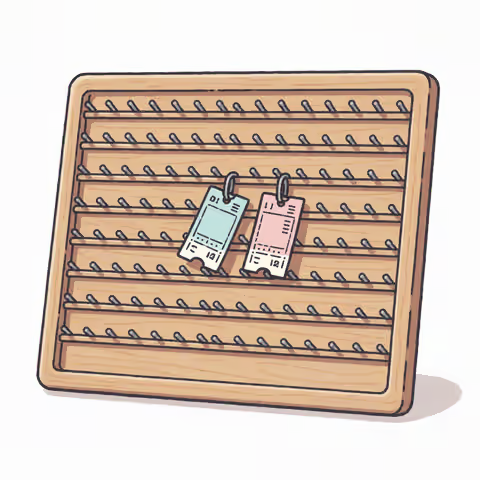
Example: 仅剩两张票了。 — There are only two tickets left.
- CJK: 仅 = 僅. JP 僅 きん, 僅かに わずか. Canto gan2. Trap: 尽 jìn (盡, exhaust) — 尽管 / 尽快 are a different family. 巾 vs 尽's 尺.
- Fun fact: 仅 is the stiff cousin of 只. Signs, news, tickets: 仅限, 不仅…而且…. 仅仅 doubles it for “merely.”
- Memorize: Two tickets in a huge empty rack. Whisper 仅. If you can swap in 只 and it still sounds like chat, 只; if it sounds like a notice, 仅.
- Study tip: 不仅 A 而且 B is the grammar unlock. Don't read it as 尽 (do all of it). Tone 3 仅 vs 4 尽.
7. 不如(bùrú)
not as good as; better to · tidak sebaik; lebih baik
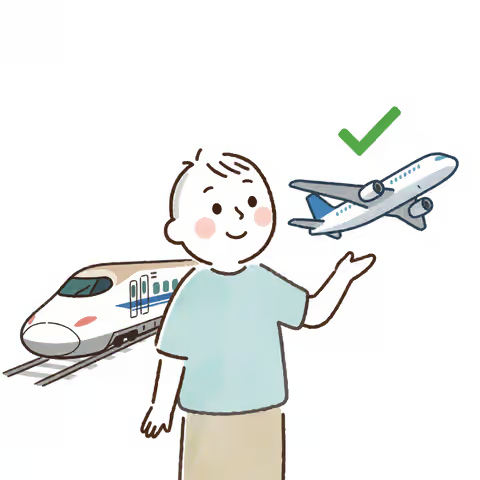
Example: 我觉得坐火车不如坐飞机快。 — I think taking the train isn't as fast as flying.
- CJK: 如 = like / if (如果). JP 如し ごとし is fossil; they say 〜より劣る or むしろ. Canto bat1 jyu4. Same 如 as 例如, 如今.
- Fun fact: Two jobs. (1) A 不如 B + adj: A loses the comparison. (2) 不如 + verb: “we might as well.” 天气不好, 不如明天去. 与其 A 不如 B is the grown-up pair.
- Memorize: Train on the left, plane on the right. Cross out the train: 不如. Then shrug and point at tomorrow: 不如明天去.
- Study tip: 比 is “A is more … than B.” 不如 is “A fails to match B” or “let's do B instead.” 不如不 is not a word — don't stack 不.
8. 停车(tíngchē)
park; stop (a vehicle); stall · parkir; mogok
Example: 这里不能停车,前面有个停车场。 — You can't park here; there's a parking lot ahead.
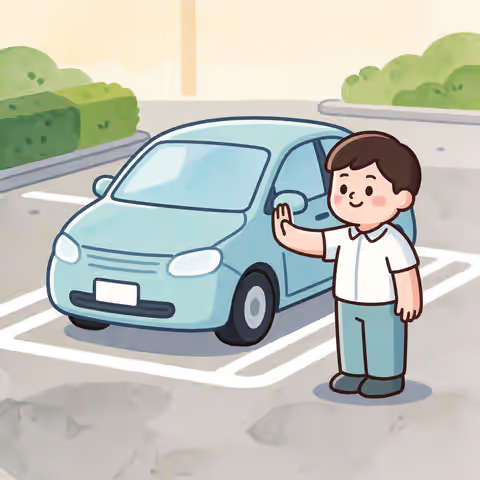
- CJK: 停 + 车(車). JP 停車 ていしゃ is what a train does at a station. Canto ting4 ce1. 停 is 亻+亭 — a person at a kiosk, standing still. Not 顿 (this batch): 顿 is a bout that ends; 停 is the engine/car that stays.
- Fun fact: 停车场 is the lot. 停车位 a bay. Machines 停车 = stall (peek's Indonesian was mogok). 停一下 = pull over a moment, not necessarily park for the afternoon.
- Memorize: Hand flat “halt,” then a toy car into a box labeled 场. If there's no 车, it's just 停.
- Study tip: 停在 + place. 把车停在门口. 别停 here is “don't park,” not 顿.
9. 样子(yàngzi)
appearance; manner · penampilan; sikap
Example: 你今天的样子看起来特别精神。 — You look especially energetic today.

- CJK: 样 = 樣. JP 様子 ようす is the same compound (様子を見る). Canto joeng6 zi2. 羊 phonetic in 样. Not 杨 yáng (poplar) and not 羊 itself.
- Fun fact: 样子 is the look you're giving off, including a fake one: 装样子. 看样子 = “looks like…” 那样子 will get you scolded (that's the face you're making).
- Memorize: Mirror. Change your face, freeze: 这个样子. JP-brain can just hear ようす and swap the reading to yàngzi.
- Study tip: 样子 vs 形状 (physical shape) vs 形式 (format). 看他的样子, 他生气了 — manner, not his body measurements. 质量 later is about the thing; 样子 is the vibe.
10. 重新(chóngxīn)
again; from scratch; re- · dari awal lagi
Example: 我们重新开始吧。 — Let's start over.

- CJK: 重 here is chóng (again / stack), not zhòng (heavy). Same character as 重要 zhòngyào — tone and meaning fork. JP 重ねて かさねて / 改めて. Canto cung4 san1. 新 is 新.
- Fun fact: 再 = do it another time (再试一次, maybe from the same save file). 重新 = wipe the save. 重新来 / 重新开始 / 重新考虑. 又 is “and then / yet again” with a complaint flavor.
- Memorize: Paper in the trash, blank sheet: 重新. Heavy backpack is zhòng, not this card.
- Study tip: If the sentence still has the old progress, it's 再. If they throw it out, 重新. Peek “again” is the trap — 又/再/重新 are not one button.
11. 低(dī)
low; to lower (one's head) · rendah; tunduk
Example: 声音有点儿低。 — The voice is a bit low.

- CJK: JP 低い ひくい, 低下 ていか. Canto dai1. Trap pair: 底 dǐ (bottom, 到底) — 低 is the height; 底 is the floor. 矮 ǎi is a person's shortness. 低头 / 低温 / 低价.
- Fun fact: You can 低 a head (verb) but you don't 低 a person — that's 矮. Prices 低, buildings 低, volume 低. 低下 can be “lowly” as a slam.
- Memorize: Palm pushing a floating head down: 低头. A short friend is 矮, not 低.
- Study tip: 低头 vs 抬头. 低 vs 高 as the clean antonym. 底 is the other card family (底下, 到底) — check the extra stroke.
12. 质量(zhìliàng)
quality (also physics: mass) · kualitas
Example: 这家店的衣服质量很好,可以放心买。 — The clothes in this shop are good quality, so you can buy them without worrying.

- CJK: 质 = 質, 量 = quantity. JP trap: 質量 しつりょう = mass. Japanese quality is 品質 ひんしつ. Chinese daily 质量 = 品质. Physics class 质量 = mass (质量单位). Canto zat1 loeng6.
- Fun fact: 质 is the stuff's character; 量 is how you measure. Put together, Mandarin mostly means “is it good.” 重量 is weight. 数量 is how many.
- Memorize: Shirt tag: 质量很好. If you hear Japanese class in your head, slap it: this is not a physics quiz unless the sentence says 千克.
- Study tip: 质量好/差, 提高质量. 质量高 is OK. Don't answer 质量 when they want 数量 or 重量.
13. 公路(gōnglù)
highway; public road · jalan raya
Example: 这条公路很长。 — This highway is very long.

- CJK: 公 public + 路. Same 公 as 公司, 公园, 公共. JP 公道 / 道路 どうろ; 公路 is the Chinese compound. Canto gung1 lou6. 高速公路 is the expressway; 公路 alone can be any intercity public road.
- Fun fact: 马路 is the street you cross in town (from horse-road). 公路 is the one that leaves town. 高速公路 often shortens to 高速, not to 公路.
- Memorize: Toll booth + a long grey ribbon labeled 公 (public), not your driveway.
- Study tip: Classifier 条. 公路 vs 路 vs 街道. If there's a parking fight, that's 停车 on a 路, not this card.
14. 普遍(pǔbiàn)
widespread; common · umum
Example: 现在用手机付钱已经很普遍了。 — Paying by phone is already very widespread now.

- CJK: 普 = the 普 in 普通话. 遍 = everywhere (遍地, 遍). JP 普遍 ふへん. Canto pou2 pin3. 普 vs 普通: 普通 = ordinary; 普遍 = spread across the map.
- Fun fact: A thing can be 普通 (nothing fancy) without being 普遍 (not everyone does it). Phone-pay is 普遍; a plain white shirt is 普通.
- Memorize: Map with dots filling every province: 普遍. One boring shirt on a hanger: 普通 — wrong card.
- Study tip: 很普遍, 普遍现象. Not 普遍的人 for “ordinary people” — that's 普通人.
15. 毕业(bìyè)
graduate · lulus
Example: 我哥哥今年夏天就要大学毕业了。 — My older brother is graduating from university this summer.

- CJK: 毕 = 畢 “finish.” 业 = 業 = 企业 きぎょう / 业 yè (作业, 事业) — same 业 as yesterday's 授業. JP uses a different first character: 卒業 そつぎょう (卒, not 毕). Canto bat1 jip6.
- Fun fact: 毕业生 the person. 毕业典礼 the ceremony. You 从 + school 毕业. 肄业 is “left without graduating” — ignore until much later.
- Memorize: Toss the cap. Caption 毕业, not 卒業. 毕 = done; 业 = the course of work.
- Study tip: 毕业了 is a change-of-state. 毕业证书. Don't 毕业 a company (that's 离职). 作业 is homework, same 业, different life.
16. 流行(liúxíng)
popular; (disease) spreading · populer; merebak
Example: 这首歌很流行。 — This song is very popular.

- CJK: 流 + 行. JP 流行 りゅうこう — same two meanings (fashion and epidemic). Canto lau4 hang4. 流 as in 河流 / 流利; 行 as in 银行 / 行走.
- Fun fact: 流感 is influenza: a 流行的感冒. A song 很流行. 流行起来 = catching on. English “flu” hid in 流感; the card still wants both senses.
- Memorize: Two panels: a street wearing the same shoes, and a row of people sneezing. Both 流行. Peek's “illness is going around” is sense 2; the note example is sense 1.
- Study tip: 很流行 (fashion). 正在流行 (epidemic). 流行音乐. Not 普遍 — 普遍 is “everyone already does it as a fact”; 流行 is “it's what's moving now.”
17. 当时(dāngshí)
at that time · saat itu
Example: 当时我正在吃饭。 — I was eating at that time.

- CJK: 当 dāng (at / as) + 时. JP 当時 とうじ. Canto dong1 si4. 当 is not dàng (当铺, 当作 sometimes). Same 当 as 当然, 当天, 当年.
- Fun fact: 当时 pins a past scene. 那时 is looser “back then.” 当天 = that same day. 当年 = that year / in those years. 立刻 / 马上 are “immediately,” which the dictionary also stuffed onto this card — HSK 4 usage is the flashback one.
- Memorize: Freeze-frame of you with chopsticks: subtitle 当时. Not 现在, not 马上.
- Study tip: 当时 + 正在 is a classic pair. Don't use 当时 for “right now.” 当时的 + noun (当时的情况).
18. 成功(chénggōng)
succeed; success · sukses
Example: 他终于成功了。 — He finally succeeded.

- CJK: 成 + 功. JP 成功 せいこう — same word. Canto sing4 gung1. 成 as in 成为, 完成; 功 as in 功夫, 功课, 用功. Ignore the CEDICT town in Taitung — that's not the card.
- Fun fact: 成功 is the result; 成功的 is the adjective; 成功地 + verb. 成就 is a countable achievement. 失败 is the antonym you'll meet forever.
- Memorize: Confetti, one thumbs-up: 成功了. 毕业 (#15) is walking out of school; 成功 is the project actually working — they can happen the same summer and they are not synonyms.
- Study tip: 成功了 vs 很成功. 成功 + verb is “succeed in …” (成功考上). Don't write 成功 to mean 完成 (finished ≠ succeeded).
19. 餐厅(cāntīng)
dining hall; restaurant · ruang makan; restoran
Example: 我们去餐厅吃饭。 — Let's go eat in the dining hall / restaurant.
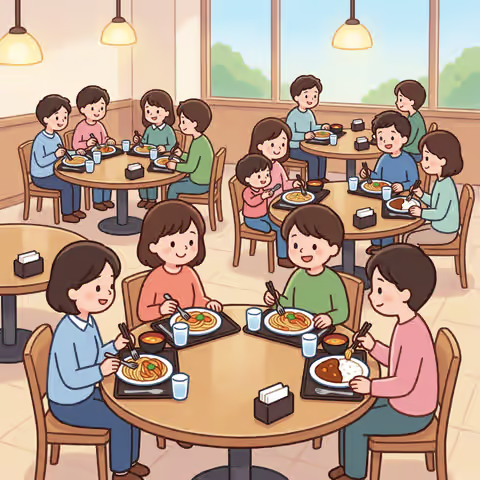
- CJK: 餐 = meal (午餐, 西餐). 厅 = 廳 hall. JP: 食堂 しょくどう (canteen), レストラン (loan). 餐廳 is the Chinese hotel/restaurant word. Canto caan1 teng1. 餐 vs 歺 (wrong) vs 夕.
- Fun fact: 餐厅 covers a hotel dining room, a fancy restaurant, and a school cafeteria depending on the building. 饭馆 / 饭店 skew “restaurant / hotel.” 食堂 is the canteen smell. 顿 (#2) is what you eat there: 在餐厅吃一顿饭.
- Memorize: Big room, round tables, 餐 on the signboard. Not a stall (摊) and not 厨房 (that's cooking).
- Study tip: Classifier 家 or 间. 在餐厅吃饭. Last card of the day — you can close the session with 一顿饭 in a 餐厅, which ties #2 and #19 together.